




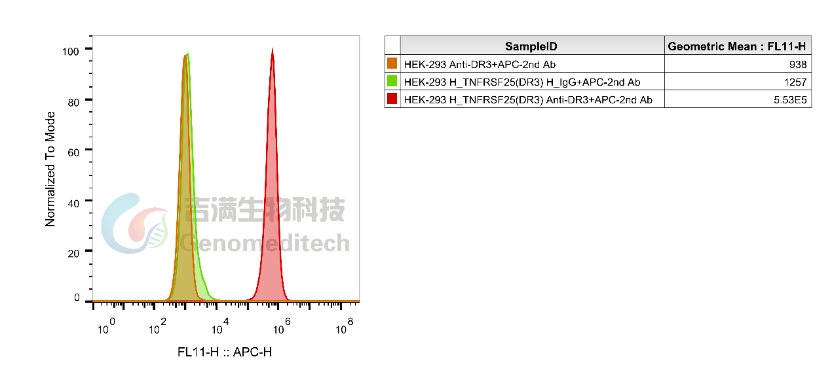
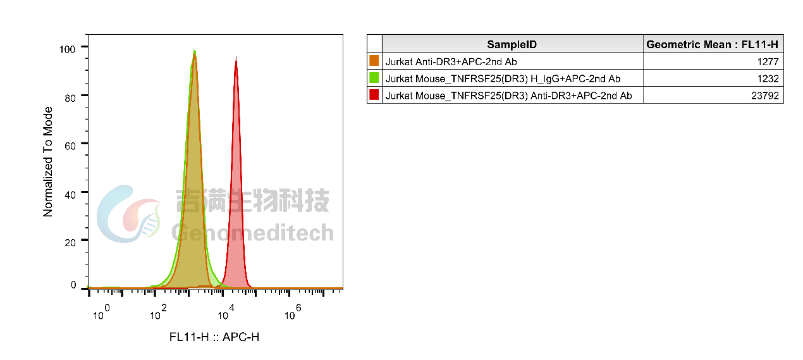
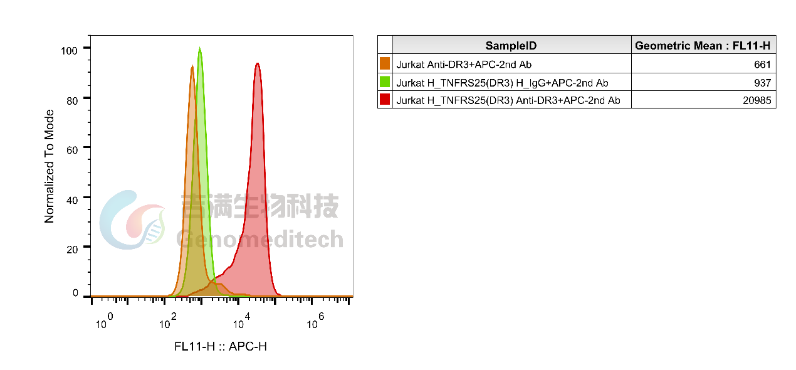
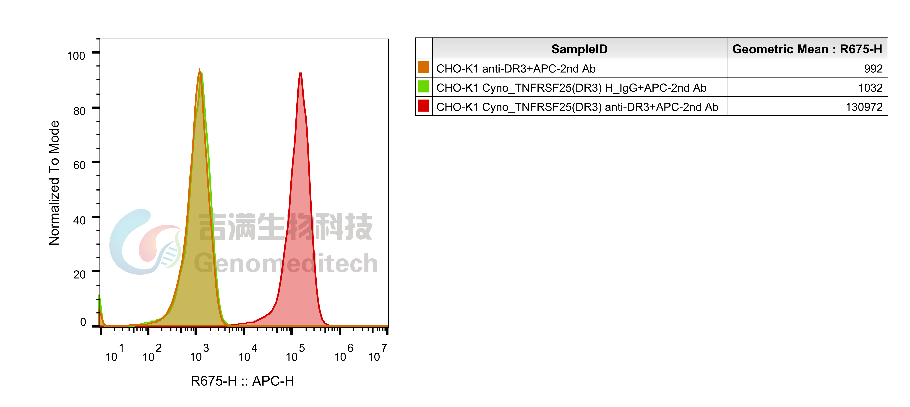


Anti-TNFRSF25(DR3) hIgG1 Antibody(PTX-35)
Research Grade
Cat. No.
GM-58913AB
Size
10 μg
100 μg
1mg
Quote
Related products
Description
Related products
Description
Species Reactivity Human; Mouse
Clone PTX-35
Source/Isotype Monoclonal Human IgG1 /λ
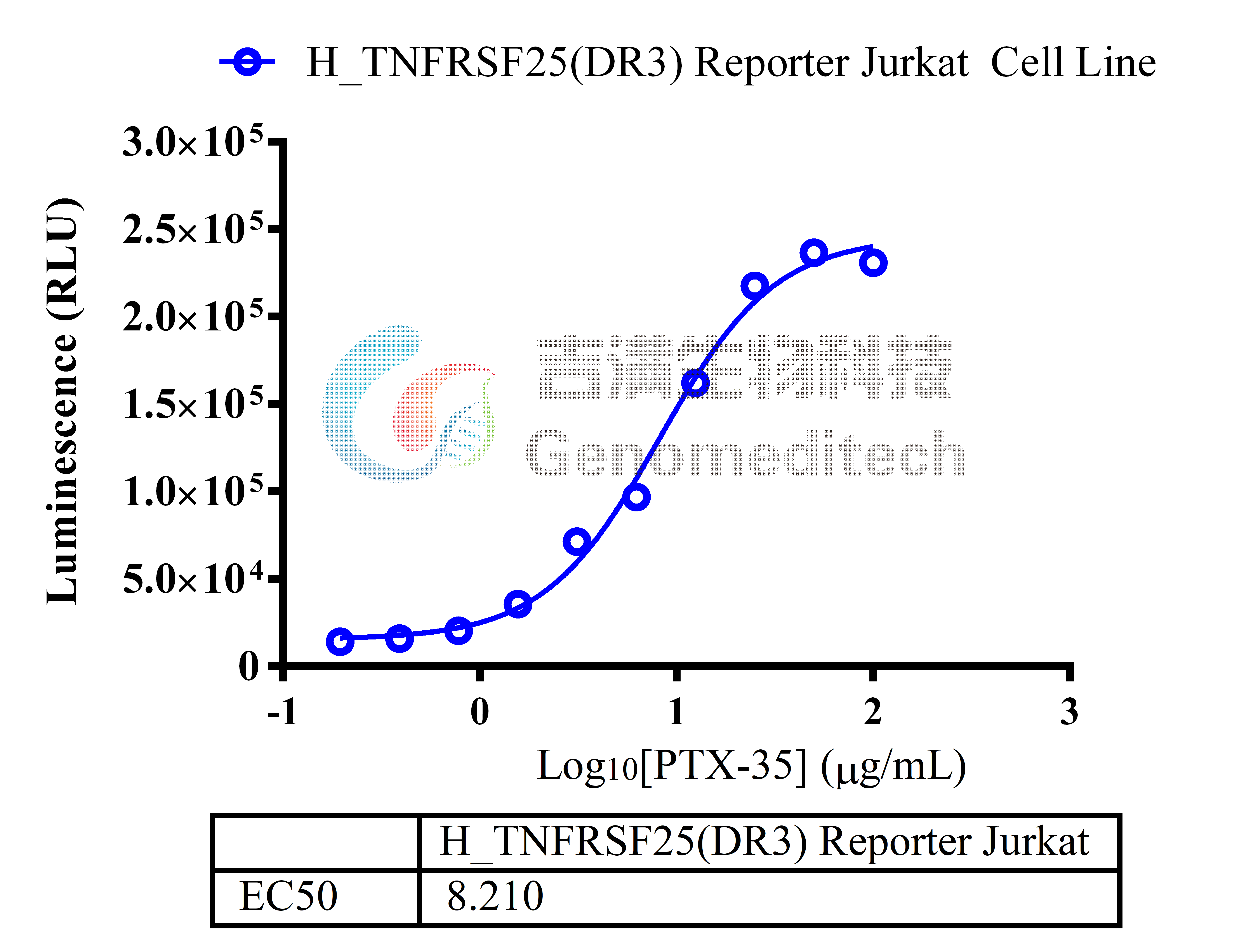
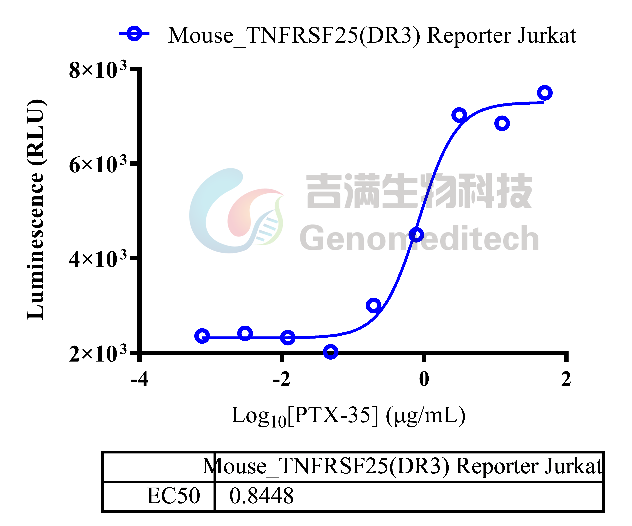
Application Flow Cytometry; Activation assay
Specificity Detects TNFRSF25(DR3)
Gene TNFRSF25
Other Names DR3; TR3; DDR3; LARD; APO-3; TRAMP; WSL-1; GEF720; WSL-LR; PLEKHG5; TNFRSF12
Gene ID 8718 (Human) ; 85030(Mouse);102137685(Cynomolgus)
Background Death receptor 3 (DR3), also known as tumor necrosis factor receptor superfamily member 25 (TNFRSF25), is a cell surface receptor of the tumor necrosis factor receptor superfamily which mediates apoptotic signalling and differentiation. The protein encoded by this gene is a member of the TNF-receptor superfamily. This receptor is expressed preferentially by activated and antigen-experienced T lymphocytes. TNFRSF25 is also highly expressed by FoxP3 positive regulatory T lymphocytes. TNFRSF25 is activated by a monogamous ligand, known as TL1A (TNFSF15), which is rapidly upregulated in antigen presenting cells and some endothelial cells following Toll-Like Receptor or Fc receptor activation. This receptor has been shown to signal both through the TRADD adaptor molecule to stimulate NF-kappa B activity or through the FADD adaptor molecule to stimulate caspase activation and regulate cell apoptosis.
Storage Store at 2-8°C short term (1-2 weeks). Store at ≤ -20°C long term.Avoid repeated freeze-thaw.
Formulation Phosphate-buffered solution, pH 7.2.
Endotoxin < 1 EU/mg, determined by LAL gel clotting assay
Species Reactivity Human; Mouse
Clone PTX-35
Source/Isotype Monoclonal Human IgG1 /λ
Application Flow Cytometry; Activation assay
Specificity Detects TNFRSF25(DR3)
Gene TNFRSF25
Other Names DR3; TR3; DDR3; LARD; APO-3; TRAMP; WSL-1; GEF720; WSL-LR; PLEKHG5; TNFRSF12
Gene ID 8718 (Human) ; 85030(Mouse);102137685(Cynomolgus)
Background Death receptor 3 (DR3), also known as tumor necrosis factor receptor superfamily member 25 (TNFRSF25), is a cell surface receptor of the tumor necrosis factor receptor superfamily which mediates apoptotic signalling and differentiation. The protein encoded by this gene is a member of the TNF-receptor superfamily. This receptor is expressed preferentially by activated and antigen-experienced T lymphocytes. TNFRSF25 is also highly expressed by FoxP3 positive regulatory T lymphocytes. TNFRSF25 is activated by a monogamous ligand, known as TL1A (TNFSF15), which is rapidly upregulated in antigen presenting cells and some endothelial cells following Toll-Like Receptor or Fc receptor activation. This receptor has been shown to signal both through the TRADD adaptor molecule to stimulate NF-kappa B activity or through the FADD adaptor molecule to stimulate caspase activation and regulate cell apoptosis.
Storage Store at 2-8°C short term (1-2 weeks). Store at ≤ -20°C long term.Avoid repeated freeze-thaw.
Formulation Phosphate-buffered solution, pH 7.2.
Endotoxin < 1 EU/mg, determined by LAL gel clotting assay
For laboratory research use only. Direct human use, including taking orally and injection and clinical use are forbidden.
Anti-TNFRSF25(DR3) hIgG1 Antibody(PTX-35)
Research Grade
Cat. No.
GM-58913AB
Size
10 μg
100 μg
1mg
Quote
Related products
Description
Related products
Description
Species Reactivity Human; Mouse
Clone PTX-35
Source/Isotype Monoclonal Human IgG1 /λ
Application Flow Cytometry; Activation assay
Specificity Detects TNFRSF25(DR3)
Gene TNFRSF25
Other Names DR3; TR3; DDR3; LARD; APO-3; TRAMP; WSL-1; GEF720; WSL-LR; PLEKHG5; TNFRSF12
Gene ID 8718 (Human) ; 85030(Mouse);102137685(Cynomolgus)
Background Death receptor 3 (DR3), also known as tumor necrosis factor receptor superfamily member 25 (TNFRSF25), is a cell surface receptor of the tumor necrosis factor receptor superfamily which mediates apoptotic signalling and differentiation. The protein encoded by this gene is a member of the TNF-receptor superfamily. This receptor is expressed preferentially by activated and antigen-experienced T lymphocytes. TNFRSF25 is also highly expressed by FoxP3 positive regulatory T lymphocytes. TNFRSF25 is activated by a monogamous ligand, known as TL1A (TNFSF15), which is rapidly upregulated in antigen presenting cells and some endothelial cells following Toll-Like Receptor or Fc receptor activation. This receptor has been shown to signal both through the TRADD adaptor molecule to stimulate NF-kappa B activity or through the FADD adaptor molecule to stimulate caspase activation and regulate cell apoptosis.
Storage Store at 2-8°C short term (1-2 weeks). Store at ≤ -20°C long term.Avoid repeated freeze-thaw.
Formulation Phosphate-buffered solution, pH 7.2.
Endotoxin < 1 EU/mg, determined by LAL gel clotting assay
Species Reactivity Human; Mouse
Clone PTX-35
Source/Isotype Monoclonal Human IgG1 /λ
Application Flow Cytometry; Activation assay
Specificity Detects TNFRSF25(DR3)
Gene TNFRSF25
Other Names DR3; TR3; DDR3; LARD; APO-3; TRAMP; WSL-1; GEF720; WSL-LR; PLEKHG5; TNFRSF12
Gene ID 8718 (Human) ; 85030(Mouse);102137685(Cynomolgus)
Background Death receptor 3 (DR3), also known as tumor necrosis factor receptor superfamily member 25 (TNFRSF25), is a cell surface receptor of the tumor necrosis factor receptor superfamily which mediates apoptotic signalling and differentiation. The protein encoded by this gene is a member of the TNF-receptor superfamily. This receptor is expressed preferentially by activated and antigen-experienced T lymphocytes. TNFRSF25 is also highly expressed by FoxP3 positive regulatory T lymphocytes. TNFRSF25 is activated by a monogamous ligand, known as TL1A (TNFSF15), which is rapidly upregulated in antigen presenting cells and some endothelial cells following Toll-Like Receptor or Fc receptor activation. This receptor has been shown to signal both through the TRADD adaptor molecule to stimulate NF-kappa B activity or through the FADD adaptor molecule to stimulate caspase activation and regulate cell apoptosis.
Storage Store at 2-8°C short term (1-2 weeks). Store at ≤ -20°C long term.Avoid repeated freeze-thaw.
Formulation Phosphate-buffered solution, pH 7.2.
Endotoxin < 1 EU/mg, determined by LAL gel clotting assay
Message consultation
reset
submit
Message
Message consultation
reset
submit