Tumor necrosis factor (TNF) was originally named for its ability to cause tumor tissue necrosis. The TNF superfamily now includes 19 ligands and 29 different receptors.
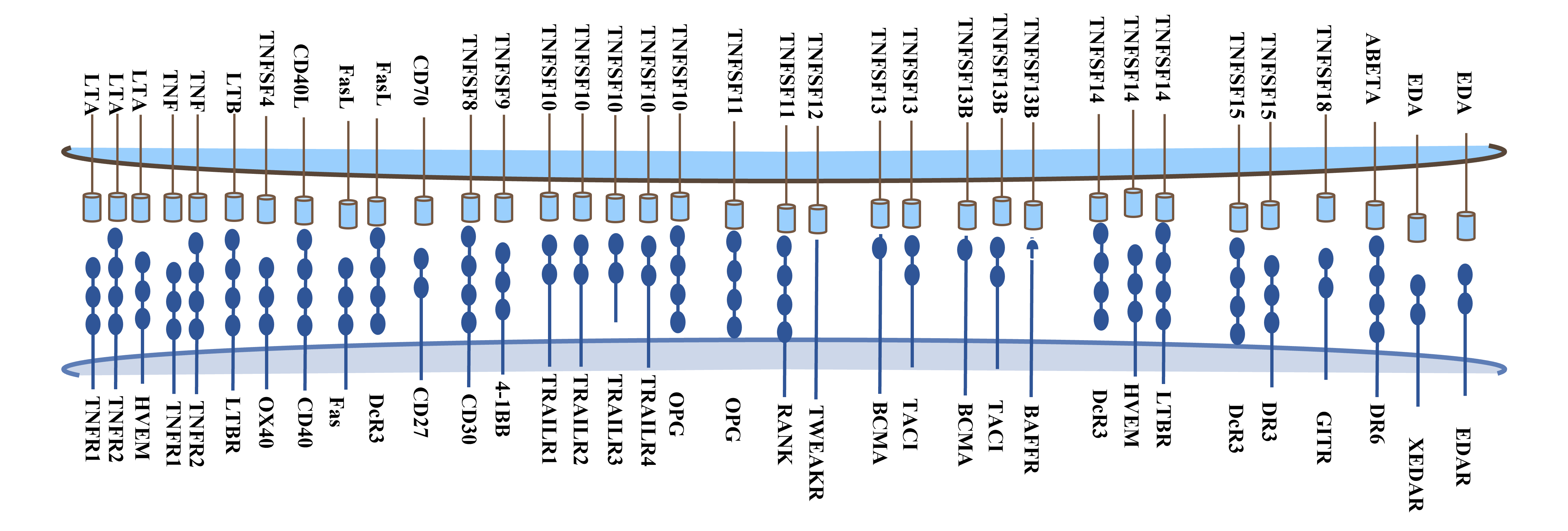
The ligands of the TNF superfamily mainly include TNF-α, TNF-β, lymphotoxin-β, CD40L, FasL, CD30L, 4-1BBL, CD27L, OX40L, TNF-related apoptosis-inducing ligand (TRAIL), LIGHT receptor activator of NF-kB ligand (RANKL), TNF-related apoptosis-inducing ligand (TWEAK), a proliferation-inducing ligand (APRIL), B-cell activating factor (BAFF), vascular endothelial growth inhibitor (VEGI), cytolysin A (EDA-A1, EDA-A2), and GITRL. Various immune and non-immune cell types can produce TNF, including macrophages, T cells, mast cells, granulocytes, natural killer (NK) cells, and non-hematopoietic cells, involved in processes such as host defense, inflammation, cell apoptosis, autoimmunity, and the development and organogenesis of the immune, ectoderm, and nervous systems.
The receptors of the TNF superfamily (TNFR) mainly include DR1, TNFR1, OX40, CD40, CD27, CD30, 4-1BB, BCMA, which are mainly transmembrane proteins. Almost all members of the TNF superfamily have pro-inflammatory activity, some activated through the NF-kB transcription factor. Some members activate various mitogen-activated protein kinases, exhibiting proliferative activity in hematopoietic cells, while others play a role in cell apoptosis.





| Product No. | Product Name | Target | Pre-order/order |
Tumor necrosis factor (TNF) was originally named for its ability to cause tumor tissue necrosis. The TNF superfamily now includes 19 ligands and 29 different receptors.
The ligands of the TNF superfamily mainly include TNF-α, TNF-β, lymphotoxin-β, CD40L, FasL, CD30L, 4-1BBL, CD27L, OX40L, TNF-related apoptosis-inducing ligand (TRAIL), LIGHT receptor activator of NF-kB ligand (RANKL), TNF-related apoptosis-inducing ligand (TWEAK), a proliferation-inducing ligand (APRIL), B-cell activating factor (BAFF), vascular endothelial growth inhibitor (VEGI), cytolysin A (EDA-A1, EDA-A2), and GITRL. Various immune and non-immune cell types can produce TNF, including macrophages, T cells, mast cells, granulocytes, natural killer (NK) cells, and non-hematopoietic cells, involved in processes such as host defense, inflammation, cell apoptosis, autoimmunity, and the development and organogenesis of the immune, ectoderm, and nervous systems.
The receptors of the TNF superfamily (TNFR) mainly include DR1, TNFR1, OX40, CD40, CD27, CD30, 4-1BB, BCMA, which are mainly transmembrane proteins. Almost all members of the TNF superfamily have pro-inflammatory activity, some activated through the NF-kB transcription factor. Some members activate various mitogen-activated protein kinases, exhibiting proliferative activity in hematopoietic cells, while others play a role in cell apoptosis.
| Product No. | Product Name | Target | Pre-order/order |