Metabolism is a highly coordinated network of biochemical pathways that governs energy production, nutrient utilization, biosynthesis, and cellular homeostasis. Metabolic signaling integrates inputs from hormones, growth factors, and nutrient availability to regulate processes such as glucose metabolism, lipid metabolism, amino acid turnover, mitochondrial function, and energy balance.
Disruptions in metabolic pathways are closely associated with various physiological imbalances and cellular dysregulations. As metabolic control involves complex interactions among multiple pathways and cell types, reliable in vitro models are essential for mechanistic studies and target identification. To support efficient and reproducible research, we provide both metabolism-related expression cell lines and reporter cell lines, enabling robust evaluation of metabolic signaling and cellular responses.
Key Advantages:
|
High Stability and Reproducibility
Monoclonal cell lines with high stability Proven passaging stability (≥20 passages) Consistent functional validation results
|
Extensive Experience
400+ target-specific cell lines developed 1,500+ monoclonal cell lines established 200+ target validation projects completed
|





| Product No. | Product Name | Gene | Pre-order/order |
|
Signaling Pathway |
Stability |
|
|
|
|
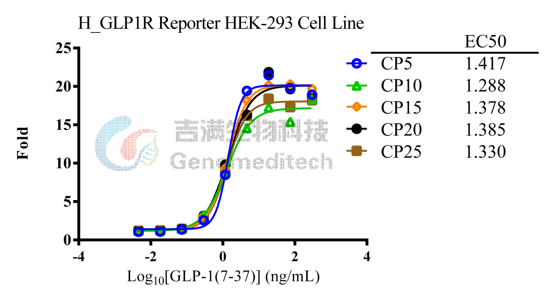
The H_GLP1R Reporter HEK-293 Cell Line (GM-C25537) response to GLP-1(7-37). |
The passage stability of H_GLP1R Reporter HEK-293 Cell Line (GM-C25537) response to GLP-1(7-37). |
|
|
|
|
Applications |
Expression |
|
|
|
|
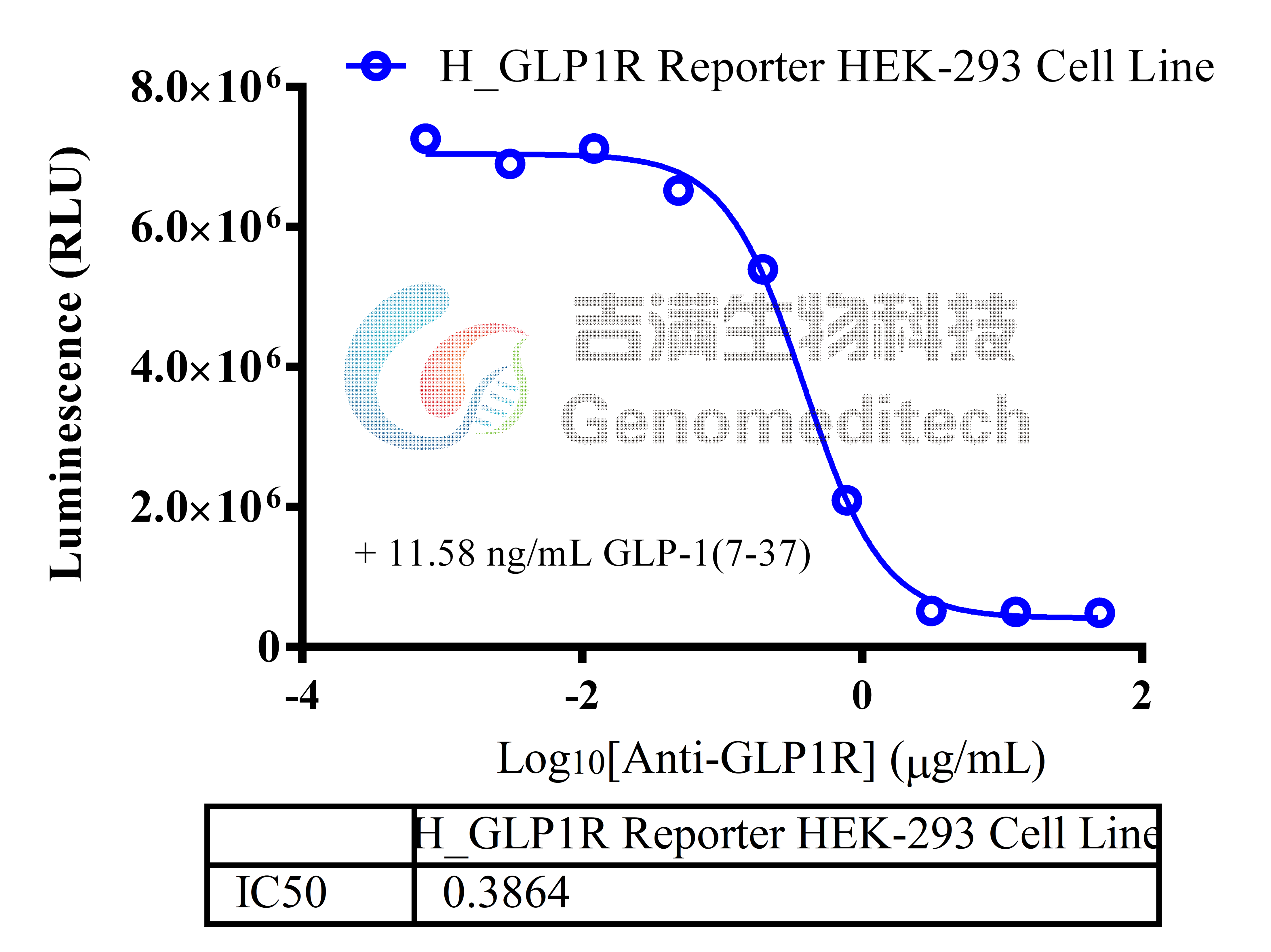
H_GLP1R Reporter HEK-293 Cell Line (GM-C25537) Response to Anti-GLP1R hIgG1 Antibody. |
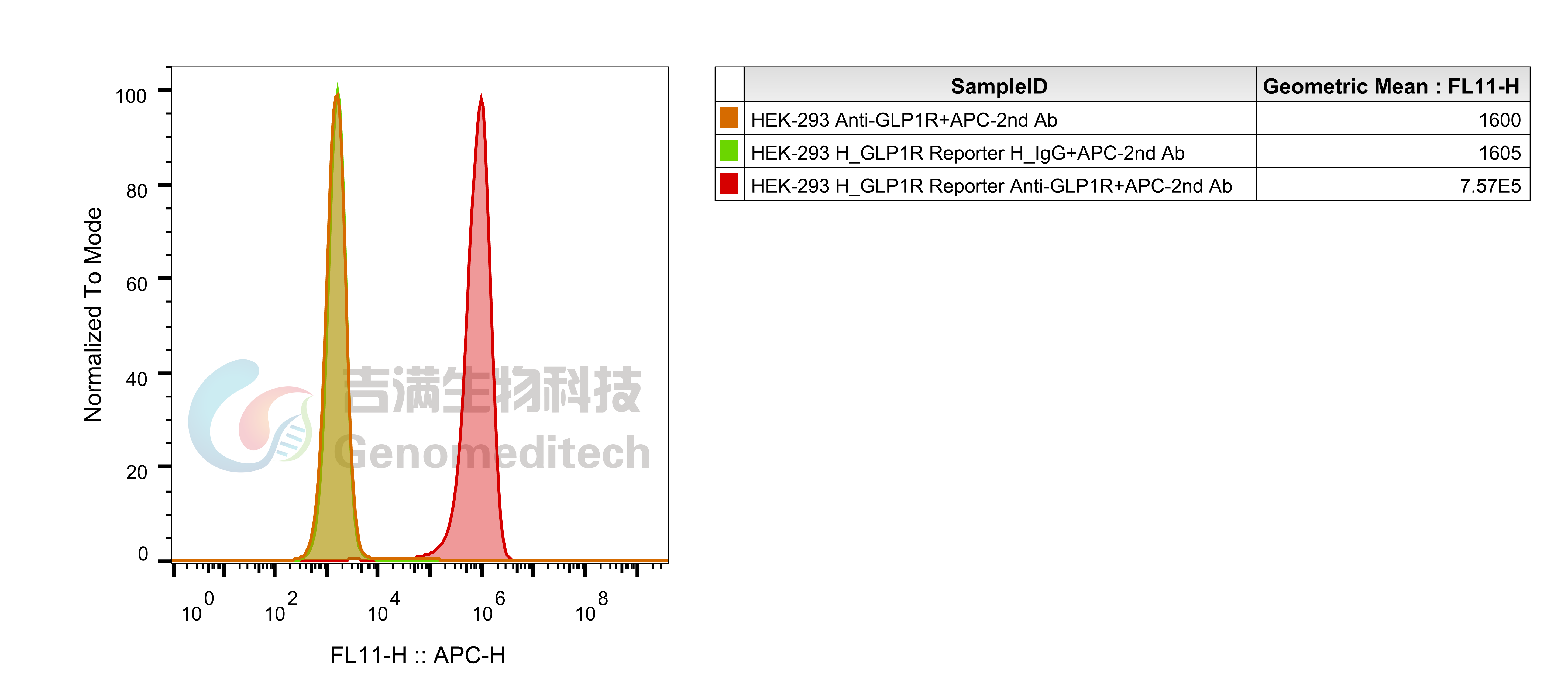
H_GLP1R Reporter HEK-293 Cell Line (GM-C25537) was determined by flow cytometry using Anti-GLP1R hIgG1 Antibody (Cat. GM-51168AB). |

Metabolism is a highly coordinated network of biochemical pathways that governs energy production, nutrient utilization, biosynthesis, and cellular homeostasis. Metabolic signaling integrates inputs from hormones, growth factors, and nutrient availability to regulate processes such as glucose metabolism, lipid metabolism, amino acid turnover, mitochondrial function, and energy balance.
Disruptions in metabolic pathways are closely associated with various physiological imbalances and cellular dysregulations. As metabolic control involves complex interactions among multiple pathways and cell types, reliable in vitro models are essential for mechanistic studies and target identification. To support efficient and reproducible research, we provide both metabolism-related expression cell lines and reporter cell lines, enabling robust evaluation of metabolic signaling and cellular responses.
Key Advantages:
|
High Stability and Reproducibility
Monoclonal cell lines with high stability Proven passaging stability (≥20 passages) Consistent functional validation results
|
Extensive Experience
400+ target-specific cell lines developed 1,500+ monoclonal cell lines established 200+ target validation projects completed
|
| Product No. | Product Name | Gene | Pre-order/order |
|
Signaling Pathway |
Stability |
|
|
|
|
The H_GLP1R Reporter HEK-293 Cell Line (GM-C25537) response to GLP-1(7-37). |
The passage stability of H_GLP1R Reporter HEK-293 Cell Line (GM-C25537) response to GLP-1(7-37). |
|
|
|
|
Applications |
Expression |
|
|
|
|
H_GLP1R Reporter HEK-293 Cell Line (GM-C25537) Response to Anti-GLP1R hIgG1 Antibody. |
H_GLP1R Reporter HEK-293 Cell Line (GM-C25537) was determined by flow cytometry using Anti-GLP1R hIgG1 Antibody (Cat. GM-51168AB). |