




Where Discovery Begins
Insights
Press Release
Current position:News > Press Release
Genomeditech Cellorigen™ Platform | Bridging AI Molecular Design and Biological Validation Through Cell-Based Evidence
Genomeditech
2026-11-18

During early-stage biologics discovery, an increasing number of candidate molecules require functional validation at the cellular level. Traditional development workflows involving cell engineering, clone selection, and assay development can be time-consuming and technically demanding, while the rapid adoption of AI-driven drug discovery (AIDD) has further increased the need to bridge the gap between in silico predictions and actual biological activity.


Genomeditech focuses on early-stage biologics discovery and cell model development, with expertise in recombinant proteins, antibody development, cell line engineering, and cell-based functional evaluation. We provide integrated services ranging from plasmid construction and lentiviral packaging to ready-to-use cell lines, custom cell model development, and cell-based functional assays.


Building on years of experience in cell model development and functional assays, Genomeditech introduces the Cellorigen™ Cell Validation Platform. The platform integrates 2,000+ ready-to-use cell lines, custom cell engineering capabilities, and comprehensive cell-based functional assay services, connecting AI-driven molecular design with experimental validation in living cells.


The name Cellorigen™ combines Cell and Origen (origin), reflecting the philosophy of "Trace the Origin of Cell". Through standardized cell models and quantitative functional evaluation, Cellorigen™ translates AI-generated molecular predictions into measurable, comparable, and traceable biological data, providing experimental evidence to support early-stage drug discovery.


Three Core Capabilities of Cellorigen™


Cell Models | Ready-to-Use Standardized Cell Models for High-Throughput Candidate Screening


The Cellorigen™ cell bank covers nearly 400 popular immunological targets and incorporates luciferase reporter systems such as NFAT and IL-2, providing standardized cell-based functional screening and activity evaluation for AI-designed molecules.


  • Ready to Use: Monoclonal cell lines with stable passage performance and minimal batch-to-batch variation, accompanied by EC50 curves.
  • Commercial Licensing Support: Genomeditech offers commercially authorized HEK293, CHO-K1, and Jurkat cell systems, backed by established licensing agreements and support for customers' downstream commercial-use requirements.
  • Expandable Target Coverage: For targets not covered by the existing portfolio, custom cell models can be developed within the same platform, maintaining consistent assay systems and readout principles.


A high prediction score does not necessarily translate into biological activity. Many highly ranked candidates may demonstrate predicted binding but lack the ability to activate intracellular signaling pathways.


Cellorigen™ helps validate AI predictions and identify false-positive candidates, providing functional evidence to support more reliable molecular design.


Functional Assays | Functional Activity Assessment Through Cell-Based Readouts

The value of a cell model extends beyond the delivery of cells. What ultimately determines the potential of a candidate molecule is the functional response revealed by the cells.


Built on the Cellorigen™ cell model platform, we provide comprehensive cell-based assay services covering experimental design, cell plating and compound treatment, signal detection, dose-response curve fitting, and EC50/IC50 calculation. Each project is delivered with a complete functional evaluation report.


Our assay capabilities cover receptor activation, pathway inhibition and neutralization, costimulatory signaling, immune cell activation, and cytokine release.


  • Complete Service Delivery: From assay design and treatment to signal detection, data fitting, and reporting, without the need to establish an in-house assay system.
  • Comparable Results: Parallel evaluation of multiple candidates using the same cell models and reagent batches under consistent experimental conditions.
  • Consistent Quality Standards: Ready-to-use and custom-engineered cell models follow the same underlying assay systems and unified quality control standards.


Data Quality & Validation | Consistent Quality Control for Reliable Data Feedback

All Cellorigen™ cell models undergo multiple layers of quality control, including target expression, signaling responsiveness, background signal, and reproducibility testing. Each cell line is supplied with a comprehensive validation report.


Every assay generates standardized, archived datasets, including raw signals, dose-response curves, EC50/IC50 values, replicate measurements, and reproducibility data. These datasets can serve directly as labeled samples for subsequent model refinement and iteration.


AI algorithms generate hypotheses. Cellorigen™ provides experimental evidence.


AIDD Expands the Frontiers of Molecular Discovery.

Celorigen Turns Scientific Predictions into Biological Evidence.


Case Study 

Case Study 1 | ADC / Fc-Engineered Antibodies

Quantitative ADCC Effector Function Assessment


GM-C05619 FcγRIIIa (158V) Reporter Jurkat
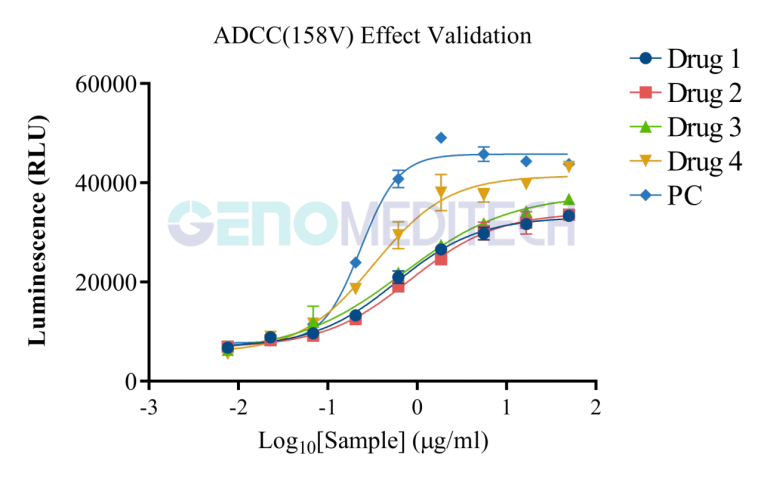
Stable expression of FcγRIIIa and NFAT-Luc enables quantitative assessment of antibody-dependent cellular cytotoxicity (ADCC).


Wide Assay Window | EC50 Quantification | Comparative Potency Assessment

Supports functional assessment of ADCC, ADCP, CDC, and internalization for ADC and Fc-engineered antibody candidates.


Case Study 2 | Tumor-Targeting Bispecific Antibodies

CTLA-4 / PD-1 Dual-Pathway Blockade Activity


GM-C26486 H_CTLA4 PD-1 Reporter + GM-C30574 H_CD80 PDL1 aAPC CHO-K1
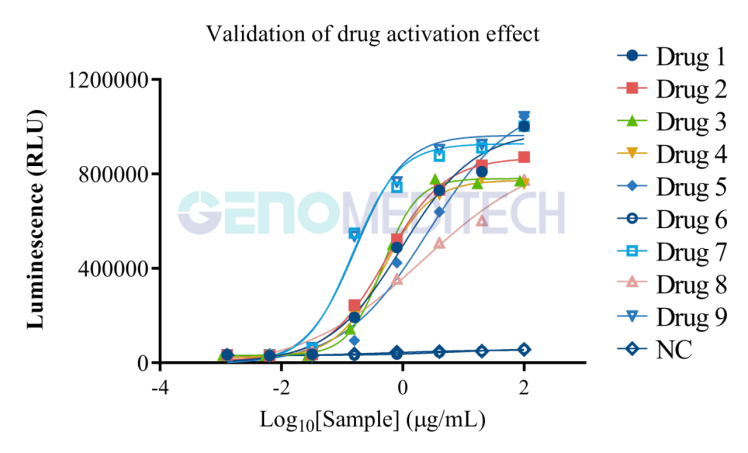
Paired reporter and aAPC cells enable quantitative assessment of immune checkpoint blockade activity in monoclonal antibodies, bispecific antibodies, and combination treatments.


Low Background | Wide Assay Window | EC50 Quantification

Supports multi-pathway immune checkpoint evaluation and functional characterization of T-cell engager (TCE) molecules.


Case Study 3 | Conditional Immune Agonists

Functional Evaluation of PD-1–IL-2v Fusion Proteins


GM-C41979 H_CD25 CD122 CD132 PD1 Reporter Jurkat
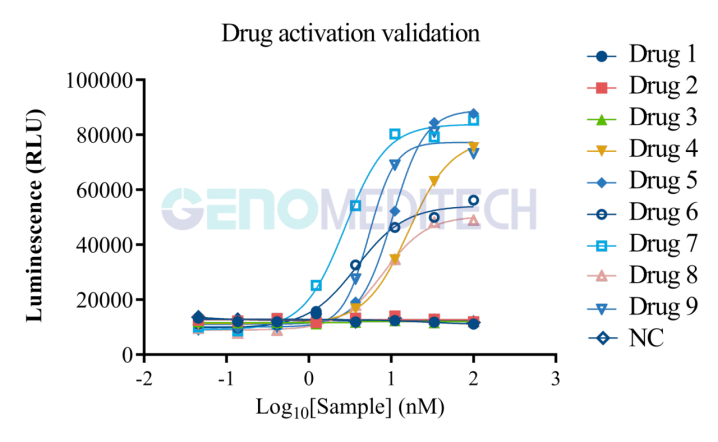
Co-expression of PD-1 and the complete IL-2 receptor complex enables evaluation of PD-1-dependent immune activation.


Low Background | Target-Specific Validation | EC50 Quantification

A PD-1-negative parental control enables differentiation between target-dependent and nonspecific activation.


Case Study 4 | Autoimmune / Inflammatory Drug Candidates

DR3 / TL1A Pathway Antagonist Activity Assessment


GM-C30290 H_TNFRSF25 (DR3) Reporter Jurkat
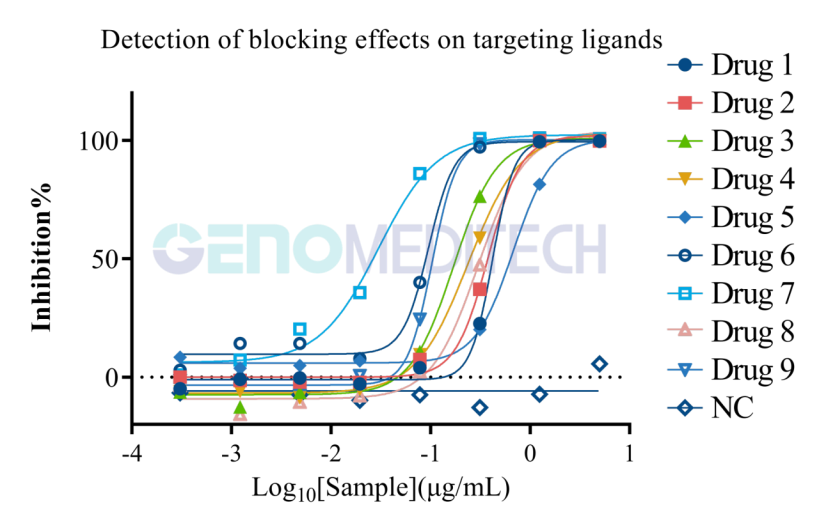
Stable expression of DR3 and a luciferase reporter enables both agonist activity screening and antagonist blockade assessment in a single cell model.


Wide Assay Window | IC50 Quantification | High Inter-Batch Reproducibility

Supports functional characterization of agonists and antagonists targeting OX40/OX40L, TSLP, TL1A/DR3, and other immune signaling pathways.


Case Study 5 | Weight Management / Metabolic Drug Candidates

Multi-Target GPCR Agonist Activity Assessment


GM-C25536 H_GIPR Reporter CHO-K1
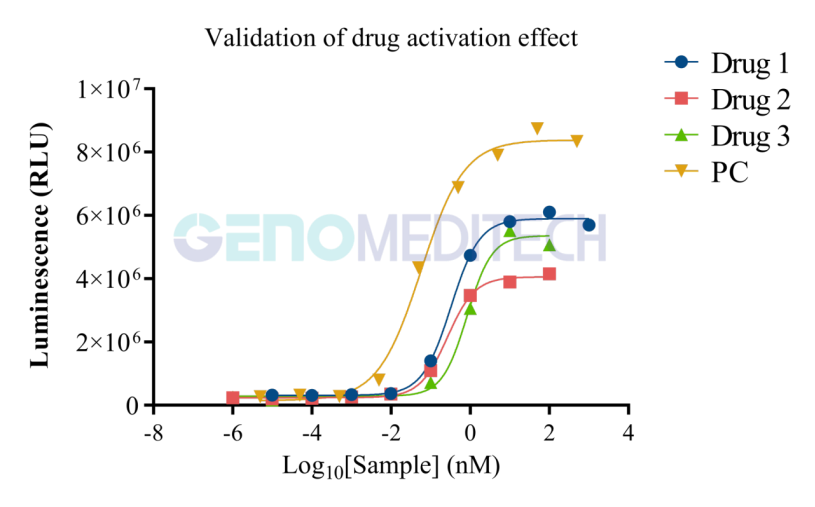
Stable expression of GIPR and CRE-Luc enables quantitative assessment of GPCR-mediated receptor activation.


Wide Assay Window | EC50 Quantification | Comparative Receptor Activation

Enables potency and selectivity profiling of single, dual, and triple agonists targeting GLP-1R, GIPR, and GCGR.


Genomeditech | Cellorigen™ Cell Validation Platform


By combining standardized cell models with comprehensive cell-based functional assays, Cellorigen™ delivers reproducible functional data to support AIDD-driven discovery and the development of biologics and candidates.


AI-Driven Design → Functional Characterization → Model Iteration


Cellorigen™ by Genomeditech — Bridging Molecular Design and Biological Validation.

Current position:News > Press Release
classify
Genomeditech Cellorigen™ Platform | Bridging AI Molecular Design and Biological Validation Through Cell-Based Evidence
Genomeditech
2026-11-18

During early-stage biologics discovery, an increasing number of candidate molecules require functional validation at the cellular level. Traditional development workflows involving cell engineering, clone selection, and assay development can be time-consuming and technically demanding, while the rapid adoption of AI-driven drug discovery (AIDD) has further increased the need to bridge the gap between in silico predictions and actual biological activity.


Genomeditech focuses on early-stage biologics discovery and cell model development, with expertise in recombinant proteins, antibody development, cell line engineering, and cell-based functional evaluation. We provide integrated services ranging from plasmid construction and lentiviral packaging to ready-to-use cell lines, custom cell model development, and cell-based functional assays.


Building on years of experience in cell model development and functional assays, Genomeditech introduces the Cellorigen™ Cell Validation Platform. The platform integrates 2,000+ ready-to-use cell lines, custom cell engineering capabilities, and comprehensive cell-based functional assay services, connecting AI-driven molecular design with experimental validation in living cells.


The name Cellorigen™ combines Cell and Origen (origin), reflecting the philosophy of "Trace the Origin of Cell". Through standardized cell models and quantitative functional evaluation, Cellorigen™ translates AI-generated molecular predictions into measurable, comparable, and traceable biological data, providing experimental evidence to support early-stage drug discovery.


Three Core Capabilities of Cellorigen™


Cell Models | Ready-to-Use Standardized Cell Models for High-Throughput Candidate Screening


The Cellorigen™ cell bank covers nearly 400 popular immunological targets and incorporates luciferase reporter systems such as NFAT and IL-2, providing standardized cell-based functional screening and activity evaluation for AI-designed molecules.


  • Ready to Use: Monoclonal cell lines with stable passage performance and minimal batch-to-batch variation, accompanied by EC50 curves.
  • Commercial Licensing Support: Genomeditech offers commercially authorized HEK293, CHO-K1, and Jurkat cell systems, backed by established licensing agreements and support for customers' downstream commercial-use requirements.
  • Expandable Target Coverage: For targets not covered by the existing portfolio, custom cell models can be developed within the same platform, maintaining consistent assay systems and readout principles.


A high prediction score does not necessarily translate into biological activity. Many highly ranked candidates may demonstrate predicted binding but lack the ability to activate intracellular signaling pathways.


Cellorigen™ helps validate AI predictions and identify false-positive candidates, providing functional evidence to support more reliable molecular design.


Functional Assays | Functional Activity Assessment Through Cell-Based Readouts

The value of a cell model extends beyond the delivery of cells. What ultimately determines the potential of a candidate molecule is the functional response revealed by the cells.


Built on the Cellorigen™ cell model platform, we provide comprehensive cell-based assay services covering experimental design, cell plating and compound treatment, signal detection, dose-response curve fitting, and EC50/IC50 calculation. Each project is delivered with a complete functional evaluation report.


Our assay capabilities cover receptor activation, pathway inhibition and neutralization, costimulatory signaling, immune cell activation, and cytokine release.


  • Complete Service Delivery: From assay design and treatment to signal detection, data fitting, and reporting, without the need to establish an in-house assay system.
  • Comparable Results: Parallel evaluation of multiple candidates using the same cell models and reagent batches under consistent experimental conditions.
  • Consistent Quality Standards: Ready-to-use and custom-engineered cell models follow the same underlying assay systems and unified quality control standards.


Data Quality & Validation | Consistent Quality Control for Reliable Data Feedback

All Cellorigen™ cell models undergo multiple layers of quality control, including target expression, signaling responsiveness, background signal, and reproducibility testing. Each cell line is supplied with a comprehensive validation report.


Every assay generates standardized, archived datasets, including raw signals, dose-response curves, EC50/IC50 values, replicate measurements, and reproducibility data. These datasets can serve directly as labeled samples for subsequent model refinement and iteration.


AI algorithms generate hypotheses. Cellorigen™ provides experimental evidence.


AIDD Expands the Frontiers of Molecular Discovery.

Celorigen Turns Scientific Predictions into Biological Evidence.


Case Study 

Case Study 1 | ADC / Fc-Engineered Antibodies

Quantitative ADCC Effector Function Assessment


GM-C05619 FcγRIIIa (158V) Reporter Jurkat

Stable expression of FcγRIIIa and NFAT-Luc enables quantitative assessment of antibody-dependent cellular cytotoxicity (ADCC).


Wide Assay Window | EC50 Quantification | Comparative Potency Assessment

Supports functional assessment of ADCC, ADCP, CDC, and internalization for ADC and Fc-engineered antibody candidates.


Case Study 2 | Tumor-Targeting Bispecific Antibodies

CTLA-4 / PD-1 Dual-Pathway Blockade Activity


GM-C26486 H_CTLA4 PD-1 Reporter + GM-C30574 H_CD80 PDL1 aAPC CHO-K1

Paired reporter and aAPC cells enable quantitative assessment of immune checkpoint blockade activity in monoclonal antibodies, bispecific antibodies, and combination treatments.


Low Background | Wide Assay Window | EC50 Quantification

Supports multi-pathway immune checkpoint evaluation and functional characterization of T-cell engager (TCE) molecules.


Case Study 3 | Conditional Immune Agonists

Functional Evaluation of PD-1–IL-2v Fusion Proteins


GM-C41979 H_CD25 CD122 CD132 PD1 Reporter Jurkat

Co-expression of PD-1 and the complete IL-2 receptor complex enables evaluation of PD-1-dependent immune activation.


Low Background | Target-Specific Validation | EC50 Quantification

A PD-1-negative parental control enables differentiation between target-dependent and nonspecific activation.


Case Study 4 | Autoimmune / Inflammatory Drug Candidates

DR3 / TL1A Pathway Antagonist Activity Assessment


GM-C30290 H_TNFRSF25 (DR3) Reporter Jurkat

Stable expression of DR3 and a luciferase reporter enables both agonist activity screening and antagonist blockade assessment in a single cell model.


Wide Assay Window | IC50 Quantification | High Inter-Batch Reproducibility

Supports functional characterization of agonists and antagonists targeting OX40/OX40L, TSLP, TL1A/DR3, and other immune signaling pathways.


Case Study 5 | Weight Management / Metabolic Drug Candidates

Multi-Target GPCR Agonist Activity Assessment


GM-C25536 H_GIPR Reporter CHO-K1

Stable expression of GIPR and CRE-Luc enables quantitative assessment of GPCR-mediated receptor activation.


Wide Assay Window | EC50 Quantification | Comparative Receptor Activation

Enables potency and selectivity profiling of single, dual, and triple agonists targeting GLP-1R, GIPR, and GCGR.


Genomeditech | Cellorigen™ Cell Validation Platform


By combining standardized cell models with comprehensive cell-based functional assays, Cellorigen™ delivers reproducible functional data to support AIDD-driven discovery and the development of biologics and candidates.


AI-Driven Design → Functional Characterization → Model Iteration


Cellorigen™ by Genomeditech — Bridging Molecular Design and Biological Validation.

Contact
Us
Message Inquiry
reset
submit
Message
Message Inquiry
reset
submit