






Anti-H_CCR4 hIgG1 Antibody(Mogamulizumab)
Cat. No.
GM-23370AB
Size
10 μg
100 μg
1 mg
Quote
Data display
Description️
Related products
Data display
Flow cytometry
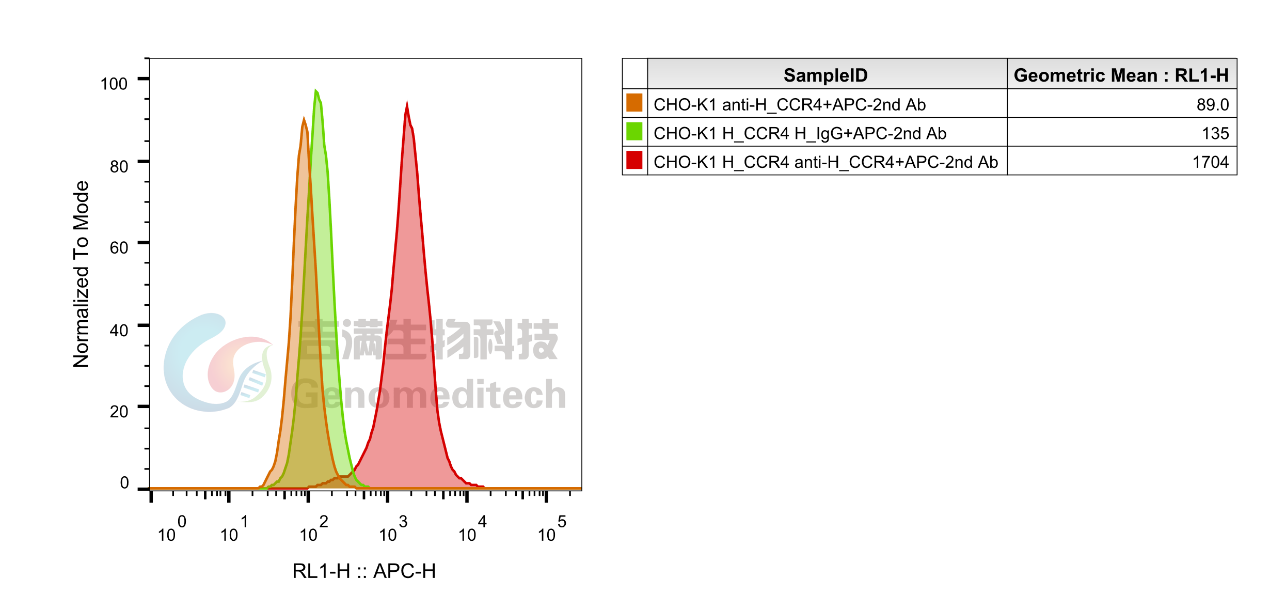
The recommended usage range is 0.5-4 μg per test. H_CCR4 CHO-K1 Cell Line(Catalog # GM-C03235) was stained with Anti-H_CCR4 hIgG1 Antibody (Catalog # GM-23370AB) or isotype control antibody, followed by anti-Human IgG APC-conjugated Secondary Antibody.
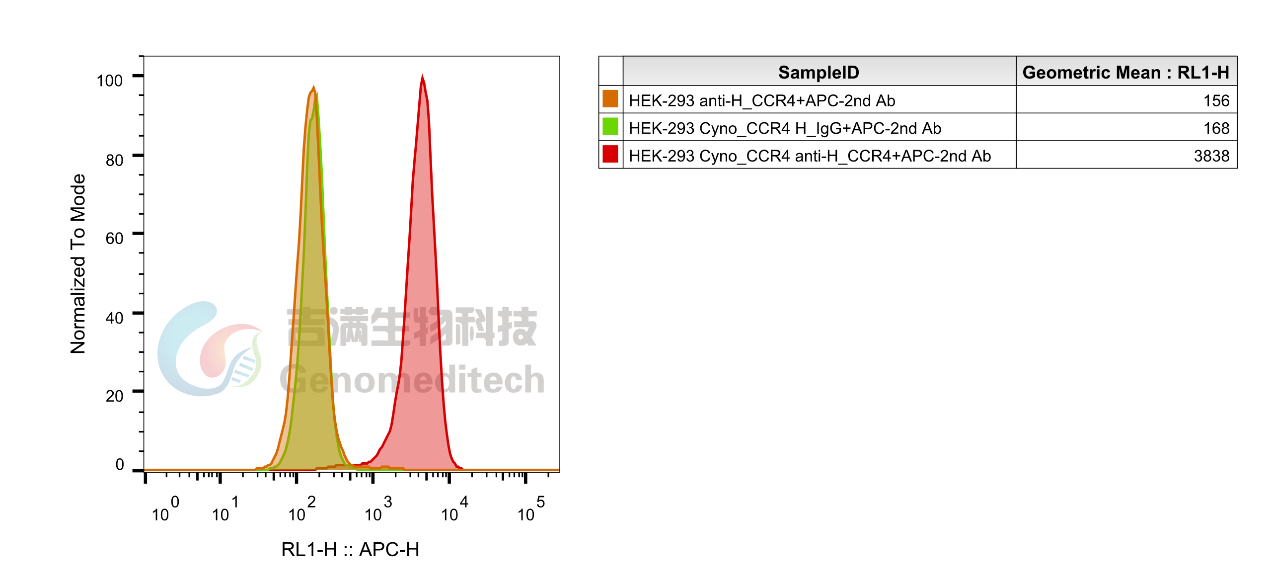
The recommended usage range is 0.5-4 μg per test. Cynomolgus_CCR4 HEK-293 Cell Line was(Catalog # GM-C24421) stained with Anti-H_CCR4 hIgG1 Antibody (Catalog # GM-23370AB) or isotype control antibody, followed by anti-Human IgG APC-conjugated Secondary Antibody .
Description️
Species Reactivity Human; Cynomolgus
Clone Mogamulizumab
Source/Isotype Monoclonal human IgG1
Application Flow cytometry
Specificity Detects CCR4
Gene CCR4
Other Names CC-CKR-4, CD194, CKR4, CMKBR4, ChemR13, HGCN:14099, K5-5
Gene ID P51679 (human); G7NYB7-1 (Cynomolgus)
Background CCR4 is a G protein-linked seven transmembrane domain chemokine receptor for the CC chemokine - MIP-1, RANTES, TARC and MCP-1. Chemokines are a group of small polypeptide, structurally related molecules that regulate cell trafficking of various types of leukocytes. The chemokines also play fundamental roles in the development, homeostasis, and function of the immune system, and they have effects on cells of the central nervous system as well as on endothelial cells involved in angiogenesis or angiostasis. CCR4 is often expressed on leukemic cells in cutaneous T-cell lymphoma (CTCL).
Storage Store at 2-8℃ short term (1-2 weeks).Store at ≤ -20℃ long term. Avoid repeated freeze-thaw.
Formulation Phosphate-buffered solution, pH 7.2.
Endotoxin < 1 EU/mg, determined by LAL gel clotting assay
Species Reactivity Human; Cynomolgus
Clone Mogamulizumab
Source/Isotype Monoclonal human IgG1
Application Flow cytometry
Specificity Detects CCR4
Gene CCR4
Other Names CC-CKR-4, CD194, CKR4, CMKBR4, ChemR13, HGCN:14099, K5-5
Gene ID P51679 (human); G7NYB7-1 (Cynomolgus)
Background CCR4 is a G protein-linked seven transmembrane domain chemokine receptor for the CC chemokine - MIP-1, RANTES, TARC and MCP-1. Chemokines are a group of small polypeptide, structurally related molecules that regulate cell trafficking of various types of leukocytes. The chemokines also play fundamental roles in the development, homeostasis, and function of the immune system, and they have effects on cells of the central nervous system as well as on endothelial cells involved in angiogenesis or angiostasis. CCR4 is often expressed on leukemic cells in cutaneous T-cell lymphoma (CTCL).
Storage Store at 2-8℃ short term (1-2 weeks).Store at ≤ -20℃ long term. Avoid repeated freeze-thaw.
Formulation Phosphate-buffered solution, pH 7.2.
Endotoxin < 1 EU/mg, determined by LAL gel clotting assay
Related products
For laboratory research use only. Direct human use, including taking orally and injection and clinical use are forbidden.
Anti-H_CCR4 hIgG1 Antibody(Mogamulizumab)
Cat. No.
GM-23370AB
Size
10 μg
100 μg
1 mg
Quote
Data display
Description️
Related products
Data display
Flow cytometry
The recommended usage range is 0.5-4 μg per test. H_CCR4 CHO-K1 Cell Line(Catalog # GM-C03235) was stained with Anti-H_CCR4 hIgG1 Antibody (Catalog # GM-23370AB) or isotype control antibody, followed by anti-Human IgG APC-conjugated Secondary Antibody.
The recommended usage range is 0.5-4 μg per test. Cynomolgus_CCR4 HEK-293 Cell Line was(Catalog # GM-C24421) stained with Anti-H_CCR4 hIgG1 Antibody (Catalog # GM-23370AB) or isotype control antibody, followed by anti-Human IgG APC-conjugated Secondary Antibody .
Description️
Species Reactivity Human; Cynomolgus
Clone Mogamulizumab
Source/Isotype Monoclonal human IgG1
Application Flow cytometry
Specificity Detects CCR4
Gene CCR4
Other Names CC-CKR-4, CD194, CKR4, CMKBR4, ChemR13, HGCN:14099, K5-5
Gene ID P51679 (human); G7NYB7-1 (Cynomolgus)
Background CCR4 is a G protein-linked seven transmembrane domain chemokine receptor for the CC chemokine - MIP-1, RANTES, TARC and MCP-1. Chemokines are a group of small polypeptide, structurally related molecules that regulate cell trafficking of various types of leukocytes. The chemokines also play fundamental roles in the development, homeostasis, and function of the immune system, and they have effects on cells of the central nervous system as well as on endothelial cells involved in angiogenesis or angiostasis. CCR4 is often expressed on leukemic cells in cutaneous T-cell lymphoma (CTCL).
Storage Store at 2-8℃ short term (1-2 weeks).Store at ≤ -20℃ long term. Avoid repeated freeze-thaw.
Formulation Phosphate-buffered solution, pH 7.2.
Endotoxin < 1 EU/mg, determined by LAL gel clotting assay
Species Reactivity Human; Cynomolgus
Clone Mogamulizumab
Source/Isotype Monoclonal human IgG1
Application Flow cytometry
Specificity Detects CCR4
Gene CCR4
Other Names CC-CKR-4, CD194, CKR4, CMKBR4, ChemR13, HGCN:14099, K5-5
Gene ID P51679 (human); G7NYB7-1 (Cynomolgus)
Background CCR4 is a G protein-linked seven transmembrane domain chemokine receptor for the CC chemokine - MIP-1, RANTES, TARC and MCP-1. Chemokines are a group of small polypeptide, structurally related molecules that regulate cell trafficking of various types of leukocytes. The chemokines also play fundamental roles in the development, homeostasis, and function of the immune system, and they have effects on cells of the central nervous system as well as on endothelial cells involved in angiogenesis or angiostasis. CCR4 is often expressed on leukemic cells in cutaneous T-cell lymphoma (CTCL).
Storage Store at 2-8℃ short term (1-2 weeks).Store at ≤ -20℃ long term. Avoid repeated freeze-thaw.
Formulation Phosphate-buffered solution, pH 7.2.
Endotoxin < 1 EU/mg, determined by LAL gel clotting assay

Related products
Message consultation
reset
submit
Message
Message consultation
reset
submit