













| Expression System | CHO |
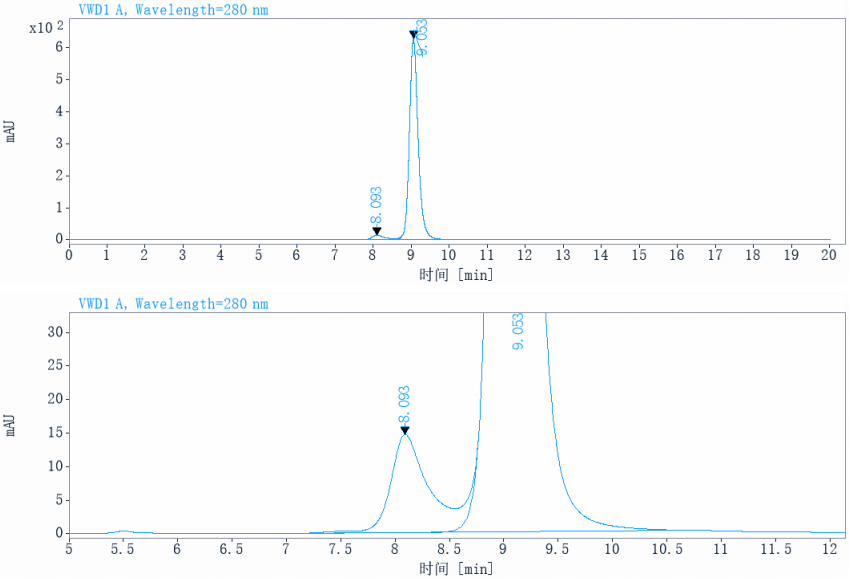
| Aggregation | < 5% as determined by SEC-HPLC |
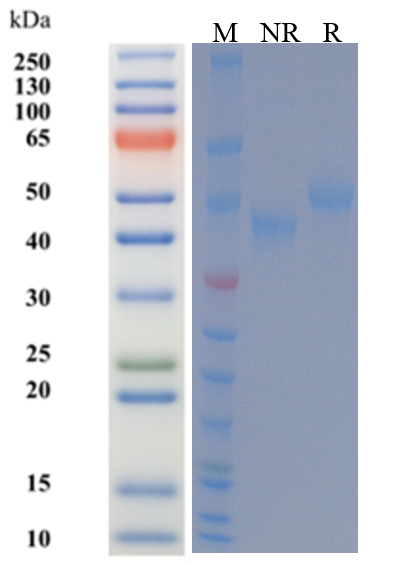
| Purity | > 95% as determined by SDS-PAGE |
| Endotoxin | < 1 EU/mg, determined by LAL gel clotting assay |
| Sterility | 0.22 μm Filtered |
| Target | CD3E、DLL3 |
| Clone | Tarlabio |
| Alternative Names | CD3E: FLJ18683, T3E, TCRE DLL3: Delta3, delta-like protein 3, SCDO1 |
| Source/Isotype | Human IgG1 Fc (R292C, N297G, V302C, D356E, L358M, G446-K447del; R292C, N297G, V302C, D356E, L358M) |
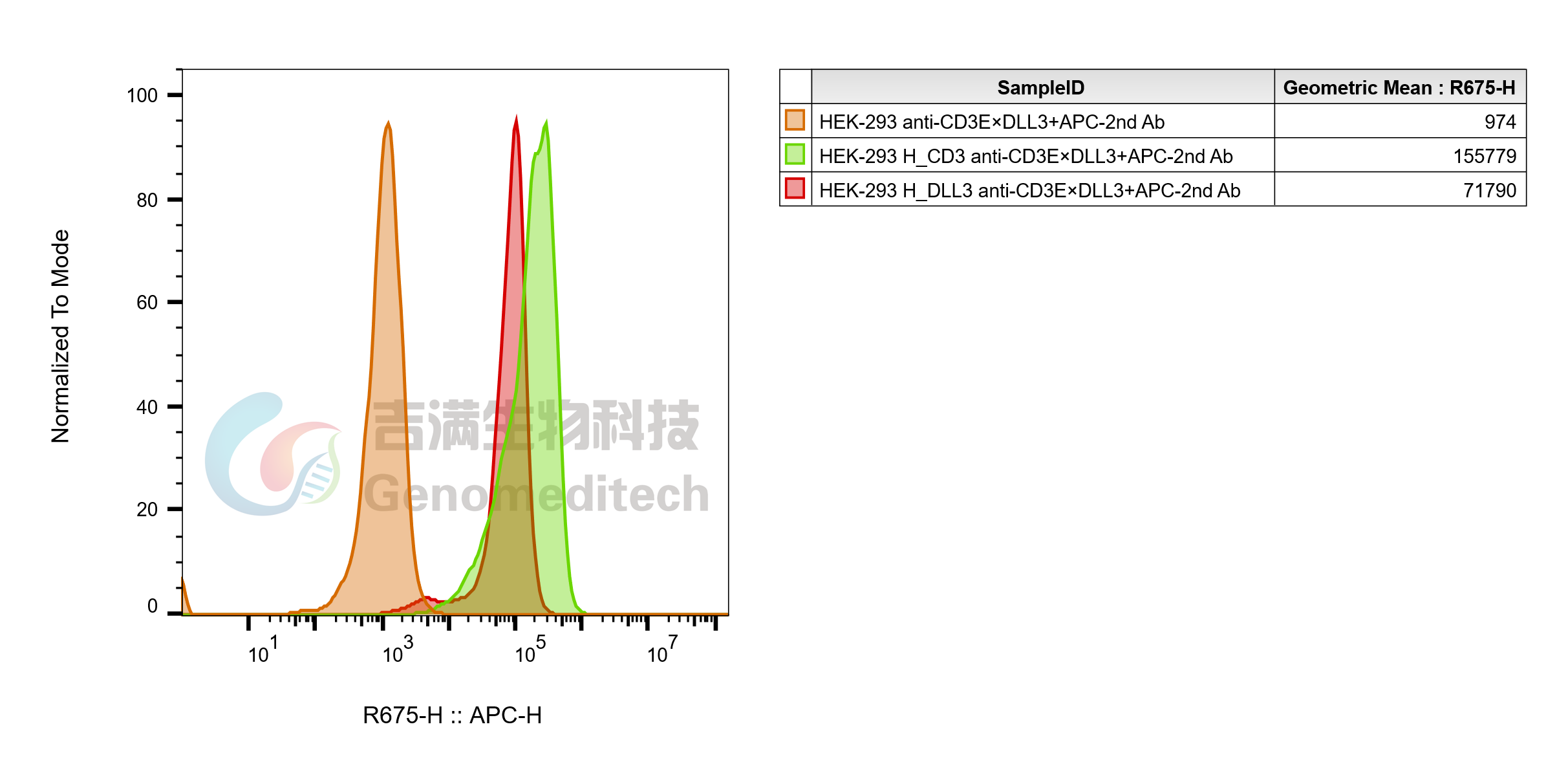
| Application | Flow Cytometry; Bioactivity-ELISA |
| Gene ID | CD3E: 916 (Human) DLL3: 10683 (Human) |
| Description | The research significance of the Anti-CD3E×DLL3 bispecific antibody lies in its potential to target DLL3, a tumor-associated antigen highly expressed on small cell lung cancer and other neuroendocrine tumors but minimally in normal tissues. This antibody simultaneously binds CD3E on T cells and DLL3 on tumor cells, redirecting T cells to the tumor site and activating their cytotoxic activity. This approach offers precise immunotherapy with enhanced antitumor efficacy, reduced off-target toxicity, and the ability to overcome resistance to existing immune checkpoint inhibitors. Thus, the Anti-CD3E×DLL3 antibody represents a novel targeted immunotherapy for DLL3-positive solid tumors with promising clinical translation potential. |
| Formulation | Phosphate-buffered solution, pH 7.2-7.4. |
| Expression System | CHO |
| Aggregation | < 5% as determined by SEC-HPLC |
| Purity | > 95% as determined by SDS-PAGE |
| Endotoxin | < 1 EU/mg, determined by LAL gel clotting assay |
| Sterility | 0.22 μm Filtered |
| Target | CD3E、DLL3 |
| Clone | Tarlabio |
| Alternative Names | CD3E: FLJ18683, T3E, TCRE DLL3: Delta3, delta-like protein 3, SCDO1 |
| Source/Isotype | Human IgG1 Fc (R292C, N297G, V302C, D356E, L358M, G446-K447del; R292C, N297G, V302C, D356E, L358M) |
| Application | Flow Cytometry; Bioactivity-ELISA |
| Gene ID | CD3E: 916 (Human) DLL3: 10683 (Human) |
| Description | The research significance of the Anti-CD3E×DLL3 bispecific antibody lies in its potential to target DLL3, a tumor-associated antigen highly expressed on small cell lung cancer and other neuroendocrine tumors but minimally in normal tissues. This antibody simultaneously binds CD3E on T cells and DLL3 on tumor cells, redirecting T cells to the tumor site and activating their cytotoxic activity. This approach offers precise immunotherapy with enhanced antitumor efficacy, reduced off-target toxicity, and the ability to overcome resistance to existing immune checkpoint inhibitors. Thus, the Anti-CD3E×DLL3 antibody represents a novel targeted immunotherapy for DLL3-positive solid tumors with promising clinical translation potential. |
| Formulation | Phosphate-buffered solution, pH 7.2-7.4. |