













| Alternative Names | FGF21 |
| Source | Human FGF-21 Protein; hFc Tag (GM-88661RP) is expressed from human 293 cells (HEK-293). It contains AA His 29 - Ser 209 (Accession # Q9NSA1). This protein carries a hFc tag at the N-terminus. |
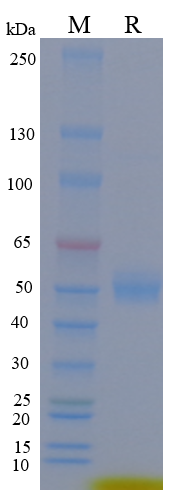
| Purity | > 90% as determined by SDS-PAGE |
| Endotoxin | < 1 EU/μg, determined by LAL gel clotting assay |
| Predicted Mol Mass | 46.2 kDa |
| Formulation | Supplied as a 0.2 μm filtered solution of PBS, pH 7.2–7.4. |
| Description | FGF21 (Fibroblast Growth Factor 21) is a protein that is mainly expressed in the liver, adipose tissue, and muscle, and belongs to the fibroblast growth factor family. It plays an important role in regulating energy metabolism, glucose metabolism, and fatty acid oxidation, promoting the oxidation of fatty acids and inhibiting fat synthesis, thus helping to maintain energy balance in the body. FGF21 is also believed to have potential therapeutic effects against diabetes, impacting weight control by improving insulin sensitivity and suppressing appetite. In recent years, with in-depth research into its physiological functions and clinical applications, FGF21 has shown great potential in the treatment of metabolic diseases such as diabetes and obesity. |
| Alternative Names | FGF21 |
| Source | Human FGF-21 Protein; hFc Tag (GM-88661RP) is expressed from human 293 cells (HEK-293). It contains AA His 29 - Ser 209 (Accession # Q9NSA1). This protein carries a hFc tag at the N-terminus. |
| Purity | > 90% as determined by SDS-PAGE |
| Endotoxin | < 1 EU/μg, determined by LAL gel clotting assay |
| Predicted Mol Mass | 46.2 kDa |
| Formulation | Supplied as a 0.2 μm filtered solution of PBS, pH 7.2–7.4. |
| Description | FGF21 (Fibroblast Growth Factor 21) is a protein that is mainly expressed in the liver, adipose tissue, and muscle, and belongs to the fibroblast growth factor family. It plays an important role in regulating energy metabolism, glucose metabolism, and fatty acid oxidation, promoting the oxidation of fatty acids and inhibiting fat synthesis, thus helping to maintain energy balance in the body. FGF21 is also believed to have potential therapeutic effects against diabetes, impacting weight control by improving insulin sensitivity and suppressing appetite. In recent years, with in-depth research into its physiological functions and clinical applications, FGF21 has shown great potential in the treatment of metabolic diseases such as diabetes and obesity. |