Toll-like receptors (TLRs) are a superfamily of single-pass transmembrane receptors that belong to the pattern recognition receptor (PRR). The name originates from the Toll gene first discovered in drosophila melanogaster in 1985. TLRs serve as the first line of defense in the human innate immune system. Functioning as the sensors, TLRs can recognize foreign pathogens or endogenous danger signals, rapidly activating defensive inflammatory responses within minutes to hours.
Structure and Classification
All TLRs are transmembrane proteins consisting of three components: an extracellular domain rich in leucine-rich repeats (recognizing specific pathogens), a transmembrane domain, and an intracellular Toll-IL-1R domain (initiating intracellular signal transduction). To date, more than 10 types of TLRs have been identified in mammals, with 10 TLR family members definitively characterized in humans. TLRs can recognize exogenous pathogen-associated molecular patterns (PAMPs) and endogenous damage-associated molecular patterns (DAMPs), with each TLR executing a distinct function in immune responses.
Based on their localization, TLRs are primarily divided into two major categories:
● Cell Surface TLRs: These include TLR1, TLR2, TLR4, TLR5, TLR6, and TLR10, which are responsible for recognizing microbial membrane components such as lipids, lipoproteins, and proteins.
● Intracellular TLRs: These include TLR3, TLR7, TLR8, and TLR9, which are dedicated to recognizing microbial nucleic acids (such as viral RNA and DNA).
We provide:
Genomeditech has launched a comprehensive series of highly efficient and reliable TLR-stable cell lines.
Leveraging our advanced molecular engineering technologies, our products offer the following core advantages
|
● Comprehensive Target Coverage: Broad selection of targets spanning various species. ● Exceptional Stability: Robust performance maintained even across high passage numbers. |
● In-Stock & Ready-to-Use: Rapid shipping directly from inventory to significantly shorten your R&D timelines. ● Stringent Quality Control Standards: Rigorously tested to ensure maximum consistency and reliability. |





| Product No. | Product Name | Gene | Pre-order/order |
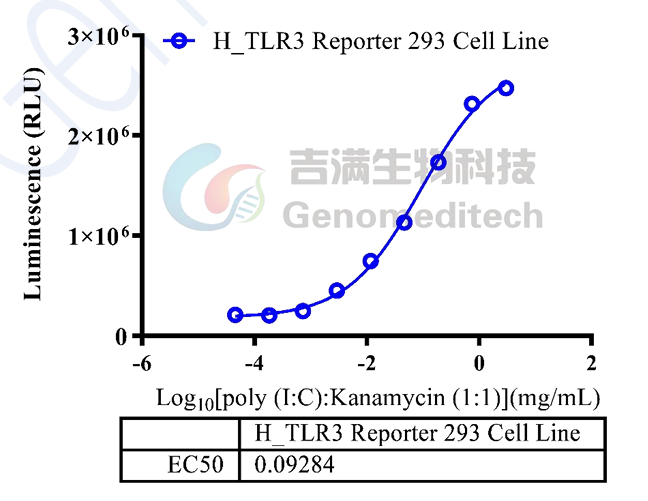
H_TLR3 Reporter 293 Cell Line can be utilized to evaluate the in vitro efficacy of dsRNA targeting TLR3
|
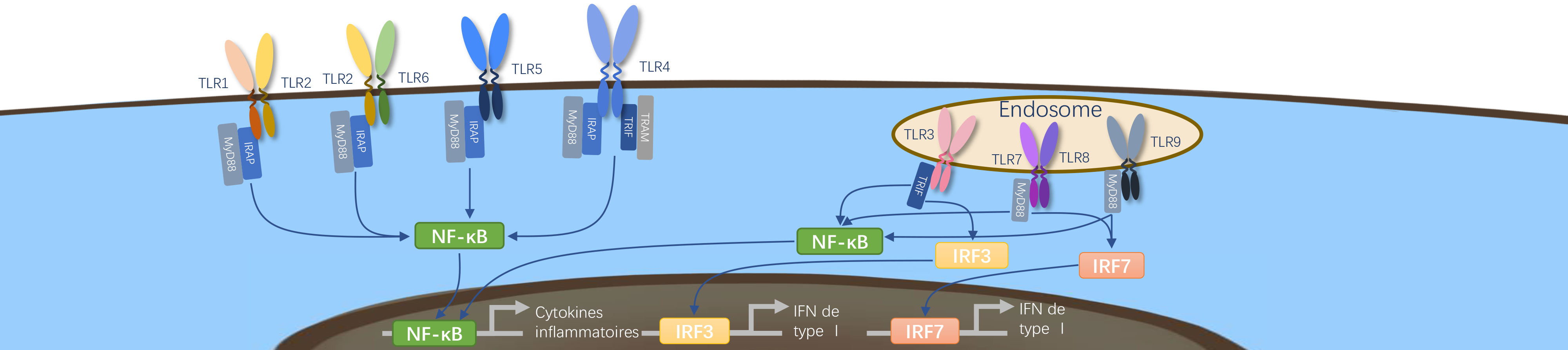
Signaling Pathway
|
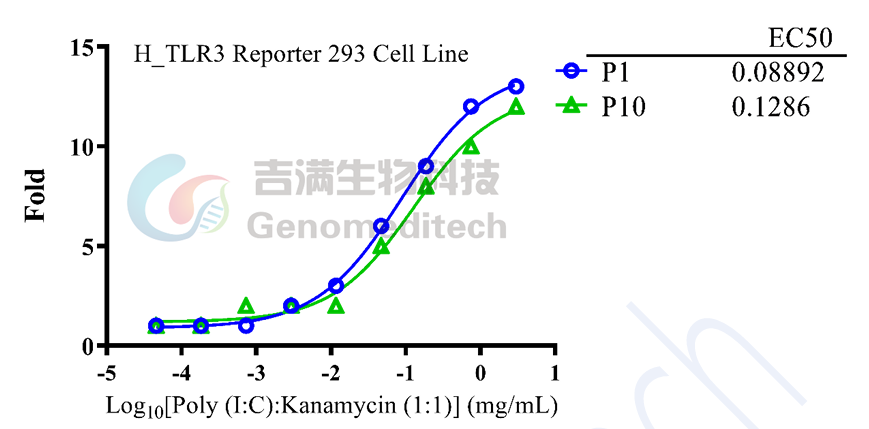
Stability
|
Mouse_TLR9 Reporter 293 Cell Line can be utilized to evaluate the in vitro efficacy of nucleic acid therapeutics targeting TLR9
|
Signaling Pathway
|
Stability
|

Toll-like receptors (TLRs) are a superfamily of single-pass transmembrane receptors that belong to the pattern recognition receptor (PRR). The name originates from the Toll gene first discovered in drosophila melanogaster in 1985. TLRs serve as the first line of defense in the human innate immune system. Functioning as the sensors, TLRs can recognize foreign pathogens or endogenous danger signals, rapidly activating defensive inflammatory responses within minutes to hours.
Structure and Classification
All TLRs are transmembrane proteins consisting of three components: an extracellular domain rich in leucine-rich repeats (recognizing specific pathogens), a transmembrane domain, and an intracellular Toll-IL-1R domain (initiating intracellular signal transduction). To date, more than 10 types of TLRs have been identified in mammals, with 10 TLR family members definitively characterized in humans. TLRs can recognize exogenous pathogen-associated molecular patterns (PAMPs) and endogenous damage-associated molecular patterns (DAMPs), with each TLR executing a distinct function in immune responses.
Based on their localization, TLRs are primarily divided into two major categories:
● Cell Surface TLRs: These include TLR1, TLR2, TLR4, TLR5, TLR6, and TLR10, which are responsible for recognizing microbial membrane components such as lipids, lipoproteins, and proteins.
● Intracellular TLRs: These include TLR3, TLR7, TLR8, and TLR9, which are dedicated to recognizing microbial nucleic acids (such as viral RNA and DNA).
We provide:
Genomeditech has launched a comprehensive series of highly efficient and reliable TLR-stable cell lines.
Leveraging our advanced molecular engineering technologies, our products offer the following core advantages
|
● Comprehensive Target Coverage: Broad selection of targets spanning various species. ● Exceptional Stability: Robust performance maintained even across high passage numbers. |
● In-Stock & Ready-to-Use: Rapid shipping directly from inventory to significantly shorten your R&D timelines. ● Stringent Quality Control Standards: Rigorously tested to ensure maximum consistency and reliability. |
| Product No. | Product Name | Gene | Pre-order/order |
H_TLR3 Reporter 293 Cell Line can be utilized to evaluate the in vitro efficacy of dsRNA targeting TLR3
|
Signaling Pathway
|
Stability
|
Mouse_TLR9 Reporter 293 Cell Line can be utilized to evaluate the in vitro efficacy of nucleic acid therapeutics targeting TLR9
|
Signaling Pathway
|
Stability
|