






Cat. No:GM-58774AB
Product:Anti-ALPPL2 hIgG1 antibody(SGN-ALPV)







Cat. No:GM-58774AB
Product:Anti-ALPPL2 hIgG1 antibody(SGN-ALPV)
GM-58774AB-10 10 μg
GM-58774AB-100 100 μg
GM-58774AB-1000 1mg
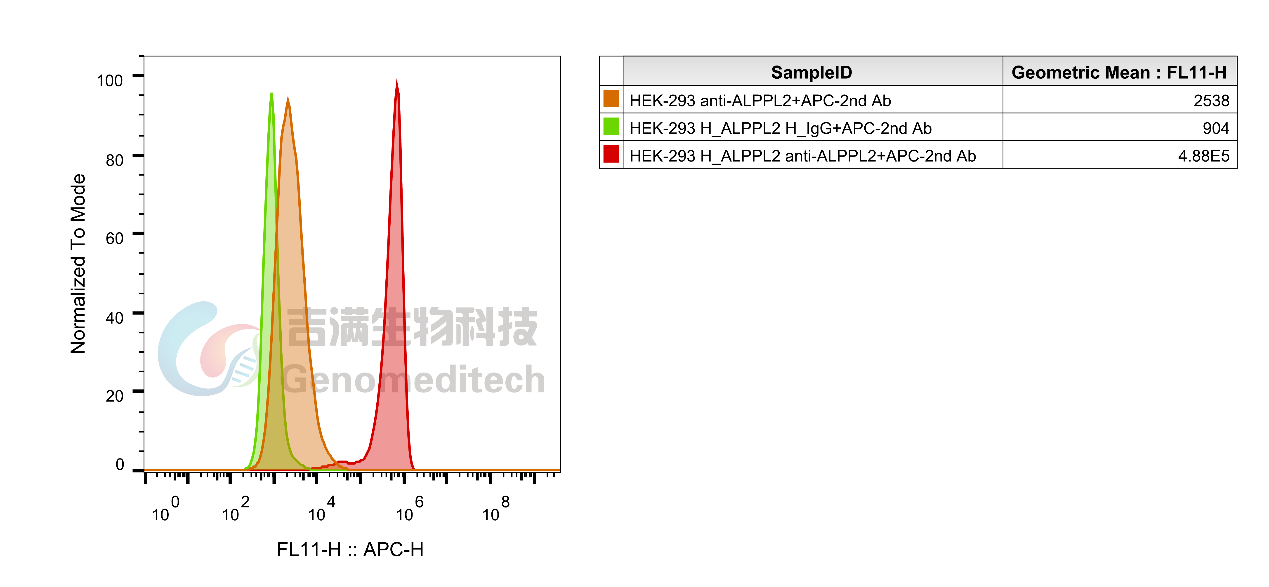
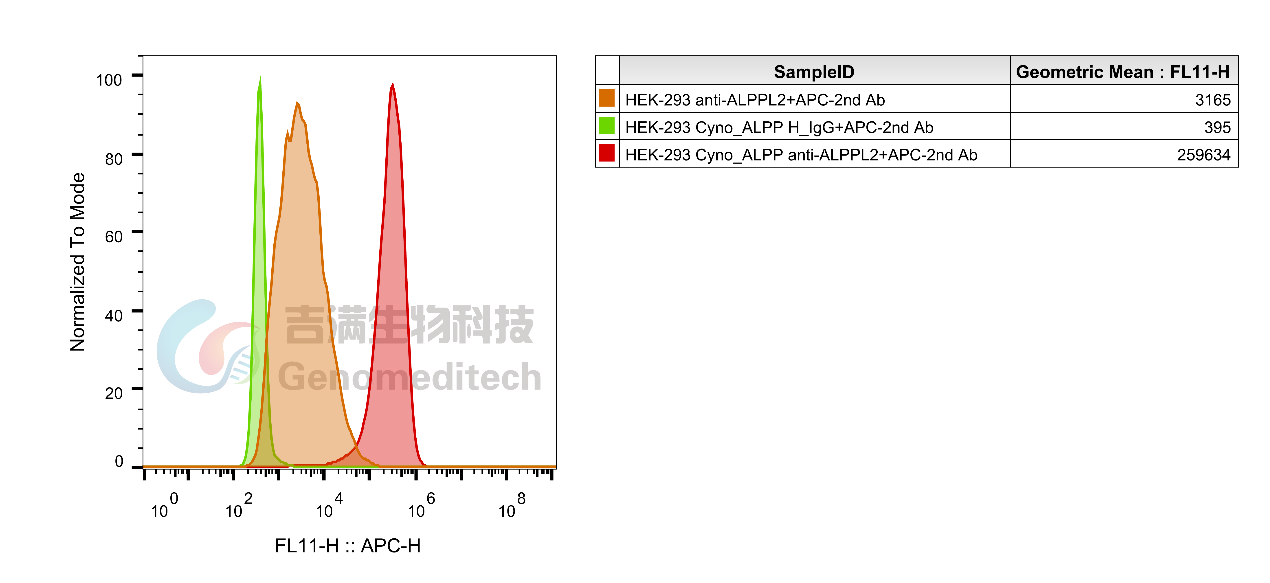
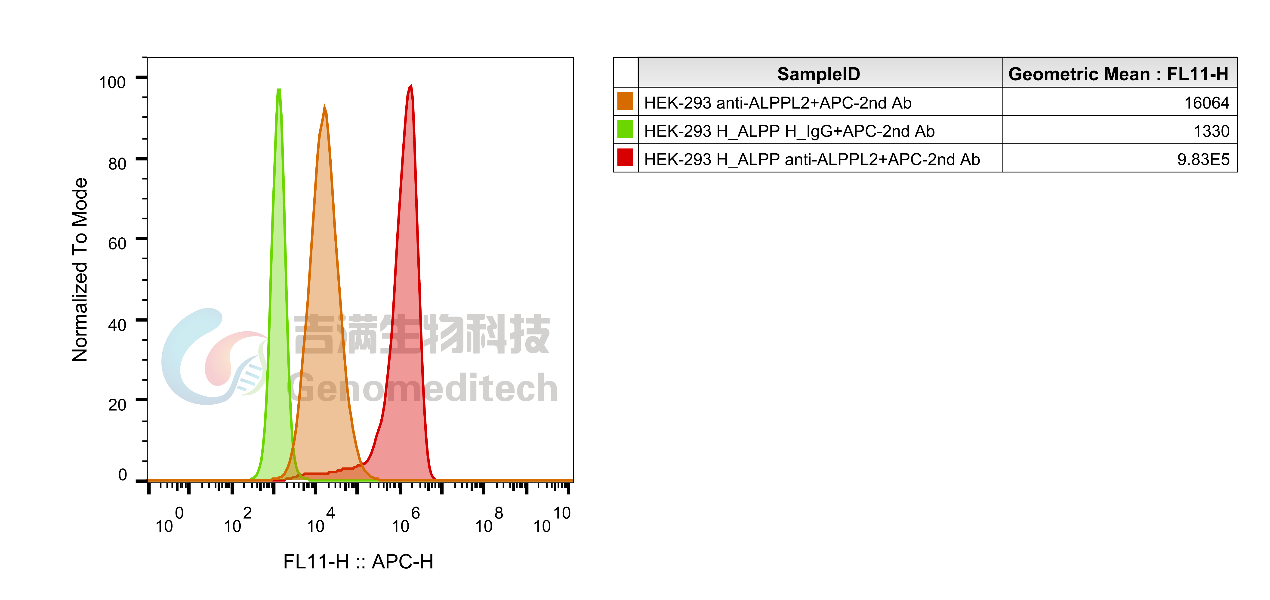
Species Reactivity Human; Cynomolgus
Clone SGN-ALPV
Source/Isotype Monoclonal Human IgG1 /κ
Application Flow Cytometry
Specificity Detects ALPPL2; ALPP
Gene ALPPL2; ALPP
Other Names ALPPL, ALPPL2, GCAP,ALP, ALPI, IAP, PALP, PLAP, PLAP-1
Gene ID ALPPL2: 251(human);ALPP: 250(human)、102133045(Cynomolgus)
Background Alkaline phosphatase, placental type also known as placental alkaline phosphatase (PLAP) is an allosteric enzyme that in humans is encoded by the ALPP gene. PLAP is a tumor marker, especially in seminoma and ovarian cancer. There are at least four distinct but related alkaline phosphatases: intestinal (ALPI), placental (this enzyme), placental-like (ALPPL2), and liver/bone/kidney (ALPL) (tissue-nonspecific). The first three are located together on chromosome 2, whereas the tissue-nonspecific form is located on chromosome 1. The coding sequence for this form of alkaline phosphatase is unique in that the 3' untranslated region contains multiple copies of an Alu family repeat. Alkaline phosphatase, placental type is a membrane-bound glycosylated dimeric enzyme, also referred to as the heat-stable form, that is expressed primarily in the placenta, although it is closely related to the intestinal form of the enzyme as well as to the placental-like form.
Storage Store at 2-8℃ short term (1-2 weeks).Store at ≤ -20℃ long term. Avoid repeated freeze-thaw.
Formulation Phosphate-buffered solution, pH 7.2.
Endotoxin < 1 EU/mg, determined by LAL gel clotting assay

Cat. No:GM-58774AB
Product:Anti-ALPPL2 hIgG1 antibody(SGN-ALPV)
Cat. No:GM-58774AB
Product:Anti-ALPPL2 hIgG1 antibody(SGN-ALPV)
GM-58774AB-10 10 μg
GM-58774AB-100 100 μg
GM-58774AB-1000 1mg
GM-58774AB-10 10 μg
GM-58774AB-100 100 μg
GM-58774AB-1000 1mg
Species Reactivity Human; Cynomolgus
Clone SGN-ALPV
Source/Isotype Monoclonal Human IgG1 /κ
Application Flow Cytometry
Specificity Detects ALPPL2; ALPP
Gene ALPPL2; ALPP
Other Names ALPPL, ALPPL2, GCAP,ALP, ALPI, IAP, PALP, PLAP, PLAP-1
Gene ID ALPPL2: 251(human);ALPP: 250(human)、102133045(Cynomolgus)
Background Alkaline phosphatase, placental type also known as placental alkaline phosphatase (PLAP) is an allosteric enzyme that in humans is encoded by the ALPP gene. PLAP is a tumor marker, especially in seminoma and ovarian cancer. There are at least four distinct but related alkaline phosphatases: intestinal (ALPI), placental (this enzyme), placental-like (ALPPL2), and liver/bone/kidney (ALPL) (tissue-nonspecific). The first three are located together on chromosome 2, whereas the tissue-nonspecific form is located on chromosome 1. The coding sequence for this form of alkaline phosphatase is unique in that the 3' untranslated region contains multiple copies of an Alu family repeat. Alkaline phosphatase, placental type is a membrane-bound glycosylated dimeric enzyme, also referred to as the heat-stable form, that is expressed primarily in the placenta, although it is closely related to the intestinal form of the enzyme as well as to the placental-like form.
Storage Store at 2-8℃ short term (1-2 weeks).Store at ≤ -20℃ long term. Avoid repeated freeze-thaw.
Formulation Phosphate-buffered solution, pH 7.2.
Endotoxin < 1 EU/mg, determined by LAL gel clotting assay
Species Reactivity Human; Cynomolgus
Clone SGN-ALPV
Source/Isotype Monoclonal Human IgG1 /κ
Application Flow Cytometry
Specificity Detects ALPPL2; ALPP
Gene ALPPL2; ALPP
Other Names ALPPL, ALPPL2, GCAP,ALP, ALPI, IAP, PALP, PLAP, PLAP-1
Gene ID ALPPL2: 251(human);ALPP: 250(human)、102133045(Cynomolgus)
Background Alkaline phosphatase, placental type also known as placental alkaline phosphatase (PLAP) is an allosteric enzyme that in humans is encoded by the ALPP gene. PLAP is a tumor marker, especially in seminoma and ovarian cancer. There are at least four distinct but related alkaline phosphatases: intestinal (ALPI), placental (this enzyme), placental-like (ALPPL2), and liver/bone/kidney (ALPL) (tissue-nonspecific). The first three are located together on chromosome 2, whereas the tissue-nonspecific form is located on chromosome 1. The coding sequence for this form of alkaline phosphatase is unique in that the 3' untranslated region contains multiple copies of an Alu family repeat. Alkaline phosphatase, placental type is a membrane-bound glycosylated dimeric enzyme, also referred to as the heat-stable form, that is expressed primarily in the placenta, although it is closely related to the intestinal form of the enzyme as well as to the placental-like form.
Storage Store at 2-8℃ short term (1-2 weeks).Store at ≤ -20℃ long term. Avoid repeated freeze-thaw.
Formulation Phosphate-buffered solution, pH 7.2.
Endotoxin < 1 EU/mg, determined by LAL gel clotting assay