


Human GCGR(26-136) Protein; His Tag
Cat. No.
GM-88497RP
Size
100 μg
1 mg
Quote
Description
Data Display
Related products
Description
Alternative Names Glucagon R, GCGR, Glucagon receptor
Source Human GCGR(26-136) Protein; His Tag (GM-88497RP) is expressed from human 293 cells (HEK-293). It contains AA Ala 26 - Lys 136 (Accession # P47871-1).
This protein carries a His tag at the C-terminus.
Purity > 90% as determined by SDS-PAGE
Endotoxin < 1 EU/μg, determined by LAL gel clotting assay
Predicted Mol Mass 13.9 KDa
Formulation Supplied as a 0.2 μm filtered solution of PBS, pH7.2-7.4.
Description GCGR (glucagon receptor) is a liver-enriched G protein–coupled receptor (GPCR) whose primary ligand is glucagon. When glucagon binds to GCGR, the receptor activates the Gs signaling pathway, coupling receptor activation to downstream metabolic regulation. This makes GCGR an important molecular target in maintaining glucose homeostasis and in diseases such as diabetes.
In the signaling pathway, Gs stimulates adenylyl cyclase (AC), leading to increased intracellular cAMP. Elevated cAMP activates protein kinase A (PKA), which phosphorylates key regulators and promotes transcriptional programs that enhance gluconeogenesis and glycogen breakdown in the liver. These events ultimately increase glucose output, and the GCGR/cAMP–PKA axis may also interface with transcription factors such as CREB and other signaling networks to fine-tune the metabolic response.
Alternative Names Glucagon R, GCGR, Glucagon receptor
Source Human GCGR(26-136) Protein; His Tag (GM-88497RP) is expressed from human 293 cells (HEK-293). It contains AA Ala 26 - Lys 136 (Accession # P47871-1).
This protein carries a His tag at the C-terminus.
Purity > 90% as determined by SDS-PAGE
Endotoxin < 1 EU/μg, determined by LAL gel clotting assay
Predicted Mol Mass 13.9 KDa
Formulation Supplied as a 0.2 μm filtered solution of PBS, pH7.2-7.4.
Description GCGR (glucagon receptor) is a liver-enriched G protein–coupled receptor (GPCR) whose primary ligand is glucagon. When glucagon binds to GCGR, the receptor activates the Gs signaling pathway, coupling receptor activation to downstream metabolic regulation. This makes GCGR an important molecular target in maintaining glucose homeostasis and in diseases such as diabetes.
In the signaling pathway, Gs stimulates adenylyl cyclase (AC), leading to increased intracellular cAMP. Elevated cAMP activates protein kinase A (PKA), which phosphorylates key regulators and promotes transcriptional programs that enhance gluconeogenesis and glycogen breakdown in the liver. These events ultimately increase glucose output, and the GCGR/cAMP–PKA axis may also interface with transcription factors such as CREB and other signaling networks to fine-tune the metabolic response.
Data Display
Purity
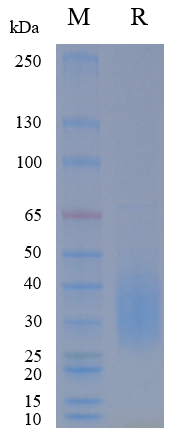
On SDS-PAGE under reducing (R) condition. The gel was stained overnight with Coomassie Blue. The purity of the protein is greater than 90%.
Affinity
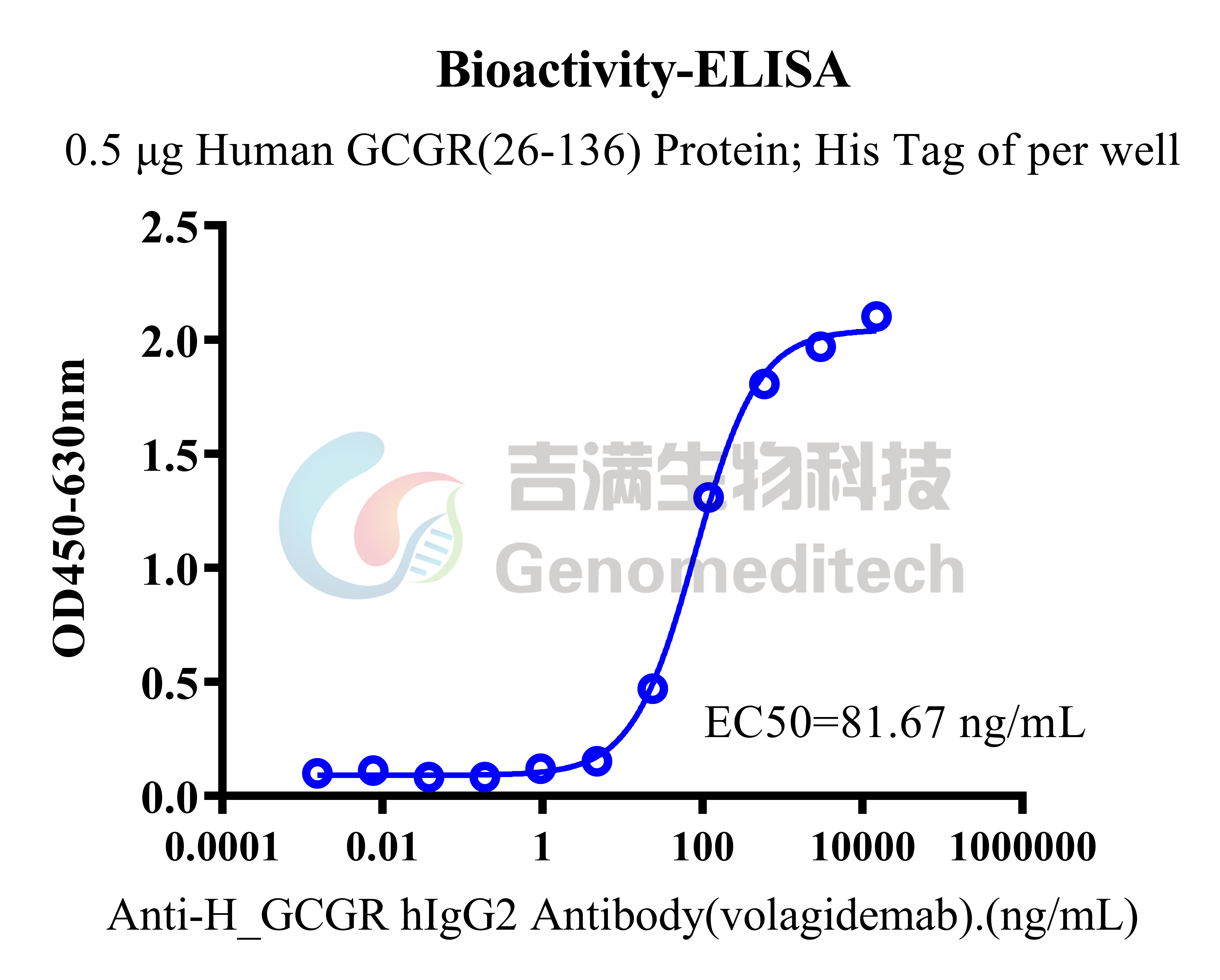
Human GCGR(26-136) Protein; His Tag (Catalog # GM-88497RP) was immobilized at 5 μg/ml (100 μL/well). Increasing concentrations of Anti-H_GCGR hIgG2 Antibody (volagidemab) (Catalog # GM-84555AB) were added.
Related products
For laboratory research use only. Direct human use, including taking orally and injection and clinical use are forbidden.
Human GCGR(26-136) Protein; His Tag
Cat. No.
GM-88497RP
Size
100 μg
1 mg
Quote
Description
Data Display
Related products
Description
Alternative Names Glucagon R, GCGR, Glucagon receptor
Source Human GCGR(26-136) Protein; His Tag (GM-88497RP) is expressed from human 293 cells (HEK-293). It contains AA Ala 26 - Lys 136 (Accession # P47871-1).
This protein carries a His tag at the C-terminus.
Purity > 90% as determined by SDS-PAGE
Endotoxin < 1 EU/μg, determined by LAL gel clotting assay
Predicted Mol Mass 13.9 KDa
Formulation Supplied as a 0.2 μm filtered solution of PBS, pH7.2-7.4.
Description GCGR (glucagon receptor) is a liver-enriched G protein–coupled receptor (GPCR) whose primary ligand is glucagon. When glucagon binds to GCGR, the receptor activates the Gs signaling pathway, coupling receptor activation to downstream metabolic regulation. This makes GCGR an important molecular target in maintaining glucose homeostasis and in diseases such as diabetes.
In the signaling pathway, Gs stimulates adenylyl cyclase (AC), leading to increased intracellular cAMP. Elevated cAMP activates protein kinase A (PKA), which phosphorylates key regulators and promotes transcriptional programs that enhance gluconeogenesis and glycogen breakdown in the liver. These events ultimately increase glucose output, and the GCGR/cAMP–PKA axis may also interface with transcription factors such as CREB and other signaling networks to fine-tune the metabolic response.
Alternative Names Glucagon R, GCGR, Glucagon receptor
Source Human GCGR(26-136) Protein; His Tag (GM-88497RP) is expressed from human 293 cells (HEK-293). It contains AA Ala 26 - Lys 136 (Accession # P47871-1).
This protein carries a His tag at the C-terminus.
Purity > 90% as determined by SDS-PAGE
Endotoxin < 1 EU/μg, determined by LAL gel clotting assay
Predicted Mol Mass 13.9 KDa
Formulation Supplied as a 0.2 μm filtered solution of PBS, pH7.2-7.4.
Description GCGR (glucagon receptor) is a liver-enriched G protein–coupled receptor (GPCR) whose primary ligand is glucagon. When glucagon binds to GCGR, the receptor activates the Gs signaling pathway, coupling receptor activation to downstream metabolic regulation. This makes GCGR an important molecular target in maintaining glucose homeostasis and in diseases such as diabetes.
In the signaling pathway, Gs stimulates adenylyl cyclase (AC), leading to increased intracellular cAMP. Elevated cAMP activates protein kinase A (PKA), which phosphorylates key regulators and promotes transcriptional programs that enhance gluconeogenesis and glycogen breakdown in the liver. These events ultimately increase glucose output, and the GCGR/cAMP–PKA axis may also interface with transcription factors such as CREB and other signaling networks to fine-tune the metabolic response.


Data Display
Purity
On SDS-PAGE under reducing (R) condition. The gel was stained overnight with Coomassie Blue. The purity of the protein is greater than 90%.
Affinity
Human GCGR(26-136) Protein; His Tag (Catalog # GM-88497RP) was immobilized at 5 μg/ml (100 μL/well). Increasing concentrations of Anti-H_GCGR hIgG2 Antibody (volagidemab) (Catalog # GM-84555AB) were added.
Related products
Message consultation
reset
submit
Message
Message consultation
reset
submit