




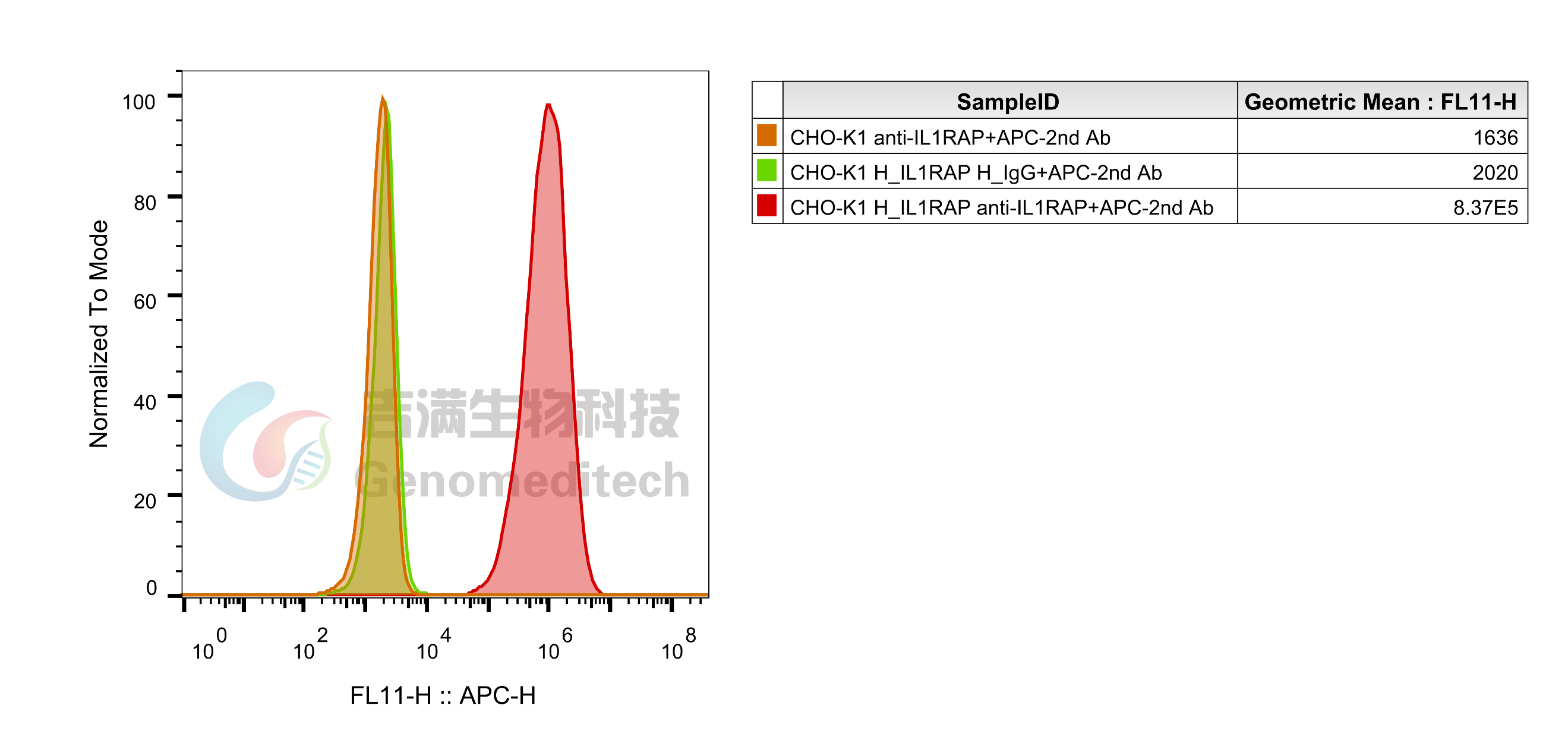
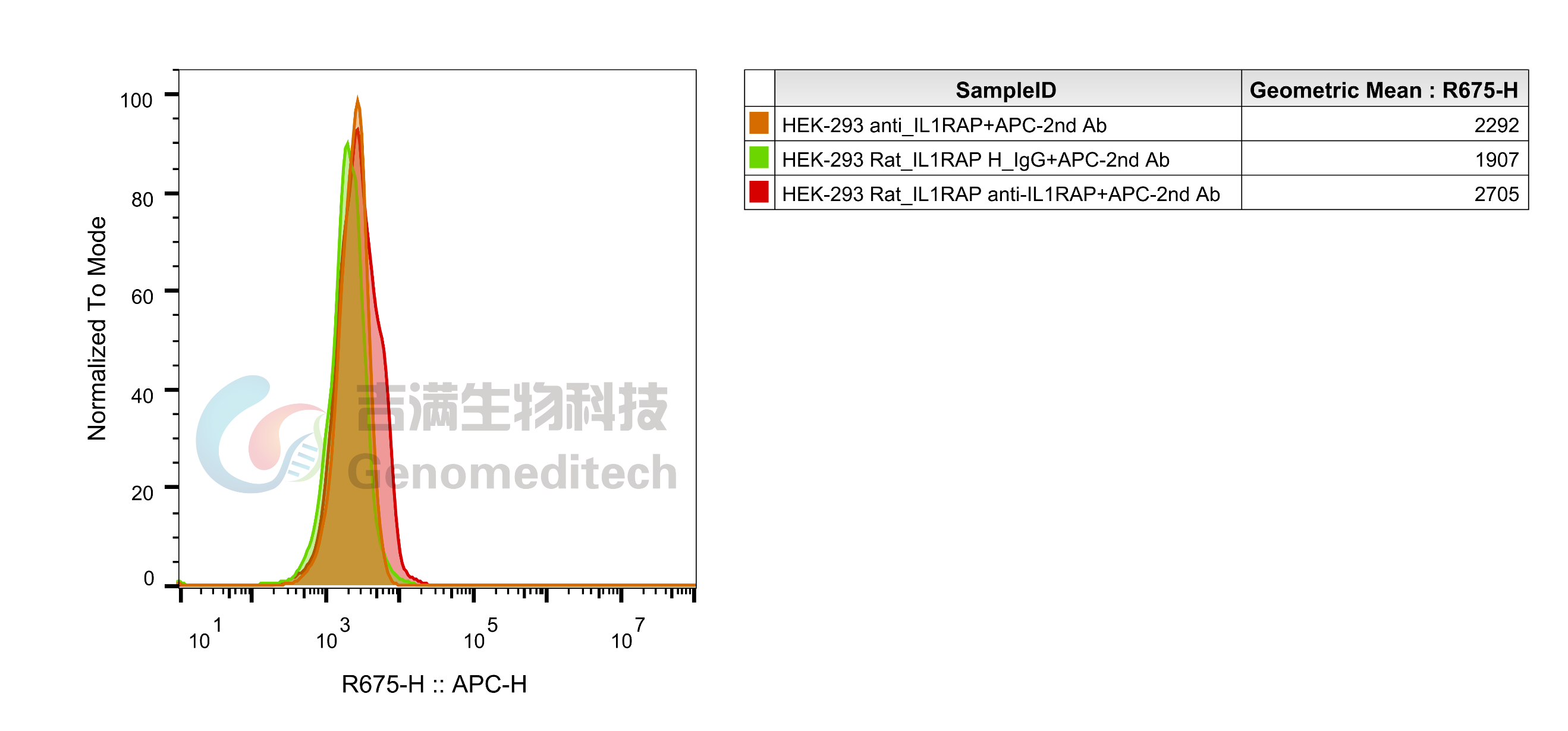
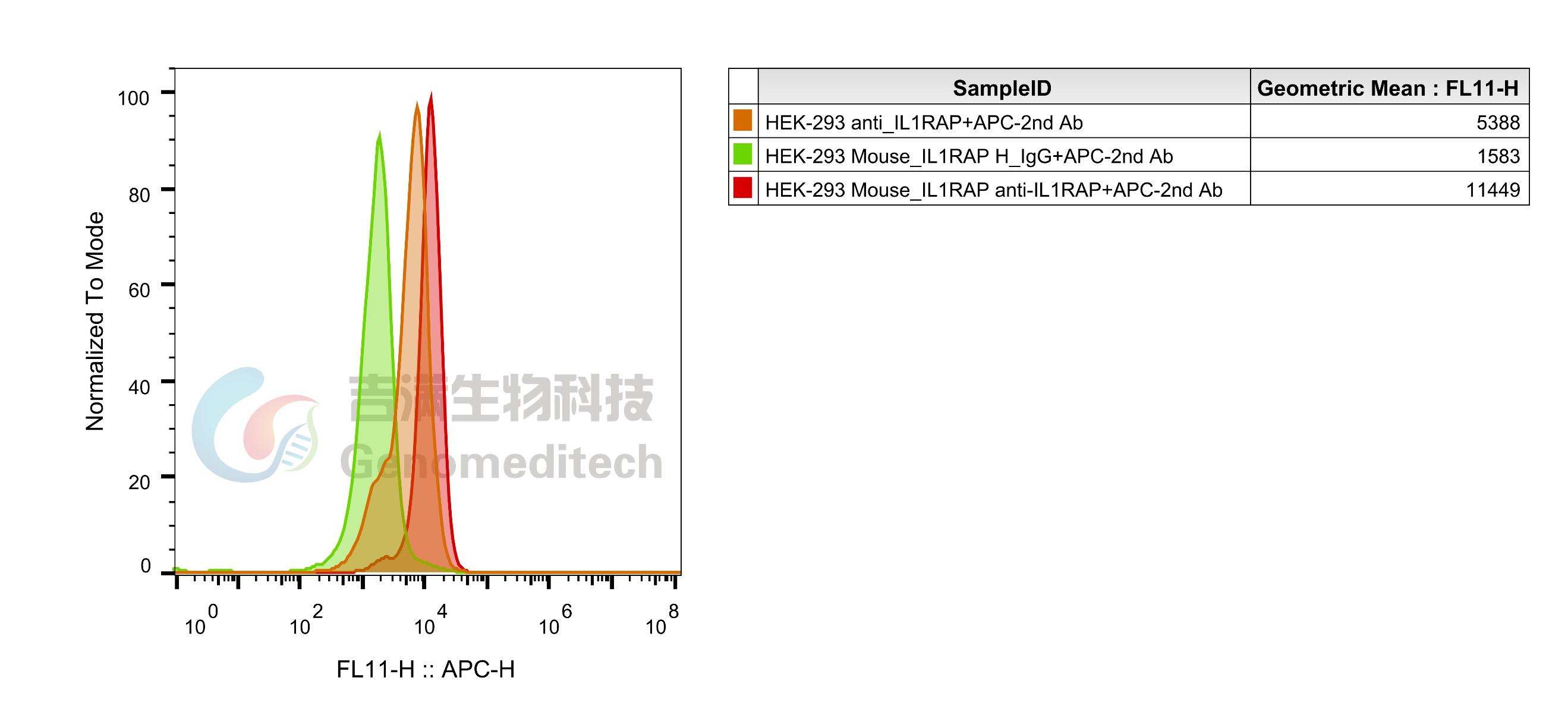
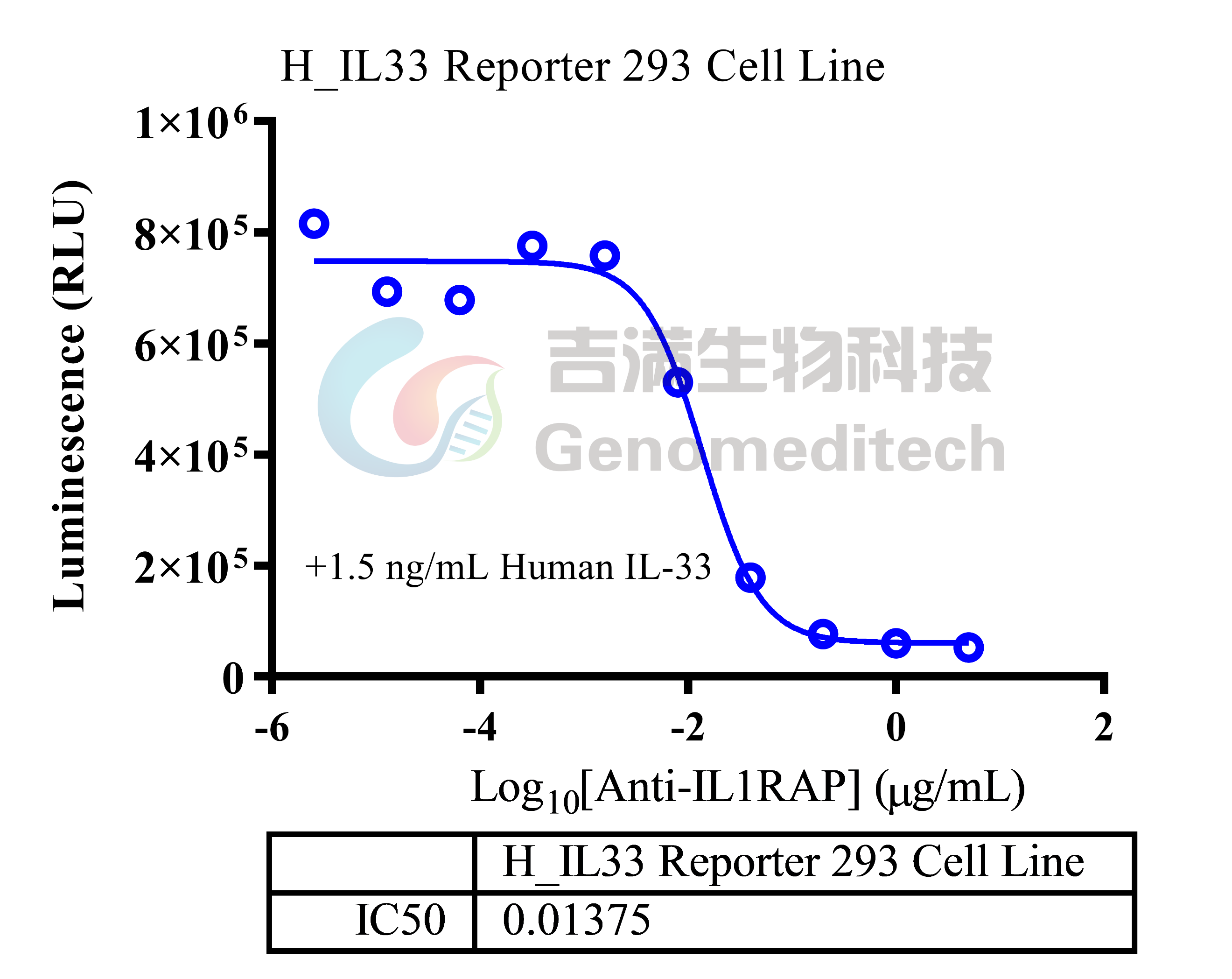




| Species Reactivity | Human |
| Clone | 48D2_VH5.GL_VL4 |
| Source/Isotype | Human IgG1(KEEM), Kappa |
| Application | Flow Cytometry; Block assay |
| Specificity | Detects IL1RAP |
| Gene | IL1RAP |
| Other Names | C3orf13, IL-1RAcP, IL1R3 |
| Gene ID | 3556 (human) |
| Background | IL1RAP gene is a key member of the human immune and inflammatory regulatory network, and its encoded protein, as the“Core co-receptor” of the IL-1 receptor family, plays an important role in a variety of physiological and pathological processes. The gene is located on the long arm of human chromosome 3 and can produce 4 isoforms through alternative splicing, including 2 membrane-bound and 2 soluble types, and 2 membrane-bound variants, among them, membrane-bound proteins recognize IL-1 family cytokines through their triple immunoglobulin domains and activate the nf-κb and MAPK signaling pathways through the TIR domain, and the IL-1 family of cytokines has been implicated in the activation of nf-κb and MAPK signaling pathways, drives the expression of proinflammatory cytokines and chemokines. In the normal physiological state, IL1RAP is mainly low-expressed in the liver, neutrophil and trophoblast cells, and is involved in the moderate regulation of immune synapse formation and inflammatory response; however, it is also involved in the regulation of immune synapse formation and inflammatory response, in acute myeloid leukemia, pancreatic ductal adenocarcinoma, glioma and other malignant tumors, IL1RAP expression was significantly up-regulated, it has become a key driver of tumor progression and metastasis by promoting tumor cell proliferation, inhibiting apoptosis, enhancing immune escape and maintaining anoikis resistance. In addition, IL1RAP also interacts with receptor tyrosine kinases such as FLT3 and c-KIT to directly regulate the self-renewal of cancer stem cells, and its gene polymorphism is more related to the risk of neurodegeneration diseases such as Alzheimer's disease. Because of its unique pro-inflammatory and pro-cancer effects, IL1RAP has become an emerging target for the treatment of cancer and autoimmune diseases. Antibody drugs and CAR-T therapies targeting this gene are entering clinical trials, it provides a new direction for improving resistance to traditional therapies and expanding indications. |
| Storage | Store at 2-8℃ short term (1-2 weeks).Store at ≤ -20℃ long term. Avoid repeated freeze-thaw. |
| Formulation | Supplied as a 0.2 μm filtered solution of PBS, pH7.2-7.4. |
| Endotoxin | < 1 EU/mg, determined by LAL gel clotting assay |
| Species Reactivity | Human |
| Clone | 48D2_VH5.GL_VL4 |
| Source/Isotype | Human IgG1(KEEM), Kappa |
| Application | Flow Cytometry; Block assay |
| Specificity | Detects IL1RAP |
| Gene | IL1RAP |
| Other Names | C3orf13, IL-1RAcP, IL1R3 |
| Gene ID | 3556 (human) |
| Background | IL1RAP gene is a key member of the human immune and inflammatory regulatory network, and its encoded protein, as the“Core co-receptor” of the IL-1 receptor family, plays an important role in a variety of physiological and pathological processes. The gene is located on the long arm of human chromosome 3 and can produce 4 isoforms through alternative splicing, including 2 membrane-bound and 2 soluble types, and 2 membrane-bound variants, among them, membrane-bound proteins recognize IL-1 family cytokines through their triple immunoglobulin domains and activate the nf-κb and MAPK signaling pathways through the TIR domain, and the IL-1 family of cytokines has been implicated in the activation of nf-κb and MAPK signaling pathways, drives the expression of proinflammatory cytokines and chemokines. In the normal physiological state, IL1RAP is mainly low-expressed in the liver, neutrophil and trophoblast cells, and is involved in the moderate regulation of immune synapse formation and inflammatory response; however, it is also involved in the regulation of immune synapse formation and inflammatory response, in acute myeloid leukemia, pancreatic ductal adenocarcinoma, glioma and other malignant tumors, IL1RAP expression was significantly up-regulated, it has become a key driver of tumor progression and metastasis by promoting tumor cell proliferation, inhibiting apoptosis, enhancing immune escape and maintaining anoikis resistance. In addition, IL1RAP also interacts with receptor tyrosine kinases such as FLT3 and c-KIT to directly regulate the self-renewal of cancer stem cells, and its gene polymorphism is more related to the risk of neurodegeneration diseases such as Alzheimer's disease. Because of its unique pro-inflammatory and pro-cancer effects, IL1RAP has become an emerging target for the treatment of cancer and autoimmune diseases. Antibody drugs and CAR-T therapies targeting this gene are entering clinical trials, it provides a new direction for improving resistance to traditional therapies and expanding indications. |
| Storage | Store at 2-8℃ short term (1-2 weeks).Store at ≤ -20℃ long term. Avoid repeated freeze-thaw. |
| Formulation | Supplied as a 0.2 μm filtered solution of PBS, pH7.2-7.4. |
| Endotoxin | < 1 EU/mg, determined by LAL gel clotting assay |