




Anti-CXCR5 hIgG1 Antibody(h11G2)
Cat. No.
GM-88548AB
Size
10 μg
100 μg
1 mg
Quote
Data display
Description
Related products
Data display
SDS-PAGE
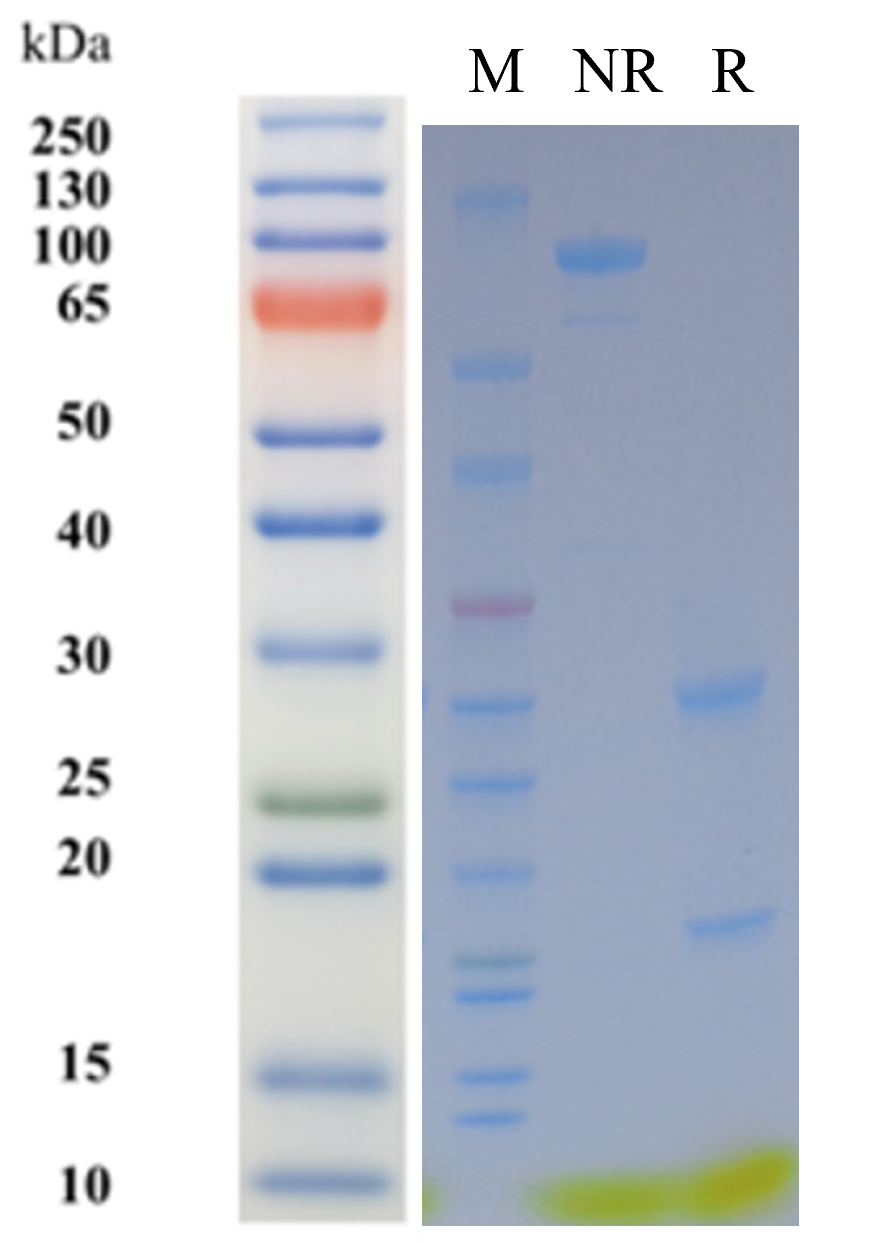
On SDS-PAGE under reducing (R)/non-reducing(N-R) condition. The gel was stained overnight with Coomassie Blue. The purity of the protein is greater than 95%.
SEC-HPLC
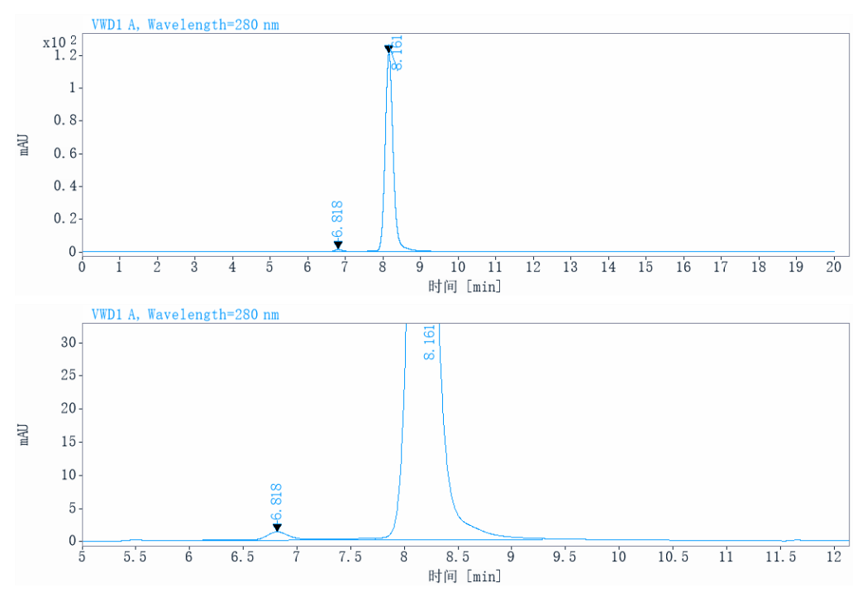
The purity of this product is more than 90% verified by SEC-HPLC.
Description
Species Reactivity Human
Clone h11G2
Source/Isotype Human IgG1, Kappa
Application /
Specificity Detects CXCR5
Gene CXCR5
Other Names BLR1, CD185, MDR15
Gene ID 643 (human)
Background CXCR5 is a member of the CXC chemokine receptor family, which belongs to the G protein-coupled receptor and has a seven-time transmembrane domain. It specifically binds to the chemokine CXCL13, mediates directional migration of B lymphocytes and follicular helper T cells to secondary lymphoid organs, and participates in lymph node development and lymphocyte homing. CXCR5 plays a key role in the construction of immune microenvironment, and its abnormal expression is closely related to autoimmune diseases such as systemic lupus erythematosus and rheumatoid arthritis, as well as tumor metastasis such as breast cancer and prostate cancer. In recent years, CXCR5 has also made breakthroughs in the fields of pain regulation and sepsis treatment, and has become a new target for immunotherapy and precision medicine.
Storage Store at 2-8℃ short term (1-2 weeks).Store at ≤ -20℃ long term. Avoid repeated freeze-thaw.
Formulation Supplied as a 0.2 μm filtered solution of 200 mM NaCl in PBS, pH 7.2–7.4.
Endotoxin < 1 EU/mg, determined by LAL gel clotting assay
Species Reactivity Human
Clone h11G2
Source/Isotype Human IgG1, Kappa
Application /
Specificity Detects CXCR5
Gene CXCR5
Other Names BLR1, CD185, MDR15
Gene ID 643 (human)
Background CXCR5 is a member of the CXC chemokine receptor family, which belongs to the G protein-coupled receptor and has a seven-time transmembrane domain. It specifically binds to the chemokine CXCL13, mediates directional migration of B lymphocytes and follicular helper T cells to secondary lymphoid organs, and participates in lymph node development and lymphocyte homing. CXCR5 plays a key role in the construction of immune microenvironment, and its abnormal expression is closely related to autoimmune diseases such as systemic lupus erythematosus and rheumatoid arthritis, as well as tumor metastasis such as breast cancer and prostate cancer. In recent years, CXCR5 has also made breakthroughs in the fields of pain regulation and sepsis treatment, and has become a new target for immunotherapy and precision medicine.
Storage Store at 2-8℃ short term (1-2 weeks).Store at ≤ -20℃ long term. Avoid repeated freeze-thaw.
Formulation Supplied as a 0.2 μm filtered solution of 200 mM NaCl in PBS, pH 7.2–7.4.
Endotoxin < 1 EU/mg, determined by LAL gel clotting assay
Related products
For laboratory research use only. Direct human use, including taking orally and injection and clinical use are forbidden.
Anti-CXCR5 hIgG1 Antibody(h11G2)
Cat. No.
GM-88548AB
Size
10 μg
100 μg
1 mg
Quote
Data display
Description
Related products
Data display
SDS-PAGE
On SDS-PAGE under reducing (R)/non-reducing(N-R) condition. The gel was stained overnight with Coomassie Blue. The purity of the protein is greater than 95%.
SEC-HPLC
The purity of this product is more than 90% verified by SEC-HPLC.
Description
Species Reactivity Human
Clone h11G2
Source/Isotype Human IgG1, Kappa
Application /
Specificity Detects CXCR5
Gene CXCR5
Other Names BLR1, CD185, MDR15
Gene ID 643 (human)
Background CXCR5 is a member of the CXC chemokine receptor family, which belongs to the G protein-coupled receptor and has a seven-time transmembrane domain. It specifically binds to the chemokine CXCL13, mediates directional migration of B lymphocytes and follicular helper T cells to secondary lymphoid organs, and participates in lymph node development and lymphocyte homing. CXCR5 plays a key role in the construction of immune microenvironment, and its abnormal expression is closely related to autoimmune diseases such as systemic lupus erythematosus and rheumatoid arthritis, as well as tumor metastasis such as breast cancer and prostate cancer. In recent years, CXCR5 has also made breakthroughs in the fields of pain regulation and sepsis treatment, and has become a new target for immunotherapy and precision medicine.
Storage Store at 2-8℃ short term (1-2 weeks).Store at ≤ -20℃ long term. Avoid repeated freeze-thaw.
Formulation Supplied as a 0.2 μm filtered solution of 200 mM NaCl in PBS, pH 7.2–7.4.
Endotoxin < 1 EU/mg, determined by LAL gel clotting assay
Species Reactivity Human
Clone h11G2
Source/Isotype Human IgG1, Kappa
Application /
Specificity Detects CXCR5
Gene CXCR5
Other Names BLR1, CD185, MDR15
Gene ID 643 (human)
Background CXCR5 is a member of the CXC chemokine receptor family, which belongs to the G protein-coupled receptor and has a seven-time transmembrane domain. It specifically binds to the chemokine CXCL13, mediates directional migration of B lymphocytes and follicular helper T cells to secondary lymphoid organs, and participates in lymph node development and lymphocyte homing. CXCR5 plays a key role in the construction of immune microenvironment, and its abnormal expression is closely related to autoimmune diseases such as systemic lupus erythematosus and rheumatoid arthritis, as well as tumor metastasis such as breast cancer and prostate cancer. In recent years, CXCR5 has also made breakthroughs in the fields of pain regulation and sepsis treatment, and has become a new target for immunotherapy and precision medicine.
Storage Store at 2-8℃ short term (1-2 weeks).Store at ≤ -20℃ long term. Avoid repeated freeze-thaw.
Formulation Supplied as a 0.2 μm filtered solution of 200 mM NaCl in PBS, pH 7.2–7.4.
Endotoxin < 1 EU/mg, determined by LAL gel clotting assay
Related products
Message consultation
reset
submit
Message
Message consultation
reset
submit