













| Alternative Names | TNFRSF8, CD30, D1S166E, Ki-1 |
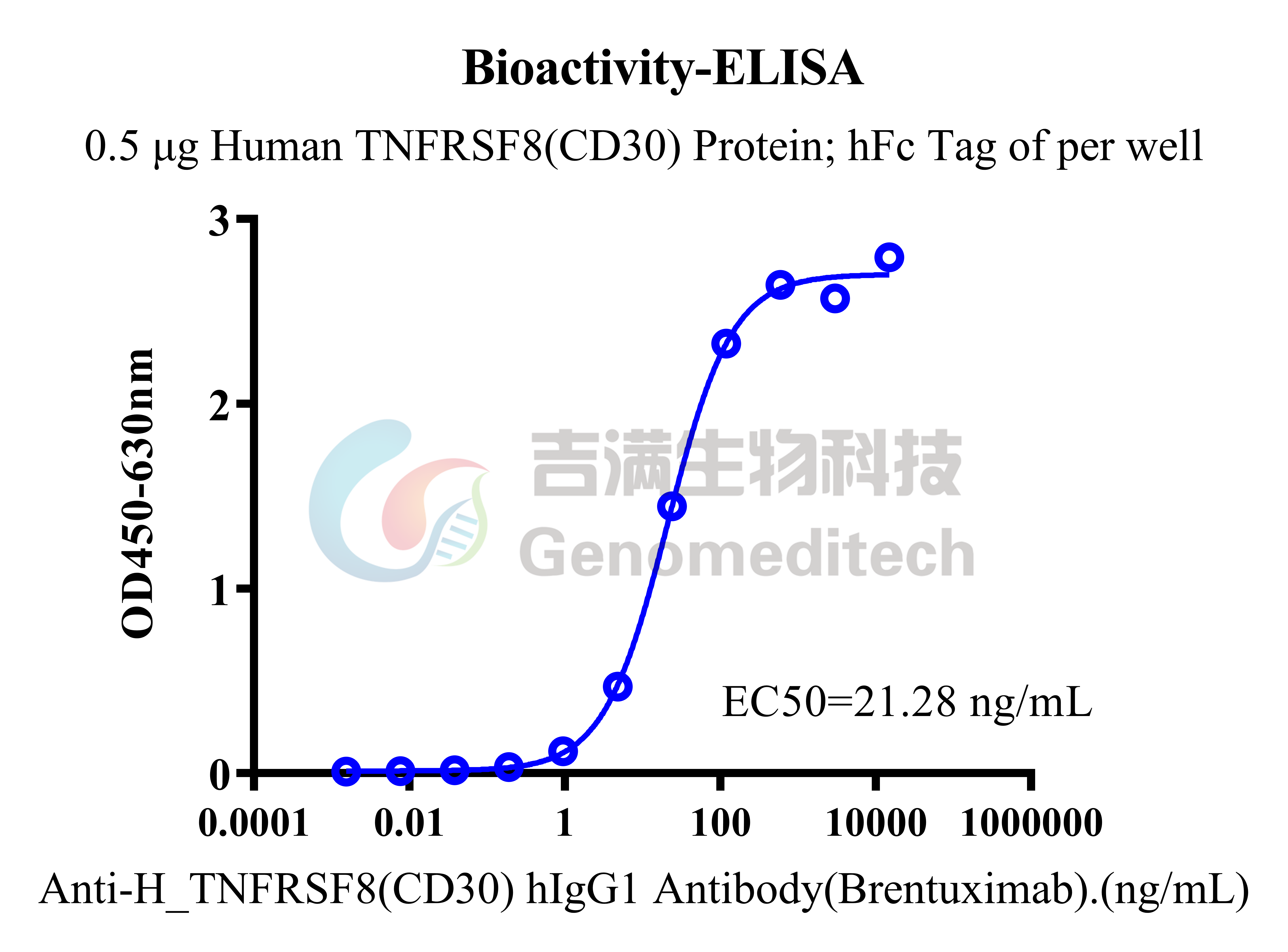
| Source | Human TNFRSF8(CD30) Protein; hFc Tag (GM88427RP) is expressed from human 293 cells (HEK-293). It contains AA Phe 19 - Lys 379 (Accession # P28908-1). This protein carries a hFc tag at the C-terminus. |
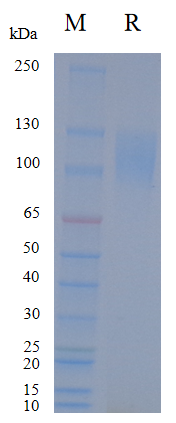
| Purity | > 95% as determined by SDS-PAGE |
| Endotoxin | < 1 EU/μg, determined by LAL gel clotting assay |
| Predicted Mol Mass | 64.4 KDa |
| Formulation | Supplied as a 0.2 μm filtered solution of PBS, pH7.2-7.4. |
| Description | TNFRSF8, also known as CD30, is a type I transmembrane receptor in the tumor necrosis factor receptor (TNFR) superfamily. It is variably expressed on activated T cells, certain B cells, and a subset of malignancies such as Hodgkin lymphoma and anaplastic large cell lymphoma. CD30 functions as a co-stimulatory receptor involved in cell proliferation, survival, and differentiation signals. It is also used as a diagnostic and therapeutic target in CD30-positive diseases. Other aliases include D1S166E and Ki-1. CD30 signaling is initiated upon trimerization or clustering of the receptor, leading to recruitment of adaptor proteins and activation of downstream pathways such as NF-κB, MAPK (ERK, JNK), and PI3K-Akt. This signaling promotes cell survival, proliferation, and cytokine production, particularly in activated T cells and certain neoplastic cells. Dysregulated CD30 signaling can contribute to pathologic immune responses and tumorigenesis, making CD30 a valuable target for monoclonal antibodies and targeted therapies. |
| Alternative Names | TNFRSF8, CD30, D1S166E, Ki-1 |
| Source | Human TNFRSF8(CD30) Protein; hFc Tag (GM88427RP) is expressed from human 293 cells (HEK-293). It contains AA Phe 19 - Lys 379 (Accession # P28908-1). This protein carries a hFc tag at the C-terminus. |
| Purity | > 95% as determined by SDS-PAGE |
| Endotoxin | < 1 EU/μg, determined by LAL gel clotting assay |
| Predicted Mol Mass | 64.4 KDa |
| Formulation | Supplied as a 0.2 μm filtered solution of PBS, pH7.2-7.4. |
| Description | TNFRSF8, also known as CD30, is a type I transmembrane receptor in the tumor necrosis factor receptor (TNFR) superfamily. It is variably expressed on activated T cells, certain B cells, and a subset of malignancies such as Hodgkin lymphoma and anaplastic large cell lymphoma. CD30 functions as a co-stimulatory receptor involved in cell proliferation, survival, and differentiation signals. It is also used as a diagnostic and therapeutic target in CD30-positive diseases. Other aliases include D1S166E and Ki-1. CD30 signaling is initiated upon trimerization or clustering of the receptor, leading to recruitment of adaptor proteins and activation of downstream pathways such as NF-κB, MAPK (ERK, JNK), and PI3K-Akt. This signaling promotes cell survival, proliferation, and cytokine production, particularly in activated T cells and certain neoplastic cells. Dysregulated CD30 signaling can contribute to pathologic immune responses and tumorigenesis, making CD30 a valuable target for monoclonal antibodies and targeted therapies. |