







Cynomolgus TNF alpha Protein; His Tag
Cat. No.
GM-88489RP
Size
100 μg
1 mg
Quote
Description
Data Display
Related products
Description
Alternative Names DIF, TNFA, TNFSF2, cachexin, cachectin, TNFα
Source Cynomolgus TNF alpha Protein; His Tag (GM-88489RP) is expressed from human 293 cells (HEK-293). It contains AA Val 77 - Leu 233 (Accession # P79337).
This protein carries a His tag at the C-terminus.
Purity > 95% as determined by SDS-PAGE
Endotoxin < 1 EU/μg, determined by LAL gel clotting assay
Predicted Mol Mass 18.1 KDa
Formulation Supplied as a 0.2 μm filtered solution of PBS, pH7.2-7.4.
Description TNF alpha protein (Tumor Necrosis Factor alpha) is a pro-inflammatory cytokine that belongs to the tumor necrosis factor (TNF) superfamily. It is encoded by the TNF gene and is a protein associated with the human immune system. TNF alpha protein was initially discovered in serum of endotoxin-treated mice and later detected in various immune cells, including macrophages, T cells, natural killer (NK) cells, and mast cells.
TNF alpha protein regulates the activity of immune cells by binding to its receptors, TNFR1 (TNF Receptor 1) and TNFR2 (TNF Receptor 2), on the surface of various cell types. Macrophages and T cells are important types of immune cells with the ability to directly kill tumor cells and infected cells, as well as orchestrate inflammatory responses, making them crucial members of the immune system.
Research indicates that TNF alpha protein plays a significant role in regulating immune cell activity, promoting inflammation, and modulating immune responses. Additionally, the aberrant expression of TNF alpha protein is associated with chronic inflammatory diseases, autoimmune disorders (such as rheumatoid arthritis, inflammatory bowel disease, and psoriasis), as well as with tumor development and immune evasion, making it a potential target for immunotherapy, including anti-TNF alpha monoclonal antibodies (e.g., infliximab, adalimumab) for autoimmune diseases and cancer therapy.
Alternative Names DIF, TNFA, TNFSF2, cachexin, cachectin, TNFα
Source Cynomolgus TNF alpha Protein; His Tag (GM-88489RP) is expressed from human 293 cells (HEK-293). It contains AA Val 77 - Leu 233 (Accession # P79337).
This protein carries a His tag at the C-terminus.
Purity > 95% as determined by SDS-PAGE
Endotoxin < 1 EU/μg, determined by LAL gel clotting assay
Predicted Mol Mass 18.1 KDa
Formulation Supplied as a 0.2 μm filtered solution of PBS, pH7.2-7.4.
Description TNF alpha protein (Tumor Necrosis Factor alpha) is a pro-inflammatory cytokine that belongs to the tumor necrosis factor (TNF) superfamily. It is encoded by the TNF gene and is a protein associated with the human immune system. TNF alpha protein was initially discovered in serum of endotoxin-treated mice and later detected in various immune cells, including macrophages, T cells, natural killer (NK) cells, and mast cells.
TNF alpha protein regulates the activity of immune cells by binding to its receptors, TNFR1 (TNF Receptor 1) and TNFR2 (TNF Receptor 2), on the surface of various cell types. Macrophages and T cells are important types of immune cells with the ability to directly kill tumor cells and infected cells, as well as orchestrate inflammatory responses, making them crucial members of the immune system.
Research indicates that TNF alpha protein plays a significant role in regulating immune cell activity, promoting inflammation, and modulating immune responses. Additionally, the aberrant expression of TNF alpha protein is associated with chronic inflammatory diseases, autoimmune disorders (such as rheumatoid arthritis, inflammatory bowel disease, and psoriasis), as well as with tumor development and immune evasion, making it a potential target for immunotherapy, including anti-TNF alpha monoclonal antibodies (e.g., infliximab, adalimumab) for autoimmune diseases and cancer therapy.
Data Display
Purity
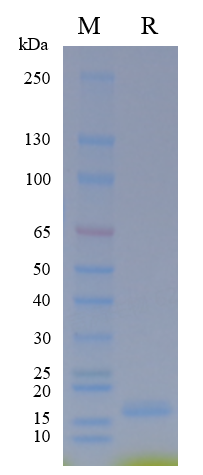
On SDS-PAGE under reducing (R) condition. The gel was stained overnight with Coomassie Blue. The purity of the protein is greater than 95%.
Affinity
Cynomolgus TNF alpha Protein; His Tag (Catalog # GM-88489RP) was immobilized at 5 μg/ml (100 μL/well). Increasing concentrations of Anti-TNF-α hIgG1 Antibody (CT-P17) (Catalog # GM-49267AB) were added.
Cynomolgus TNF alpha Protein; His Tag (Catalog # GM-88489RP) was immobilized at 5 μg/ml (100 μL/well). Increasing concentrations of Anti-TNF-α hIgG1 Reference Antibody (Adabio) (Catalog # GM-87987MAB) were added.
Cynomolgus TNF alpha Protein; His Tag (Catalog # GM-88489RP) was immobilized at 2 μg/ml (100 μL/well). Increasing concentrations of Human TNFR2 Protein; hFc Tag
(Catalog # GM-88214RP) were added
Related products
For laboratory research use only. Direct human use, including taking orally and injection and clinical use are forbidden.
Cynomolgus TNF alpha Protein; His Tag
Cat. No.
GM-88489RP
Size
100 μg
1 mg
Quote
Description
Data Display
Related products
Description
Alternative Names DIF, TNFA, TNFSF2, cachexin, cachectin, TNFα
Source Cynomolgus TNF alpha Protein; His Tag (GM-88489RP) is expressed from human 293 cells (HEK-293). It contains AA Val 77 - Leu 233 (Accession # P79337).
This protein carries a His tag at the C-terminus.
Purity > 95% as determined by SDS-PAGE
Endotoxin < 1 EU/μg, determined by LAL gel clotting assay
Predicted Mol Mass 18.1 KDa
Formulation Supplied as a 0.2 μm filtered solution of PBS, pH7.2-7.4.
Description TNF alpha protein (Tumor Necrosis Factor alpha) is a pro-inflammatory cytokine that belongs to the tumor necrosis factor (TNF) superfamily. It is encoded by the TNF gene and is a protein associated with the human immune system. TNF alpha protein was initially discovered in serum of endotoxin-treated mice and later detected in various immune cells, including macrophages, T cells, natural killer (NK) cells, and mast cells.
TNF alpha protein regulates the activity of immune cells by binding to its receptors, TNFR1 (TNF Receptor 1) and TNFR2 (TNF Receptor 2), on the surface of various cell types. Macrophages and T cells are important types of immune cells with the ability to directly kill tumor cells and infected cells, as well as orchestrate inflammatory responses, making them crucial members of the immune system.
Research indicates that TNF alpha protein plays a significant role in regulating immune cell activity, promoting inflammation, and modulating immune responses. Additionally, the aberrant expression of TNF alpha protein is associated with chronic inflammatory diseases, autoimmune disorders (such as rheumatoid arthritis, inflammatory bowel disease, and psoriasis), as well as with tumor development and immune evasion, making it a potential target for immunotherapy, including anti-TNF alpha monoclonal antibodies (e.g., infliximab, adalimumab) for autoimmune diseases and cancer therapy.
Alternative Names DIF, TNFA, TNFSF2, cachexin, cachectin, TNFα
Source Cynomolgus TNF alpha Protein; His Tag (GM-88489RP) is expressed from human 293 cells (HEK-293). It contains AA Val 77 - Leu 233 (Accession # P79337).
This protein carries a His tag at the C-terminus.
Purity > 95% as determined by SDS-PAGE
Endotoxin < 1 EU/μg, determined by LAL gel clotting assay
Predicted Mol Mass 18.1 KDa
Formulation Supplied as a 0.2 μm filtered solution of PBS, pH7.2-7.4.
Description TNF alpha protein (Tumor Necrosis Factor alpha) is a pro-inflammatory cytokine that belongs to the tumor necrosis factor (TNF) superfamily. It is encoded by the TNF gene and is a protein associated with the human immune system. TNF alpha protein was initially discovered in serum of endotoxin-treated mice and later detected in various immune cells, including macrophages, T cells, natural killer (NK) cells, and mast cells.
TNF alpha protein regulates the activity of immune cells by binding to its receptors, TNFR1 (TNF Receptor 1) and TNFR2 (TNF Receptor 2), on the surface of various cell types. Macrophages and T cells are important types of immune cells with the ability to directly kill tumor cells and infected cells, as well as orchestrate inflammatory responses, making them crucial members of the immune system.
Research indicates that TNF alpha protein plays a significant role in regulating immune cell activity, promoting inflammation, and modulating immune responses. Additionally, the aberrant expression of TNF alpha protein is associated with chronic inflammatory diseases, autoimmune disorders (such as rheumatoid arthritis, inflammatory bowel disease, and psoriasis), as well as with tumor development and immune evasion, making it a potential target for immunotherapy, including anti-TNF alpha monoclonal antibodies (e.g., infliximab, adalimumab) for autoimmune diseases and cancer therapy.
Data Display
Purity
On SDS-PAGE under reducing (R) condition. The gel was stained overnight with Coomassie Blue. The purity of the protein is greater than 95%.
Affinity
Cynomolgus TNF alpha Protein; His Tag (Catalog # GM-88489RP) was immobilized at 5 μg/ml (100 μL/well). Increasing concentrations of Anti-TNF-α hIgG1 Antibody (CT-P17) (Catalog # GM-49267AB) were added.
Cynomolgus TNF alpha Protein; His Tag (Catalog # GM-88489RP) was immobilized at 5 μg/ml (100 μL/well). Increasing concentrations of Anti-TNF-α hIgG1 Reference Antibody (Adabio) (Catalog # GM-87987MAB) were added.
Cynomolgus TNF alpha Protein; His Tag (Catalog # GM-88489RP) was immobilized at 2 μg/ml (100 μL/well). Increasing concentrations of Human TNFR2 Protein; hFc Tag
(Catalog # GM-88214RP) were added
Related products
Message consultation
reset
submit
Message
Message consultation
reset
submit