









| Alternative Names | NTB-A, Ly108,NK-T-B-antigen,CD352,KALI |
| Source | Human SLAMF6 Protein; His Tag (GM-88713RP) is expressed from human 293 cells (HEK-293). It contains AA Gln 22 - Met 226 (Accession # Q96DU3-1). This protein carries a His tag at the C-terminus. |
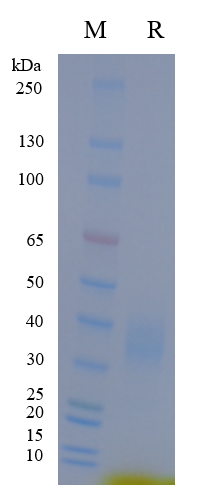
| Purity | > 95% as determined by SDS-PAGE |
| Endotoxin | < 1 EU/μg, determined by LAL gel clotting assay |
| Predicted Mol Mass | 23.9 KDa |
| Formulation | Supplied as a 0.2 μm filtered solution of PBS, pH7.2-7.4. |
| Description | SLAMF6 protein (Signaling Lymphocytic Activation Molecule Family member 6), also known as NK-T-B-antigen (NTB-A), is a co-stimulatory molecule that belongs to the CD2 family of the immunoglobulin superfamily. It is encoded by the SLAMF6 gene and is a protein associated with the human immune system. SLAMF6 protein was initially discovered on natural killer (NK) cells, T cells, and B cells, and later detected on other immune cell subsets, including NKT cells and activated lymphocytes. SLAMF6 protein regulates the activity of NK cells and T cells by binding homophilically (SLAMF6-SLAMF6 interaction) or heterophilically to other SLAM family receptors on adjacent immune cells. NK cells and T cells are important types of lymphocytes with the ability to directly kill tumor cells and infected cells, as well as orchestrate adaptive immune responses, making them crucial members of the immune system. Research indicates that SLAMF6 protein plays a significant role in regulating the activity of NK cells and T cells, promoting cytotoxicity, cytokine production, and modulating immune responses. Additionally, the expression of SLAMF6 protein is associated with immune exhaustion in chronic viral infections and tumor microenvironments, as well as with autoimmune diseases, making it a potential target for immunotherapy, including cancer immunotherapy and the treatment of autoimmune disorders. |
| Alternative Names | NTB-A, Ly108,NK-T-B-antigen,CD352,KALI |
| Source | Human SLAMF6 Protein; His Tag (GM-88713RP) is expressed from human 293 cells (HEK-293). It contains AA Gln 22 - Met 226 (Accession # Q96DU3-1). This protein carries a His tag at the C-terminus. |
| Purity | > 95% as determined by SDS-PAGE |
| Endotoxin | < 1 EU/μg, determined by LAL gel clotting assay |
| Predicted Mol Mass | 23.9 KDa |
| Formulation | Supplied as a 0.2 μm filtered solution of PBS, pH7.2-7.4. |
| Description | SLAMF6 protein (Signaling Lymphocytic Activation Molecule Family member 6), also known as NK-T-B-antigen (NTB-A), is a co-stimulatory molecule that belongs to the CD2 family of the immunoglobulin superfamily. It is encoded by the SLAMF6 gene and is a protein associated with the human immune system. SLAMF6 protein was initially discovered on natural killer (NK) cells, T cells, and B cells, and later detected on other immune cell subsets, including NKT cells and activated lymphocytes. SLAMF6 protein regulates the activity of NK cells and T cells by binding homophilically (SLAMF6-SLAMF6 interaction) or heterophilically to other SLAM family receptors on adjacent immune cells. NK cells and T cells are important types of lymphocytes with the ability to directly kill tumor cells and infected cells, as well as orchestrate adaptive immune responses, making them crucial members of the immune system. Research indicates that SLAMF6 protein plays a significant role in regulating the activity of NK cells and T cells, promoting cytotoxicity, cytokine production, and modulating immune responses. Additionally, the expression of SLAMF6 protein is associated with immune exhaustion in chronic viral infections and tumor microenvironments, as well as with autoimmune diseases, making it a potential target for immunotherapy, including cancer immunotherapy and the treatment of autoimmune disorders. |