









| Alternative Names | GM-CSF-R-alpha,GMCSFR-alpha,CSF2RA,CSF2R,CSF2RY,CDw116,CD116 |
| Source | Human GM-CSFRA Protein; His Tag (GM-88385RP) is expressed from human 293 cells (HEK-293). It contains AA Glu 23 - Gly 320 (Accession # P15509-1). This protein carries a His tag at the C-terminus. |
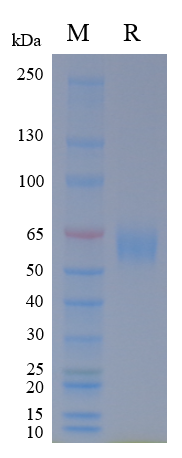
| Purity | > 95% as determined by SDS-PAGE |
| Endotoxin | < 1 EU/μg, determined by LAL gel clotting assay |
| Predicted Mol Mass | 35.3 kDa |
| Formulation | Supplied as a 0.2 μm filtered solution of PBS, pH7.2-7.4. |
| Description | GM-CSFRA protein, full name Granulocyte-Macrophage Colony-Stimulating Factor Receptor Alpha Chain, is a cytokine receptor that belongs to the type I cytokine receptor family. It is encoded by the CSF2RA gene and is a protein associated with the human immune system. GM-CSFRA protein was initially discovered on hematopoietic progenitor cells and later detected on various myeloid lineage cells, including granulocytes, macrophages, dendritic cells, and alveolar macrophages. GM-CSFRA protein regulates the survival, proliferation, and differentiation of myeloid cells by binding to its ligand GM-CSF (granulocyte-macrophage colony-stimulating factor), typically in partnership with the common beta chain (CD131). Myeloid cells such as neutrophils, macrophages, and dendritic cells are important types of immune cells with critical functions in innate immunity, antigen presentation, and inflammatory responses, making them central members of the immune system. Research indicates that GM-CSFRA protein plays a significant role in promoting myeloid cell production, enhancing immune cell function, and modulating inflammatory responses. Additionally, the expression of GM-CSFRA protein is associated with autoimmune diseases (such as rheumatoid arthritis and multiple sclerosis), inflammatory disorders, and pulmonary alveolar proteinosis (PAP), making it a potential target for immunotherapy. |
| Alternative Names | GM-CSF-R-alpha,GMCSFR-alpha,CSF2RA,CSF2R,CSF2RY,CDw116,CD116 |
| Source | Human GM-CSFRA Protein; His Tag (GM-88385RP) is expressed from human 293 cells (HEK-293). It contains AA Glu 23 - Gly 320 (Accession # P15509-1). This protein carries a His tag at the C-terminus. |
| Purity | > 95% as determined by SDS-PAGE |
| Endotoxin | < 1 EU/μg, determined by LAL gel clotting assay |
| Predicted Mol Mass | 35.3 kDa |
| Formulation | Supplied as a 0.2 μm filtered solution of PBS, pH7.2-7.4. |
| Description | GM-CSFRA protein, full name Granulocyte-Macrophage Colony-Stimulating Factor Receptor Alpha Chain, is a cytokine receptor that belongs to the type I cytokine receptor family. It is encoded by the CSF2RA gene and is a protein associated with the human immune system. GM-CSFRA protein was initially discovered on hematopoietic progenitor cells and later detected on various myeloid lineage cells, including granulocytes, macrophages, dendritic cells, and alveolar macrophages. GM-CSFRA protein regulates the survival, proliferation, and differentiation of myeloid cells by binding to its ligand GM-CSF (granulocyte-macrophage colony-stimulating factor), typically in partnership with the common beta chain (CD131). Myeloid cells such as neutrophils, macrophages, and dendritic cells are important types of immune cells with critical functions in innate immunity, antigen presentation, and inflammatory responses, making them central members of the immune system. Research indicates that GM-CSFRA protein plays a significant role in promoting myeloid cell production, enhancing immune cell function, and modulating inflammatory responses. Additionally, the expression of GM-CSFRA protein is associated with autoimmune diseases (such as rheumatoid arthritis and multiple sclerosis), inflammatory disorders, and pulmonary alveolar proteinosis (PAP), making it a potential target for immunotherapy. |