









| Alternative Names | Cadherin-17, HPT-1, LI-cadherin |
| Source | Human CDH17 Protein; hFc Tag (GM-88594RP) is expressed from human 293 cells (HEK-293). It contains AA Gln23-Met787 (Accession # Q12864-1). This protein carries a hFc tag at the C-terminus. |
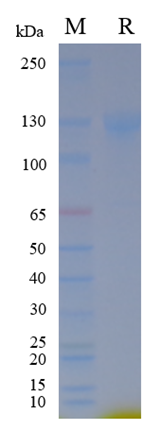
| Purity | > 95% as determined by SDS-PAGE |
| Endotoxin | < 1 EU/μg, determined by LAL gel clotting assay |
| Predicted Mol Mass | 110.9 kDa |
| Formulation | Supplied as a 0.2 μm filtered solution of PBS, pH7.2-7.4. |
| Description | CDH17 protein (Cadherin-17), also known as LI-cadherin (liver-intestine cadherin), is a calcium-dependent cell adhesion molecule that belongs to the cadherin superfamily. It is encoded by the CDH17 gene and is a protein associated with the human digestive system and tumor biology. CDH17 protein was initially discovered in the liver and intestine, and later detected in various epithelial tissues of the gastrointestinal tract, including the small intestine, colon, and pancreas, as well as in pancreatic and gastric cancer tissues. CDH17 protein regulates cell-cell adhesion, tissue architecture, and cell migration by binding to its ligands, which include other cadherin molecules and integrins, on the surface of adjacent epithelial cells. Intestinal epithelial cells and tumor cells are important types of cells expressing CDH17, playing critical functions in maintaining intestinal barrier integrity, facilitating nutrient absorption, and promoting tumor invasion and metastasis, making them central members of the gastrointestinal epithelium and tumor progression. Research indicates that CDH17 protein plays a significant role in promoting tumor cell proliferation, enhancing cell migration and invasion, and modulating Wnt/β-catenin signaling pathways. Additionally, the expression of CDH17 protein is associated with various gastrointestinal cancers, including colorectal cancer, gastric cancer, hepatocellular carcinoma, and pancreatic cancer, as well as with inflammatory bowel diseases, making it a potential target for cancer diagnosis, prognosis, and targeted therapy. |
| Alternative Names | Cadherin-17, HPT-1, LI-cadherin |
| Source | Human CDH17 Protein; hFc Tag (GM-88594RP) is expressed from human 293 cells (HEK-293). It contains AA Gln23-Met787 (Accession # Q12864-1). This protein carries a hFc tag at the C-terminus. |
| Purity | > 95% as determined by SDS-PAGE |
| Endotoxin | < 1 EU/μg, determined by LAL gel clotting assay |
| Predicted Mol Mass | 110.9 kDa |
| Formulation | Supplied as a 0.2 μm filtered solution of PBS, pH7.2-7.4. |
| Description | CDH17 protein (Cadherin-17), also known as LI-cadherin (liver-intestine cadherin), is a calcium-dependent cell adhesion molecule that belongs to the cadherin superfamily. It is encoded by the CDH17 gene and is a protein associated with the human digestive system and tumor biology. CDH17 protein was initially discovered in the liver and intestine, and later detected in various epithelial tissues of the gastrointestinal tract, including the small intestine, colon, and pancreas, as well as in pancreatic and gastric cancer tissues. CDH17 protein regulates cell-cell adhesion, tissue architecture, and cell migration by binding to its ligands, which include other cadherin molecules and integrins, on the surface of adjacent epithelial cells. Intestinal epithelial cells and tumor cells are important types of cells expressing CDH17, playing critical functions in maintaining intestinal barrier integrity, facilitating nutrient absorption, and promoting tumor invasion and metastasis, making them central members of the gastrointestinal epithelium and tumor progression. Research indicates that CDH17 protein plays a significant role in promoting tumor cell proliferation, enhancing cell migration and invasion, and modulating Wnt/β-catenin signaling pathways. Additionally, the expression of CDH17 protein is associated with various gastrointestinal cancers, including colorectal cancer, gastric cancer, hepatocellular carcinoma, and pancreatic cancer, as well as with inflammatory bowel diseases, making it a potential target for cancer diagnosis, prognosis, and targeted therapy. |