










| Alternative Names | 4Ig-B7-H3,B7-H3,PSEC0249,UNQ309,PRO352,B7 homolog 3 |
| Source | Human CD276(B7H3 4Ig) Protein; hFc Tag (GM-88591RP) is expressed from human 293 cells (HEK-293). It contains AA Gly 27 - Thr 461 (Accession # Q5ZPR3-1). This protein carries a hFc tag at the C-terminus. |
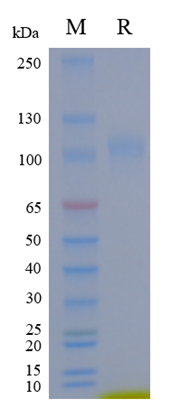
| Purity | > 95% as determined by SDS-PAGE |
| Endotoxin | < 1 EU/μg, determined by LAL gel clotting assay |
| Predicted Mol Mass | 72.6 kDa |
| Formulation | Supplied as a 0.2 μm filtered solution of PBS, pH7.2-7.4. |
| Description | CD276 protein, also known as B7-H3, is a co-stimulatory molecule that belongs to the B7 family of the immunoglobulin superfamily. It is encoded by the CD276 gene and is a protein associated with the human immune system. CD276 protein was initially discovered on activated dendritic cells and monocytes, and later detected in various immune cell subsets, including T cells, natural killer (NK) cells, and antigen-presenting cells, as well as in non-immune tissues such as bone, liver, and tumor tissues. CD276 protein regulates T cell activation, proliferation, and cytokine production by binding to its as-yet-uncharacterized receptors on the surface of immune cells. T cells and NK cells are important types of lymphocytes with critical functions in adaptive immune responses, antitumor immunity, and immune surveillance, making them central members of the immune system. Research indicates that CD276 protein plays a significant role in inhibiting T cell-mediated immune responses, promoting immune evasion, and modulating tumor immunity. Additionally, the expression of CD276 protein is associated with various solid tumors, including lung cancer, breast cancer, prostate cancer, and colorectal cancer, as well as with autoimmune diseases and transplant rejection, making it a potential target for immunotherapy and cancer treatment. |
| Alternative Names | 4Ig-B7-H3,B7-H3,PSEC0249,UNQ309,PRO352,B7 homolog 3 |
| Source | Human CD276(B7H3 4Ig) Protein; hFc Tag (GM-88591RP) is expressed from human 293 cells (HEK-293). It contains AA Gly 27 - Thr 461 (Accession # Q5ZPR3-1). This protein carries a hFc tag at the C-terminus. |
| Purity | > 95% as determined by SDS-PAGE |
| Endotoxin | < 1 EU/μg, determined by LAL gel clotting assay |
| Predicted Mol Mass | 72.6 kDa |
| Formulation | Supplied as a 0.2 μm filtered solution of PBS, pH7.2-7.4. |
| Description | CD276 protein, also known as B7-H3, is a co-stimulatory molecule that belongs to the B7 family of the immunoglobulin superfamily. It is encoded by the CD276 gene and is a protein associated with the human immune system. CD276 protein was initially discovered on activated dendritic cells and monocytes, and later detected in various immune cell subsets, including T cells, natural killer (NK) cells, and antigen-presenting cells, as well as in non-immune tissues such as bone, liver, and tumor tissues. CD276 protein regulates T cell activation, proliferation, and cytokine production by binding to its as-yet-uncharacterized receptors on the surface of immune cells. T cells and NK cells are important types of lymphocytes with critical functions in adaptive immune responses, antitumor immunity, and immune surveillance, making them central members of the immune system. Research indicates that CD276 protein plays a significant role in inhibiting T cell-mediated immune responses, promoting immune evasion, and modulating tumor immunity. Additionally, the expression of CD276 protein is associated with various solid tumors, including lung cancer, breast cancer, prostate cancer, and colorectal cancer, as well as with autoimmune diseases and transplant rejection, making it a potential target for immunotherapy and cancer treatment. |