













| Alternative Names | CD30 ligand, CD153 |
| Source | Mouse TNFSF8(CD30L) Protein; His Tag (GM-88436RP) is expressed from human 293 cells (HEK-293). It contains AA Gln 68 - Asp 239 (Accession # P32972). This protein carries a His tag at the N-terminus. |
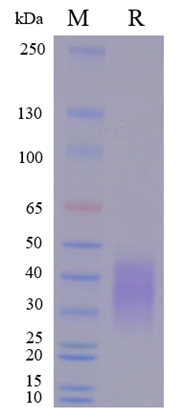
| Purity | > 90% as determined by SDS-PAGE |
| Endotoxin | < 1 EU/μg, determined by LAL gel clotting assay |
| Predicted Mol Mass | 20.3 kDa |
| Formulation | Supplied as a 0.2 μm filtered solution of PBS, pH7.2-7.4. |
| Description | TNFSF8 protein (Tumor Necrosis Factor Ligand Superfamily Member 8), also known as CD30L, is a co-stimulatory molecule that belongs to the tumor necrosis factor (TNF) ligand superfamily. It is encoded by the TNFSF8 gene and is a protein associated with the human immune system. TNFSF8 protein was initially discovered on activated T cells and Hodgkin lymphoma cells, and later detected on various immune cell subsets, including activated T cells, B cells, and myeloid cells, as well as in lymphoid tissues such as the thymus and spleen. TNFSF8 protein regulates the activation, proliferation, and survival of lymphocytes by binding to its receptor CD30 (also known as TNFRSF8) on the surface of immune cells. CD30-positive T cells and B cells are important targets of TNFSF8 signaling, playing critical functions in adaptive immune responses, inflammation, and immune regulation, making them central members of the immune system. Research indicates that TNFSF8 protein plays a significant role in promoting lymphocyte survival, enhancing T cell activation and differentiation, and modulating inflammatory responses. Additionally, the expression of TNFSF8 protein is associated with hematological malignancies, such as Hodgkin lymphoma and anaplastic large cell lymphoma, as well as with inflammatory and autoimmune diseases, making it a potential target for immunotherapy and targeted therapy. |
| Alternative Names | CD30 ligand, CD153 |
| Source | Mouse TNFSF8(CD30L) Protein; His Tag (GM-88436RP) is expressed from human 293 cells (HEK-293). It contains AA Gln 68 - Asp 239 (Accession # P32972). This protein carries a His tag at the N-terminus. |
| Purity | > 90% as determined by SDS-PAGE |
| Endotoxin | < 1 EU/μg, determined by LAL gel clotting assay |
| Predicted Mol Mass | 20.3 kDa |
| Formulation | Supplied as a 0.2 μm filtered solution of PBS, pH7.2-7.4. |
| Description | TNFSF8 protein (Tumor Necrosis Factor Ligand Superfamily Member 8), also known as CD30L, is a co-stimulatory molecule that belongs to the tumor necrosis factor (TNF) ligand superfamily. It is encoded by the TNFSF8 gene and is a protein associated with the human immune system. TNFSF8 protein was initially discovered on activated T cells and Hodgkin lymphoma cells, and later detected on various immune cell subsets, including activated T cells, B cells, and myeloid cells, as well as in lymphoid tissues such as the thymus and spleen. TNFSF8 protein regulates the activation, proliferation, and survival of lymphocytes by binding to its receptor CD30 (also known as TNFRSF8) on the surface of immune cells. CD30-positive T cells and B cells are important targets of TNFSF8 signaling, playing critical functions in adaptive immune responses, inflammation, and immune regulation, making them central members of the immune system. Research indicates that TNFSF8 protein plays a significant role in promoting lymphocyte survival, enhancing T cell activation and differentiation, and modulating inflammatory responses. Additionally, the expression of TNFSF8 protein is associated with hematological malignancies, such as Hodgkin lymphoma and anaplastic large cell lymphoma, as well as with inflammatory and autoimmune diseases, making it a potential target for immunotherapy and targeted therapy. |