













| Alternative Names | TNFSF15, VEGI, TL1, TNLG1B, VEGI192A |
| Source | Human TL1A Protein; His Tag (Trimer Design) (GM-88951RP) is expressed from human 293 cells (HEK-293). It contains AA Leu 72 - Leu 251 (Accession # O95150-1).This protein carries a His tag at the N-terminus. |
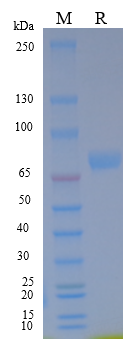
| Purity | > 90% as determined by SDS-PAGE |
| Endotoxin | < 1 EU/μg, determined by LAL gel clotting assay |
| Predicted Mol Mass | 64.1 kDa |
| Formulation | Supplied as a 0.2 μm filtered solution of PBS, pH 7.2–7.4. |
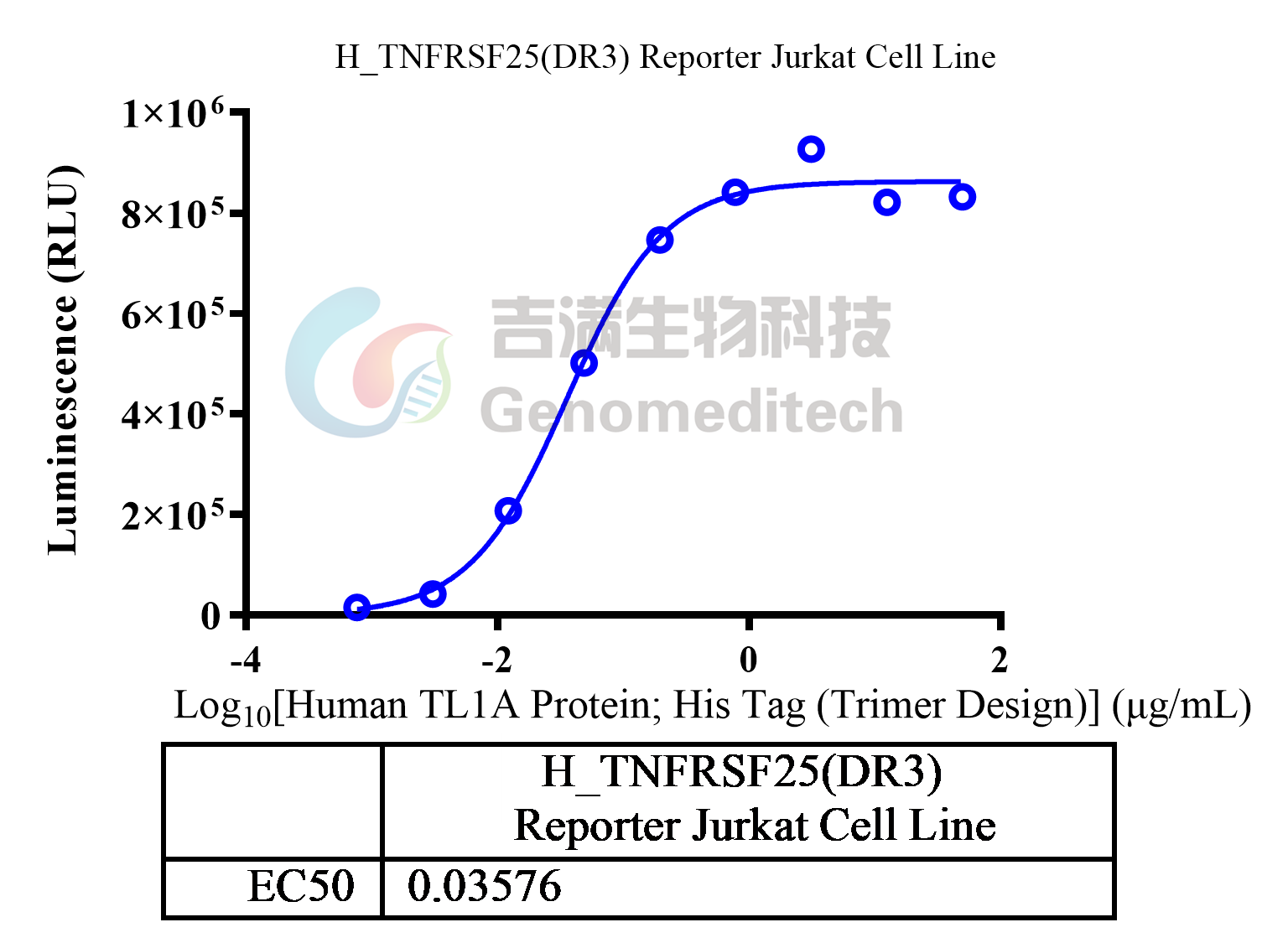
| Description | Tumor necrosis factor (TNF)-like cytokine 1A (TL1A) is a member of the TNF superfamily of proteins (TNFSF15), which signals through association with death domain receptor 3 (DR3). Decoy receptor 3 (DcR3) competes with DR3 for TL1A binding and inhibits functional signaling. These proteins are significantly upregulated in inflamed intestinal tissues, and their pathogenetic importance for inflammatory bowel disease (IBD) is suggested by accumulating evidence. TL1A/DR3 induce costimulatory signals to activated lymphocytes, including the gut-specific populations of CD4+CD161+ and CD4+CCR9+ cells, affecting all major effector pathways and inducing the mucosal upregulation of Th1, Th2, and Th17 factors. |
| Alternative Names | TNFSF15, VEGI, TL1, TNLG1B, VEGI192A |
| Source | Human TL1A Protein; His Tag (Trimer Design) (GM-88951RP) is expressed from human 293 cells (HEK-293). It contains AA Leu 72 - Leu 251 (Accession # O95150-1).This protein carries a His tag at the N-terminus. |
| Purity | > 90% as determined by SDS-PAGE |
| Endotoxin | < 1 EU/μg, determined by LAL gel clotting assay |
| Predicted Mol Mass | 64.1 kDa |
| Formulation | Supplied as a 0.2 μm filtered solution of PBS, pH 7.2–7.4. |
| Description | Tumor necrosis factor (TNF)-like cytokine 1A (TL1A) is a member of the TNF superfamily of proteins (TNFSF15), which signals through association with death domain receptor 3 (DR3). Decoy receptor 3 (DcR3) competes with DR3 for TL1A binding and inhibits functional signaling. These proteins are significantly upregulated in inflamed intestinal tissues, and their pathogenetic importance for inflammatory bowel disease (IBD) is suggested by accumulating evidence. TL1A/DR3 induce costimulatory signals to activated lymphocytes, including the gut-specific populations of CD4+CD161+ and CD4+CCR9+ cells, affecting all major effector pathways and inducing the mucosal upregulation of Th1, Th2, and Th17 factors. |