Current Position: Product Center
FcεRIα Reporter RBL-2H3 Cell Line
Cat. No.
GM-C40137
Size
1 Tube
Quote
Description
Data Display
Specifications
Materials
Cell Culture
Related products
Description
FcεRIα, the alpha subunit of the high-affinity IgE receptor, is primarily expressed on mast cells and basophils and plays a crucial role in type I hypersensitivity reactions. It consists of an extracellular domain with two Ig-like regions (D1 and D2), a transmembrane domain, and a short intracellular tail. The extracellular domain binds tightly to the Fc region (Fcε3) of IgE. When multivalent allergens cross-link IgE bound to FcεRIα, the receptor aggregates, activating signaling pathways such as Syk kinase, calcium influx, and NFAT transcription factors. This triggers degranulation and the release of inflammatory mediators like histamine and leukotrienes.

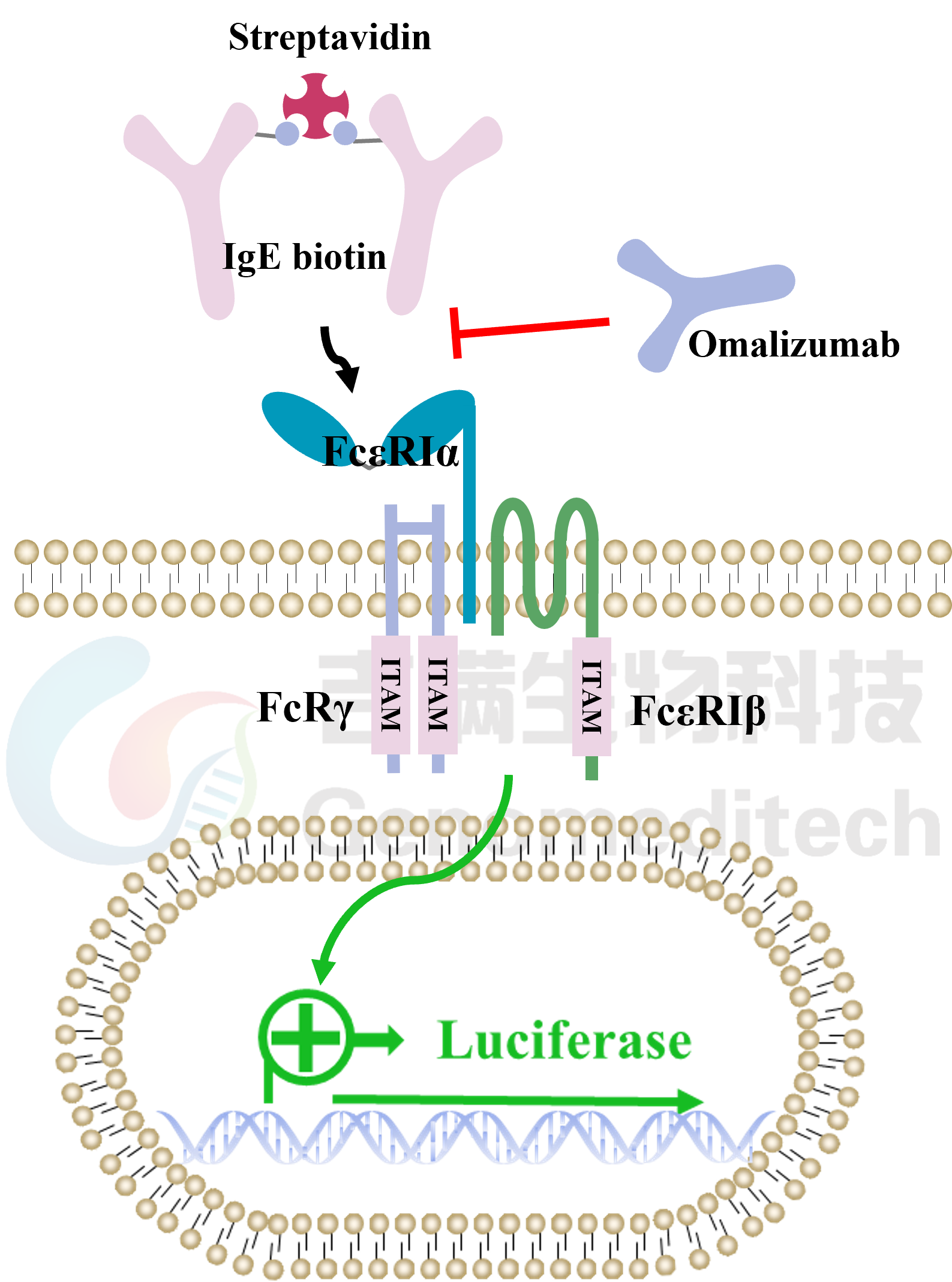
FcεRIα Reporter RBL-2H3 Cell Line is a stable clonal RBL-2H3 cell line constructed using lentiviral technology, constitutive expression of the FcεRIα gene, along with signal-dependent expression of a luciferase reporter gene. IgE-biotin binds FcεRIα via its Fc region, while biotin can be crosslinked by streptavidin to activate downstream signaling pathways. Omalizumab, an anti-IgE antibody, targets the Fcε3 domain of free IgE, blocking its interaction with FcεRIα and inhibiting downstream signaling, which reduces luciferase expression. The luciferase signal reflects the pathway's activation level, making this method effective for evaluating anti-IgE antibody bioactivity.
Data Display
Signaling Pathway
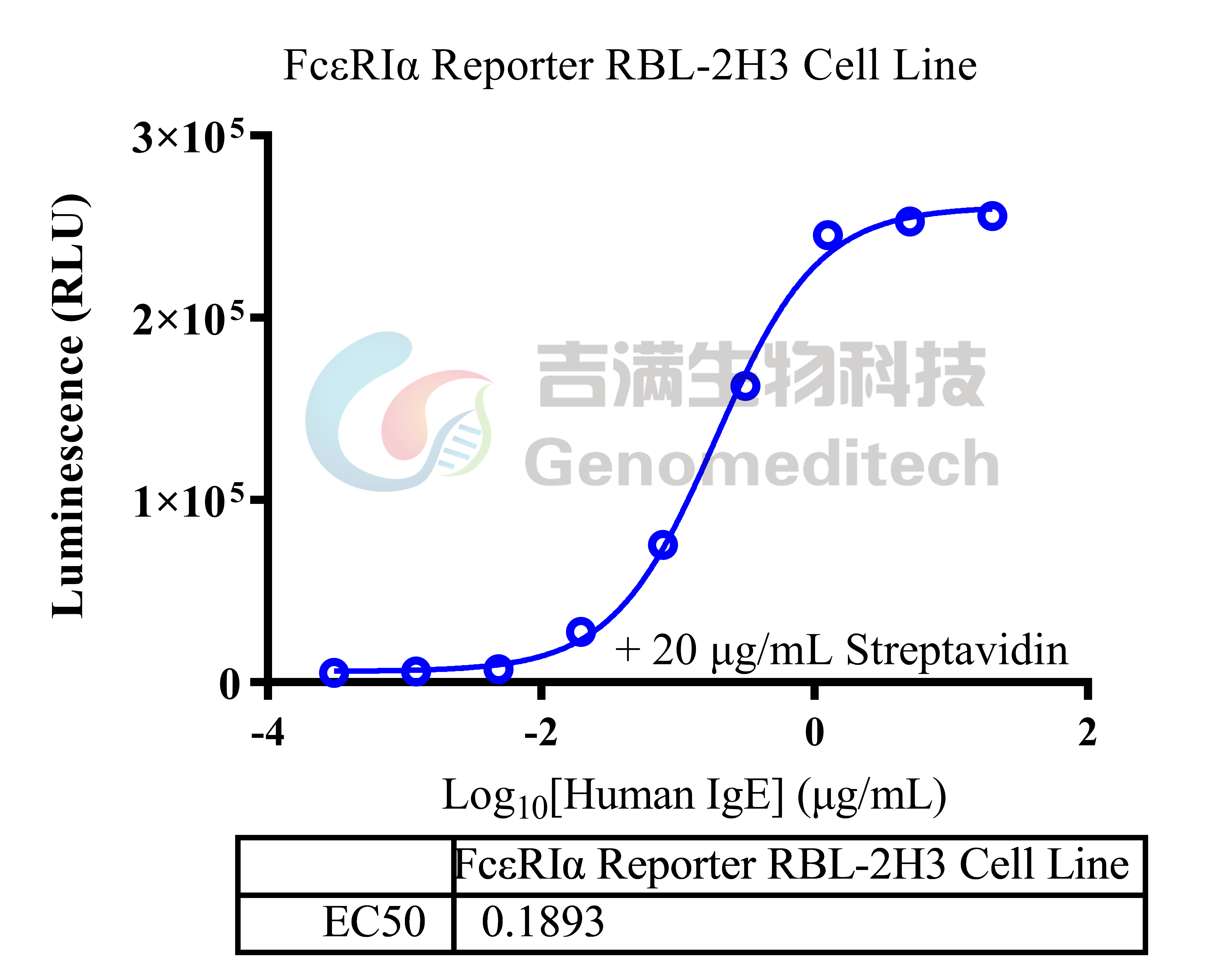
Response to Biotinylated Human IgE Isotype. On day one, FcεRIα Reporter RBL-2H3 Cell Line(Cat. GM-C40137) were seeded in a 96-well plate at 1E4 cells/well and incubated for at least 4 hours before removing the supernatant. Simultaneously, serial dilutions of human IgE (Cat. GM-88131AB) were prepared and added to FcεRIα Reporter RBL-2H3 Cell Line for overnight incubation. The next day, after supernatant removal, streptavidin (2 μg/well) was added and incubated for 3 hours. The firefly luciferase activity was measured using the Luciferase Reporter Assay Kit (Genomeditech). The maximum induction fold reached approximately [49.8]. Data are shown as drug mass concentration.
Applications
Response to Omalizumab. On day one, FcεRIα Reporter RBL-2H3 cells (Cat. GM-C40137) were seeded in a 96-well plate at 1E4 cells/well and incubated for at least 4 hours before removing the supernatant. Simultaneously, serially diluted omalizumab and 20 ng/well Human IgE (Cat.GM-88131AB) were co-incubated in assay buffer for 1 hour, then added to the FcεRIα Reporter RBL-2H3 cells for overnight incubation. The next day, after supernatant removal, streptavidin (2 μg/well) was added and incubated for 3 hours. The firefly luciferase activity was measured using the Luciferase Reporter Assay Kit (Genomeditech). The maximum induction fold reached approximately [10.6]. Data are shown as drug mass concentration.
Expression
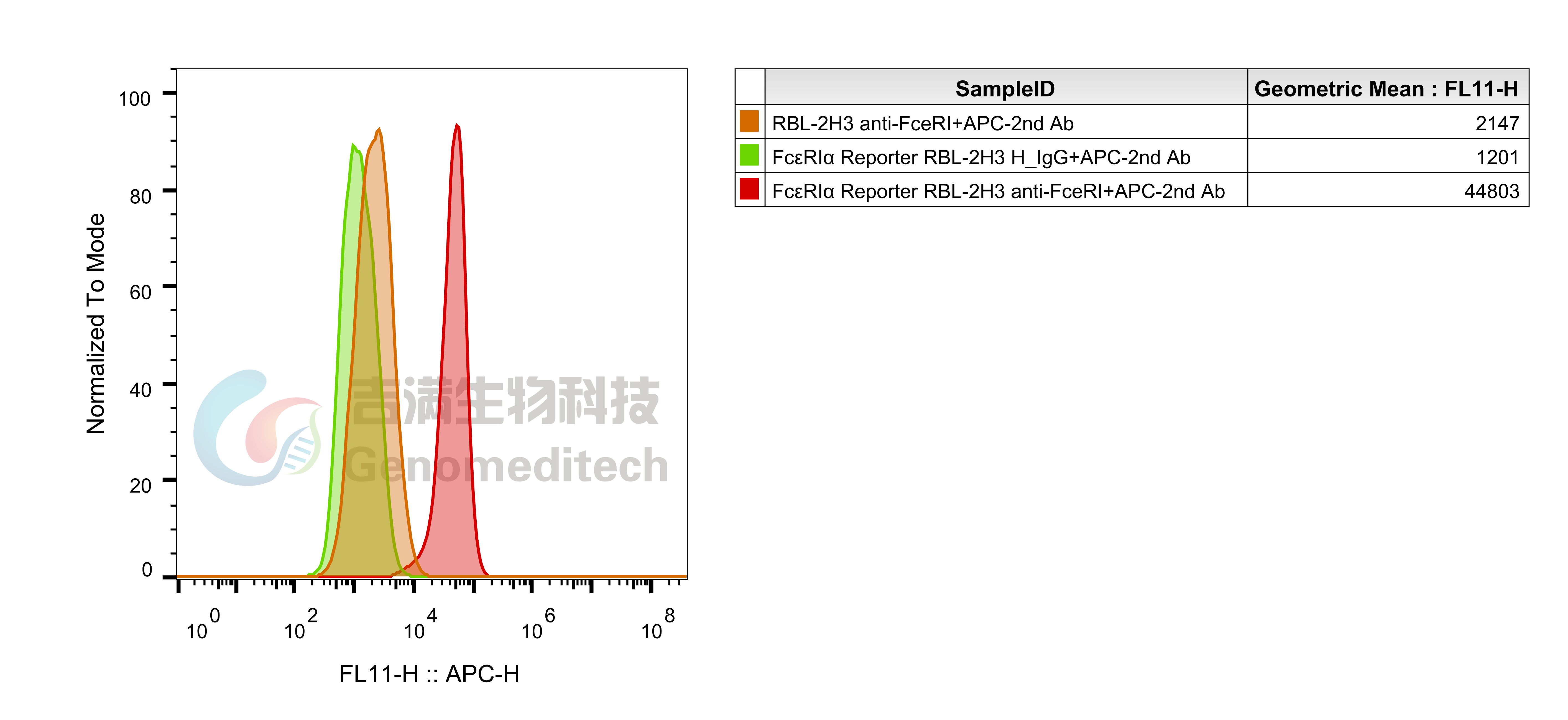
FcεRIα Reporter RBL-2H3 Cell Line (Cat. GM-C40137) was determined by flow cytometry using Anti-FcεRI hIgG1 Antibody (1E7) (Cat. GM-88159AB).
Specifications
Cat. No GM-C40137
Product FcεRIα Reporter RBL-2H3 Cell Line
Product Format 1 vial of frozen cells
Quantity 5E6 Cells per vial,1 mL
Storage Conditions Liquid nitrogen immediately upon receipt
Recovery Medium MEM+15% FBS+1% P.S+1% NEAA+0.11 mg/mL Sodium Pyruvate
Growth medium MEM+15% FBS+1% P.S+1% NEAA+0.11 mg/mL Sodium Pyruvate+1 μg/mL Blasticidin+0.5 μg/mL Puromycin
Note None
Freezing Medium 90% FBS+10% DMSO
Growth properties Adherent
Growth Conditions 37°C, 5% CO₂
Safety considerations Biosafety Level 2
Mycoplasma Testing The cell line has been screened to confirm the absence of Mycoplasma species.
Materials
Reagent Ordering Information
MEM gibco/11095-080
Fetal Bovine Serum Cegrogen biotech/A0500-3010
NEAA Pricella/PB180424
Pen/Strep Thermo/15140-122
Sodium Pyruvate Solution Viva Cell/C3546-0100
Blasticidin Genomeditech/GM-040404
Puromycin Genomeditech/GM-040401
Biotinylated Human IgE Isotype Control; His-Avi Tag (Anti-RSV) Genomeditech/GM-88131AB
Streptavidin Yeasen/35101ES03
Anti-IGHE hIgG1 Reference Antibody(Omalbio) Genomeditech/GM-87960MAB
Anti-FcεRI hIgG1 Antibody (1E7) Genomeditech/GM-88159AB
GMOne-Step 2.0 Luciferase Reporter Gene Assay Kit Genomeditech/GM-040513
Cell Culture

Cell Recovery

Recovery Medium: MEM+15% FBS+1% P.S+1% NEAA+0.11 mg/mL Sodium Pyruvate

To insure the highest level of viability, thaw the vial and initiate the culture as soon as possible upon receipt. If upon arrival, continued storage of the frozen culture is necessary, it should be stored in liquid nitrogen vapor phase and not at -70°C. Storage at -70°C will result in loss of viability.

a)       Thaw the vial by gentle agitation in a 37°C water bath. To reduce the possibility of contamination, keep the O-ring and cap out of the water. Thawing should be rapid (approximately 2 - 3 minutes).

b)       Remove the vial from the water bath as soon as the contents are thawed, and decontaminate by dipping in or spraying with 70% ethanol. All of the operations from this point on should be carried out under strict aseptic conditions.

c)       Transfer the vial contents to a centrifuge tube containing 5.0 mL complete culture medium and spin at approximately 176 x g for 5 minutes. Discard supernatant.

d)       Resuspend cell pellet with the recommended recovery medium. And dispense into appropriate culture dishes.

e)       Incubate the culture at 37°C in a suitable incubator. A 5% CO₂ in air atmosphere is recommended if using the medium described on this product sheet.

Cell Freezing

Freezing Medium: 90% FBS+10% DMSO

a)          Centrifuge at 176 x g for 3 minutes to collect cells.

b)         Resuspend the cells in pre-cooled freezing medium and adjust the cell density to 5E6 cells/mL.

c)          Aliquot 1 mL into each vial.

d)         Place the vial in a controlled-rate freezing container and store at -80°C for at least 1 day, then transfer to liquid nitrogen as soon as possible.

Cell passage

Growth medium: MEM+15% FBS+1% P.S+1% NEAA+0.11 mg/mL Sodium Pyruvate+1 μg/mL Blasticidin+0.5 μg/mL Puromycin

For the first 1 to 2 passages post-resuscitation, use the recovery medium. Once the cells have stabilized, switch to a growth medium.

a)          Remove and discard culture medium.

b)         Briefly rinse the cell layer with PBS to remove all traces of serum that contains trypsin inhibitor.

c)          Add 1.0 mL of 0.25% (w/v) Trypsin-EDTA solution to dish and observe cells under an inverted microscope until cell layer is dispersed (usually within 2 to 3 minutes at 37°C).

d)         Note: To avoid clumping do not agitate the cells by hitting or shaking the flask while waiting for the cells to detach. Cells that are difficult to detach may be placed at 37°C to facilitate dispersal.

e)          Add 2.0 mL of growth medium to mix well and aspirate cells by gently pipetting.

f)          After centrifugation, resuspend the pellet and add appropriate aliquots of the cell suspension to new culture vessels.

g)         Incubate cultures at 37°C.

Subcultivation Ratio: A subcultivation ratio of 1:3 - 1:4 is recommended

Medium Renewal: Every 2 to 3 days

Notes

a)          RBL-2H3 cells exhibit a polygonal adherent morphology when cultured at low density. As the cell density increases, rounded cells begin to appear. The cell density should not exceed 80%, as over-confluence can lead to rounding of the cells and significant detachment.

FcεRIα Reporter RBL-2H3 Cell Line
Cat. No.
GM-C40137
Size
1 Tube
Quote
Description
Data Display
Specifications
Materials
Cell Culture
Related products
Description
FcεRIα, the alpha subunit of the high-affinity IgE receptor, is primarily expressed on mast cells and basophils and plays a crucial role in type I hypersensitivity reactions. It consists of an extracellular domain with two Ig-like regions (D1 and D2), a transmembrane domain, and a short intracellular tail. The extracellular domain binds tightly to the Fc region (Fcε3) of IgE. When multivalent allergens cross-link IgE bound to FcεRIα, the receptor aggregates, activating signaling pathways such as Syk kinase, calcium influx, and NFAT transcription factors. This triggers degranulation and the release of inflammatory mediators like histamine and leukotrienes.

FcεRIα Reporter RBL-2H3 Cell Line is a stable clonal RBL-2H3 cell line constructed using lentiviral technology, constitutive expression of the FcεRIα gene, along with signal-dependent expression of a luciferase reporter gene. IgE-biotin binds FcεRIα via its Fc region, while biotin can be crosslinked by streptavidin to activate downstream signaling pathways. Omalizumab, an anti-IgE antibody, targets the Fcε3 domain of free IgE, blocking its interaction with FcεRIα and inhibiting downstream signaling, which reduces luciferase expression. The luciferase signal reflects the pathway's activation level, making this method effective for evaluating anti-IgE antibody bioactivity.
Data Display
Signaling Pathway
Response to Biotinylated Human IgE Isotype. On day one, FcεRIα Reporter RBL-2H3 Cell Line(Cat. GM-C40137) were seeded in a 96-well plate at 1E4 cells/well and incubated for at least 4 hours before removing the supernatant. Simultaneously, serial dilutions of human IgE (Cat. GM-88131AB) were prepared and added to FcεRIα Reporter RBL-2H3 Cell Line for overnight incubation. The next day, after supernatant removal, streptavidin (2 μg/well) was added and incubated for 3 hours. The firefly luciferase activity was measured using the Luciferase Reporter Assay Kit (Genomeditech). The maximum induction fold reached approximately [49.8]. Data are shown as drug mass concentration.
Applications
Response to Omalizumab. On day one, FcεRIα Reporter RBL-2H3 cells (Cat. GM-C40137) were seeded in a 96-well plate at 1E4 cells/well and incubated for at least 4 hours before removing the supernatant. Simultaneously, serially diluted omalizumab and 20 ng/well Human IgE (Cat.GM-88131AB) were co-incubated in assay buffer for 1 hour, then added to the FcεRIα Reporter RBL-2H3 cells for overnight incubation. The next day, after supernatant removal, streptavidin (2 μg/well) was added and incubated for 3 hours. The firefly luciferase activity was measured using the Luciferase Reporter Assay Kit (Genomeditech). The maximum induction fold reached approximately [10.6]. Data are shown as drug mass concentration.
Expression
FcεRIα Reporter RBL-2H3 Cell Line (Cat. GM-C40137) was determined by flow cytometry using Anti-FcεRI hIgG1 Antibody (1E7) (Cat. GM-88159AB).
Specifications
Cat. No GM-C40137
Product FcεRIα Reporter RBL-2H3 Cell Line
Product Format 1 vial of frozen cells
Quantity 5E6 Cells per vial,1 mL
Storage Conditions Liquid nitrogen immediately upon receipt
Recovery Medium MEM+15% FBS+1% P.S+1% NEAA+0.11 mg/mL Sodium Pyruvate
Growth medium MEM+15% FBS+1% P.S+1% NEAA+0.11 mg/mL Sodium Pyruvate+1 μg/mL Blasticidin+0.5 μg/mL Puromycin
Note None
Freezing Medium 90% FBS+10% DMSO
Growth properties Adherent
Growth Conditions 37°C, 5% CO₂
Safety considerations Biosafety Level 2
Mycoplasma Testing The cell line has been screened to confirm the absence of Mycoplasma species.
Materials
Reagent Ordering Information
MEM gibco/11095-080
Fetal Bovine Serum Cegrogen biotech/A0500-3010
NEAA Pricella/PB180424
Pen/Strep Thermo/15140-122
Sodium Pyruvate Solution Viva Cell/C3546-0100
Blasticidin Genomeditech/GM-040404
Puromycin Genomeditech/GM-040401
Biotinylated Human IgE Isotype Control; His-Avi Tag (Anti-RSV) Genomeditech/GM-88131AB
Streptavidin Yeasen/35101ES03
Anti-IGHE hIgG1 Reference Antibody(Omalbio) Genomeditech/GM-87960MAB
Anti-FcεRI hIgG1 Antibody (1E7) Genomeditech/GM-88159AB
GMOne-Step 2.0 Luciferase Reporter Gene Assay Kit Genomeditech/GM-040513
Cell Culture

Cell Recovery

Recovery Medium: MEM+15% FBS+1% P.S+1% NEAA+0.11 mg/mL Sodium Pyruvate

To insure the highest level of viability, thaw the vial and initiate the culture as soon as possible upon receipt. If upon arrival, continued storage of the frozen culture is necessary, it should be stored in liquid nitrogen vapor phase and not at -70°C. Storage at -70°C will result in loss of viability.

a)       Thaw the vial by gentle agitation in a 37°C water bath. To reduce the possibility of contamination, keep the O-ring and cap out of the water. Thawing should be rapid (approximately 2 - 3 minutes).

b)       Remove the vial from the water bath as soon as the contents are thawed, and decontaminate by dipping in or spraying with 70% ethanol. All of the operations from this point on should be carried out under strict aseptic conditions.

c)       Transfer the vial contents to a centrifuge tube containing 5.0 mL complete culture medium and spin at approximately 176 x g for 5 minutes. Discard supernatant.

d)       Resuspend cell pellet with the recommended recovery medium. And dispense into appropriate culture dishes.

e)       Incubate the culture at 37°C in a suitable incubator. A 5% CO₂ in air atmosphere is recommended if using the medium described on this product sheet.

Cell Freezing

Freezing Medium: 90% FBS+10% DMSO

a)          Centrifuge at 176 x g for 3 minutes to collect cells.

b)         Resuspend the cells in pre-cooled freezing medium and adjust the cell density to 5E6 cells/mL.

c)          Aliquot 1 mL into each vial.

d)         Place the vial in a controlled-rate freezing container and store at -80°C for at least 1 day, then transfer to liquid nitrogen as soon as possible.

Cell passage

Growth medium: MEM+15% FBS+1% P.S+1% NEAA+0.11 mg/mL Sodium Pyruvate+1 μg/mL Blasticidin+0.5 μg/mL Puromycin

For the first 1 to 2 passages post-resuscitation, use the recovery medium. Once the cells have stabilized, switch to a growth medium.

a)          Remove and discard culture medium.

b)         Briefly rinse the cell layer with PBS to remove all traces of serum that contains trypsin inhibitor.

c)          Add 1.0 mL of 0.25% (w/v) Trypsin-EDTA solution to dish and observe cells under an inverted microscope until cell layer is dispersed (usually within 2 to 3 minutes at 37°C).

d)         Note: To avoid clumping do not agitate the cells by hitting or shaking the flask while waiting for the cells to detach. Cells that are difficult to detach may be placed at 37°C to facilitate dispersal.

e)          Add 2.0 mL of growth medium to mix well and aspirate cells by gently pipetting.

f)          After centrifugation, resuspend the pellet and add appropriate aliquots of the cell suspension to new culture vessels.

g)         Incubate cultures at 37°C.

Subcultivation Ratio: A subcultivation ratio of 1:3 - 1:4 is recommended

Medium Renewal: Every 2 to 3 days

Notes

a)          RBL-2H3 cells exhibit a polygonal adherent morphology when cultured at low density. As the cell density increases, rounded cells begin to appear. The cell density should not exceed 80%, as over-confluence can lead to rounding of the cells and significant detachment.

Message consultation
reset
submit
Message
Message consultation
reset
submit