




Where Discovery Begins
Insights
Press Release
Current position:News > Insights
IL-11: An Emerging Anti-Aging and Anti-Fibrotic Target
吉满生物
2026-09-03

In July 2024, a study published in Nature brought a cytokine long associated primarily with hematopoiesis back into the spotlight of aging research.


A team led by Stuart Cook at Duke-NUS Medical School in Singapore found that blocking interleukin-11 (IL-11) signaling with an antibody could significantly extend lifespan in mice. Even when treatment was initiated at an age equivalent to approximately 55 years in humans, median lifespan increased by 22.5% in males and 25% in females. In genetic models in which IL-11 signaling was eliminated, mean lifespan increased by approximately 24.9% in both sexes.


Importantly, blocking IL-11 signaling did more than extend lifespan. The treated mice also showed improved muscle function and metabolic health, along with a slower decline in age-related physiological functions.


This study raises an important question:


Could IL-11 play a role not only in age-related diseases, but in the aging process itself?


As evidence for IL-11’s broader role in aging continues to emerge, this question is also drawing increasing attention from the biopharmaceutical industry.


In June 2025, Calico Life Sciences, Alphabet’s aging and age-related disease research company, entered into an exclusive licensing agreement with Mabwell Biotech for IL-11-targeted therapies, with a total potential value of up to $596 million. Meanwhile, Boehringer Ingelheim is advancing the anti-IL-11 monoclonal antibody BI 765423 into clinical development, exploring its therapeutic potential in idiopathic pulmonary fibrosis (IPF).


From a traditional hematopoietic factor to a pro-fibrotic mediator and now a potential target for aging intervention, IL-11 is undergoing an expanding redefinition of its biological role.


IL-11: A Cytokine Being Reconsidered


Interleukin-11 (IL-11) is a member of the IL-6 cytokine family. Around 1990, IL-11 was first cloned from primate bone marrow stromal cells.


Early research focused primarily on its role in hematopoiesis.


Studies showed that IL-11 could promote megakaryocyte development and, in combination with other hematopoietic factors, support platelet production. For many years, IL-11 was therefore viewed mainly as a cytokine involved in hematopoietic regulation and tissue protection, and was developed for the treatment of chemotherapy-induced thrombocytopenia.


As research progressed, however, the biological functions of IL-11 proved to extend well beyond its original characterization.


A major turning point came from research into fibrosis.


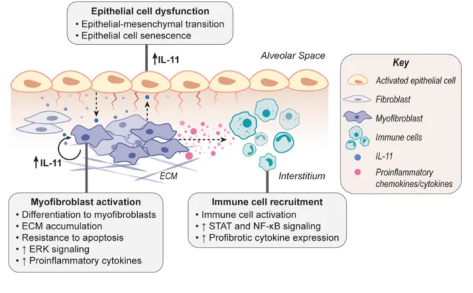
In 2017, the Cook team published a study in Nature that systematically revealed the role of IL-11 in organ fibrosis. The researchers found that TGF-β1 induces IL-11 production in fibroblasts, which in turn promotes fibroblast activation and extracellular matrix (ECM) deposition through ERK signaling, driving tissue fibrosis.
 

This finding changed the way IL-11 was understood:


IL-11 is not simply a hematopoietic factor. It may also serve as an important signaling mediator in tissue injury and fibrosis.


Subsequent studies have increasingly linked IL-11 to fibrosis across multiple organs, including the lungs, liver, kidneys, heart, and skin.


How Does IL-11 Contribute to Fibrosis?


IL-11 binds to IL-11Rα, which then associates with gp130 to form a receptor complex and activate downstream signaling pathways.


Among these, ERK signaling is considered one of the key mediators of the pro-fibrotic effects of IL-11.


The process can be summarized as:


IL-11 → IL-11Rα/gp130 → ERK → Fibroblast activation → ECM deposition → Tissue fibrosis


During this process, fibroblasts differentiate into myofibroblasts and increase the production of collagen and other extracellular matrix proteins, ultimately driving fibrotic tissue remodeling.


This mechanism provided a foundation for a new therapeutic concept:


If IL-11 contributes to the progression of fibrosis, could blocking IL-11 signaling prevent or even reverse the process?


This question would later become an important foundation for the development of IL-11-targeted therapies.

From Fibrosis to Aging: IL-11 Takes a Second Turn


If research around 2017 brought IL-11 into focus as a pro-fibrotic target beyond its traditional role as a hematopoietic factor, a 2024 Nature study took the field one step further by connecting IL-11 to the biology of aging.


The study found that IL-11 signaling increases with age and is associated with multiple age-related changes.


At the mechanistic level, chronic IL-11 signaling may influence cellular metabolism and mitochondrial function through pathways including ERK, AMPK, and mTORC1, contributing to the development of aging-related phenotypes.


This process can be broadly summarized as:


Persistent IL-11 signaling → Increased ERK signaling → Altered AMPK-mediated metabolic regulation → Changes in mTORC1 and related metabolic pathways → Disrupted mitochondrial function and metabolic homeostasis → Cellular aging and functional decline


These changes are not entirely separate from IL-11’s role in fibrosis.


At the tissue level, chronic injury, aberrant repair, fibrosis, and age-related functional decline are closely interconnected processes. IL-11 may sit at the intersection of these biological pathways.


Animal studies provided more direct functional evidence.


When researchers blocked IL-11 with an antibody or eliminated IL-11 signaling through genetic knockout, mice not only lived longer but also showed improved muscle strength, metabolic health, and age-related physiological function.


These findings suggest that IL-11 may be more than a downstream marker of individual age-related diseases. It may also contribute to the broader decline in healthspan that accompanies aging.


However, this conclusion should be interpreted with caution.


The current evidence for lifespan extension through IL-11 inhibition comes primarily from animal studies. Whether IL-11 blockade can delay aging, extend lifespan, or improve healthspan in humans has not yet been clinically established.


Therefore, rather than defining IL-11 as an established anti-aging target, a more accurate characterization is:


IL-11 is emerging as a promising intervention target in aging and age-related disease research.


This expanding body of evidence is broadening the significance of IL-11 beyond individual disease mechanisms and placing it within the larger landscape of aging biology.


Global Landscape of IL-11 Drug Development

Several distinct strategies are now being explored in IL-11 drug development. One approach directly targets IL-11 itself, using antibodies to block its interaction with the receptor. Another targets IL-11Rα, aiming to inhibit downstream signaling at the receptor level. In addition, some programs are exploring bispecific antibodies that simultaneously target IL-11 and other cytokine pathways, with the goal of achieving broader pathway modulation.


The emergence of these different approaches signals a broader shift in the IL-11 field, from target discovery toward more focused drug design and clinical validation.
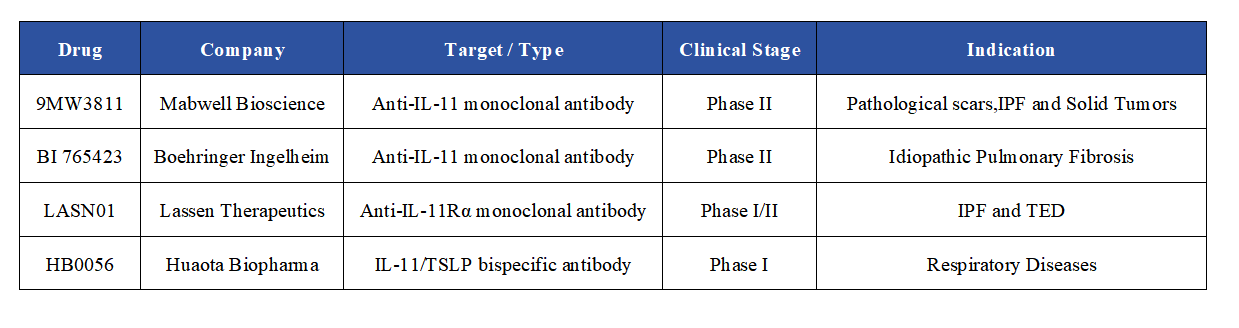


Among these, 9MW3811 from Mabwell and BI 765423 from Boehringer Ingelheim have both advanced to Phase II, making them the two most advanced anti-IL-11 monoclonal antibody programs currently in clinical development.


9MW3811 directly targets IL-11 and is a humanized monoclonal antibody independently developed by Mabwell. Phase I studies in healthy volunteers have been completed in both Australia and China, with a favorable safety profile and a half-life of more than one month. In 2025, Mabwell granted Calico exclusive rights to 9MW3811 outside Greater China. In November, China's NMPA approved a Phase II study in pathological scarring. The study plans to enroll 30 patients, with change in the modified Vancouver Scar Scale (mVSS) score as the primary endpoint. The first patient was dosed on December 29, making 9MW3811 the first IL-11-targeted therapy globally to enter clinical development for pathological scarring. The program is also being explored in idiopathic pulmonary fibrosis and advanced solid tumors.


BI 765423, meanwhile, is an anti-IL-11 monoclonal antibody licensed by Boehringer Ingelheim from Enleofen. It is currently being evaluated in a Phase II study in idiopathic pulmonary fibrosis, with the goal of determining whether IL-11 blockade can slow or potentially reverse the progression of pulmonary fibrosis.


LASN01, developed by U.S.-based Lassen Therapeutics, takes a different approach by directly targeting IL-11Rα, thereby blocking IL-11 signaling at the receptor level. The program is currently being evaluated in clinical studies involving healthy volunteers as well as patients with pulmonary fibrosis and thyroid eye disease (TED).


China-based Bio-Thera Solutions' HB0056 represents a more differentiated strategy. It is a bispecific antibody targeting both TSLP and IL-11, and is currently in Phase I clinical development for respiratory diseases.


Conclusion

Research on IL-11 is entering a new stage.


IL-11 was initially characterized primarily as a cytokine involved in hematopoiesis and platelet production. Subsequent research revealed its important role in tissue fibrosis, while more recent studies have further linked IL-11 to aging, metabolism, and healthspan.


At the same time, multiple therapeutic approaches are now advancing into clinical development, ranging from anti-IL-11 monoclonal antibodies and anti-IL-11Rα antibodies to bispecific antibody strategies.


These advances do not mean that IL-11 has already become a fully validated therapeutic target. Rather, the field is moving beyond basic biological investigation toward a stage where mechanistic validation and clinical translation are progressing in parallel.


As more clinical data and mechanistic insights accumulate, further research will be needed to determine which diseases may ultimately derive meaningful therapeutic benefit from targeting IL-11.


Genomeditech provides a comprehensive portfolio of IL-11 and IL-11Rα research tools, including cell lines, antibodies, and recombinant proteins, supporting every stage of IL-11 research, from target validation and pathway analysis to candidate drug activity evaluation.


Learn More: https://en.genomeditech.com/v2/search?k=IL-11 


Reference

1. Widjaja, A. A., et al. (2024). Inhibition of IL-11 signalling extends mammalian healthspan and lifespan. Nature, 632(8023), 157–165. https://doi.org/10.1038/s41586-024-07701-9 


2. Mabwell Bioscience, & Calico Life Sciences. (2025, June 26). Mabwell Bioscience and Calico Life Sciences announce exclusive licensing agreement for novel IL-11 targeting monoclonal antibody. Calico Life Sciences. https://www.calicolabs.com/press/mabwell-bioscience-and-calico-life-sciences-announce-exclusive-licensing-agreement-for-novel-il-11-targeting-monoclonal-antibody/ 


3. Boehringer Ingelheim. (2026, January 13). Boehringer Ingelheim advances potential first-in-class IL-11 inhibitor to Phase II clinical research in idiopathic pulmonary fibrosis. https://www.globenewswire.com/news-release/2026/01/13/3217650/0/en/Boehringer-Ingelheim-advances-potential-first-in-class-IL-11-inhibitor-to-Phase-II-Clinical-Research-in-Idiopathic-Pulmonary-Fibrosis.html 


4. Paul, S. R., Bennett, F., Calvetti, J. A., Kelleher, K., Wood, C. R., O'Hara, R. M., Jr., Leary, A. C., Sibley, B., Clark, S. C., & Williams, D. A. (1990). Molecular cloning of a cDNA encoding interleukin 11, a stromal cell-derived lymphopoietic and hematopoietic cytokine. Proceedings of the National Academy of Sciences, 87(19), 7512–7516. https://doi.org/10.1073/pnas.87.19.7512 


5. U.S. Food and Drug Administration. (1997, November 25). Oprelvekin (Neumega): Marketing approval. https://www.accessdata.fda.gov/scripts/opdlisting/oopd/detailedIndex.cfm?cfgridkey=96796 


6. Schafer, S., Viswanathan, S., Widjaja, A. A., Lim, W.-W., Moreno-Moral, A., DeLaughter, D. M., et al. (2017). IL-11 is a crucial determinant of cardiovascular fibrosis. Nature, 552(7683), 110–115. https://doi.org/10.1038/nature24676 


7. Fung, K. Y., Louis, C., Metcalfe, R. D., Kosasih, C. C., Wicks, I. P., Griffin, M. D. W., & Putoczki, T. L. (2022). Emerging roles for IL-11 in inflammatory diseases. Cytokine, 149, 155750. https://doi.org/10.1016/j.cyto.2021.155750 


8. Zhou, J., An, X., Xia, X., Xiao, W., Dou, D., Li, W., & Huang, Q. (2025). Aging-associated interleukin-11 drives the molecular mechanism and targeted therapy of idiopathic pulmonary fibrosis. European Journal of Medical Research, 30(1), 542. https://doi.org/10.1186/s40001-025-02755-5 


9. Zhang, J., Leng, Y., Li, W., Wang, B., Yang, B., & Li, W. (2026). The role of IL-11 in chronic diseases. Frontiers in Immunology, 17, 1763360. https://doi.org/10.3389/fimmu.2026.1763360 
Latest news
Insights
2026-09-03
IL-11: An Emerging Anti-Aging and Anti-Fibrotic Target
Explore how IL-11 is being redefined as a potential target in aging and age-related disease research.
Insights
2026-08-26
PD-1 × IL-2α-Bias: From Mechanistic Design to Durable Clinical Benefit
Immune checkpoint inhibitors have transformed cancer immunotherapy by restoring antitumor T-cell activity through blockade of the PD-1/PD-L1 axis. However, PD-1 inhibition alone does not always overcome the functional limitations of exhausted T cells, particularly in tumors with an immunosuppressive microenvironment or acquired resistance to immune checkpoint therapy.

This has driven growing interest in cytokine-based strategies that can simultaneously reinvigorate exhausted T cells and enhance their expansion and survival.
Among these approaches, PD-1 × IL-2 fusion proteins have emerged as a particularly interesting strategy. By combining PD-1-directed targeting with engineered IL-2 signaling, these molecules are designed to concentrate cytokine activity on PD-1-positive tumor-reactive T cells while reducing systemic IL-2 exposure.

The key challenge, however, lies not simply in combining PD-1 blockade with IL-2, but in determining how IL-2 receptor signaling should be engineered.
Press Release
2026-08-19
The Final Step in TCR-T Development: Functional Validation
Explore how defined cellular models and quantitative reporter systems can improve the accuracy and consistency of TCR functional validation.
Current position:News > Insights
classify
IL-11: An Emerging Anti-Aging and Anti-Fibrotic Target
吉满生物
2026-09-03

In July 2024, a study published in Nature brought a cytokine long associated primarily with hematopoiesis back into the spotlight of aging research.


A team led by Stuart Cook at Duke-NUS Medical School in Singapore found that blocking interleukin-11 (IL-11) signaling with an antibody could significantly extend lifespan in mice. Even when treatment was initiated at an age equivalent to approximately 55 years in humans, median lifespan increased by 22.5% in males and 25% in females. In genetic models in which IL-11 signaling was eliminated, mean lifespan increased by approximately 24.9% in both sexes.


Importantly, blocking IL-11 signaling did more than extend lifespan. The treated mice also showed improved muscle function and metabolic health, along with a slower decline in age-related physiological functions.


This study raises an important question:


Could IL-11 play a role not only in age-related diseases, but in the aging process itself?


As evidence for IL-11’s broader role in aging continues to emerge, this question is also drawing increasing attention from the biopharmaceutical industry.


In June 2025, Calico Life Sciences, Alphabet’s aging and age-related disease research company, entered into an exclusive licensing agreement with Mabwell Biotech for IL-11-targeted therapies, with a total potential value of up to $596 million. Meanwhile, Boehringer Ingelheim is advancing the anti-IL-11 monoclonal antibody BI 765423 into clinical development, exploring its therapeutic potential in idiopathic pulmonary fibrosis (IPF).


From a traditional hematopoietic factor to a pro-fibrotic mediator and now a potential target for aging intervention, IL-11 is undergoing an expanding redefinition of its biological role.


IL-11: A Cytokine Being Reconsidered


Interleukin-11 (IL-11) is a member of the IL-6 cytokine family. Around 1990, IL-11 was first cloned from primate bone marrow stromal cells.


Early research focused primarily on its role in hematopoiesis.


Studies showed that IL-11 could promote megakaryocyte development and, in combination with other hematopoietic factors, support platelet production. For many years, IL-11 was therefore viewed mainly as a cytokine involved in hematopoietic regulation and tissue protection, and was developed for the treatment of chemotherapy-induced thrombocytopenia.


As research progressed, however, the biological functions of IL-11 proved to extend well beyond its original characterization.


A major turning point came from research into fibrosis.


In 2017, the Cook team published a study in Nature that systematically revealed the role of IL-11 in organ fibrosis. The researchers found that TGF-β1 induces IL-11 production in fibroblasts, which in turn promotes fibroblast activation and extracellular matrix (ECM) deposition through ERK signaling, driving tissue fibrosis.


This finding changed the way IL-11 was understood:


IL-11 is not simply a hematopoietic factor. It may also serve as an important signaling mediator in tissue injury and fibrosis.


Subsequent studies have increasingly linked IL-11 to fibrosis across multiple organs, including the lungs, liver, kidneys, heart, and skin.


How Does IL-11 Contribute to Fibrosis?


IL-11 binds to IL-11Rα, which then associates with gp130 to form a receptor complex and activate downstream signaling pathways.


Among these, ERK signaling is considered one of the key mediators of the pro-fibrotic effects of IL-11.


The process can be summarized as:


IL-11 → IL-11Rα/gp130 → ERK → Fibroblast activation → ECM deposition → Tissue fibrosis


During this process, fibroblasts differentiate into myofibroblasts and increase the production of collagen and other extracellular matrix proteins, ultimately driving fibrotic tissue remodeling.


This mechanism provided a foundation for a new therapeutic concept:


If IL-11 contributes to the progression of fibrosis, could blocking IL-11 signaling prevent or even reverse the process?


This question would later become an important foundation for the development of IL-11-targeted therapies.

From Fibrosis to Aging: IL-11 Takes a Second Turn


If research around 2017 brought IL-11 into focus as a pro-fibrotic target beyond its traditional role as a hematopoietic factor, a 2024 Nature study took the field one step further by connecting IL-11 to the biology of aging.


The study found that IL-11 signaling increases with age and is associated with multiple age-related changes.


At the mechanistic level, chronic IL-11 signaling may influence cellular metabolism and mitochondrial function through pathways including ERK, AMPK, and mTORC1, contributing to the development of aging-related phenotypes.


This process can be broadly summarized as:


Persistent IL-11 signaling → Increased ERK signaling → Altered AMPK-mediated metabolic regulation → Changes in mTORC1 and related metabolic pathways → Disrupted mitochondrial function and metabolic homeostasis → Cellular aging and functional decline


These changes are not entirely separate from IL-11’s role in fibrosis.


At the tissue level, chronic injury, aberrant repair, fibrosis, and age-related functional decline are closely interconnected processes. IL-11 may sit at the intersection of these biological pathways.


Animal studies provided more direct functional evidence.


When researchers blocked IL-11 with an antibody or eliminated IL-11 signaling through genetic knockout, mice not only lived longer but also showed improved muscle strength, metabolic health, and age-related physiological function.


These findings suggest that IL-11 may be more than a downstream marker of individual age-related diseases. It may also contribute to the broader decline in healthspan that accompanies aging.


However, this conclusion should be interpreted with caution.


The current evidence for lifespan extension through IL-11 inhibition comes primarily from animal studies. Whether IL-11 blockade can delay aging, extend lifespan, or improve healthspan in humans has not yet been clinically established.


Therefore, rather than defining IL-11 as an established anti-aging target, a more accurate characterization is:


IL-11 is emerging as a promising intervention target in aging and age-related disease research.


This expanding body of evidence is broadening the significance of IL-11 beyond individual disease mechanisms and placing it within the larger landscape of aging biology.


Global Landscape of IL-11 Drug Development

Several distinct strategies are now being explored in IL-11 drug development. One approach directly targets IL-11 itself, using antibodies to block its interaction with the receptor. Another targets IL-11Rα, aiming to inhibit downstream signaling at the receptor level. In addition, some programs are exploring bispecific antibodies that simultaneously target IL-11 and other cytokine pathways, with the goal of achieving broader pathway modulation.


The emergence of these different approaches signals a broader shift in the IL-11 field, from target discovery toward more focused drug design and clinical validation.


Among these, 9MW3811 from Mabwell and BI 765423 from Boehringer Ingelheim have both advanced to Phase II, making them the two most advanced anti-IL-11 monoclonal antibody programs currently in clinical development.


9MW3811 directly targets IL-11 and is a humanized monoclonal antibody independently developed by Mabwell. Phase I studies in healthy volunteers have been completed in both Australia and China, with a favorable safety profile and a half-life of more than one month. In 2025, Mabwell granted Calico exclusive rights to 9MW3811 outside Greater China. In November, China's NMPA approved a Phase II study in pathological scarring. The study plans to enroll 30 patients, with change in the modified Vancouver Scar Scale (mVSS) score as the primary endpoint. The first patient was dosed on December 29, making 9MW3811 the first IL-11-targeted therapy globally to enter clinical development for pathological scarring. The program is also being explored in idiopathic pulmonary fibrosis and advanced solid tumors.


BI 765423, meanwhile, is an anti-IL-11 monoclonal antibody licensed by Boehringer Ingelheim from Enleofen. It is currently being evaluated in a Phase II study in idiopathic pulmonary fibrosis, with the goal of determining whether IL-11 blockade can slow or potentially reverse the progression of pulmonary fibrosis.


LASN01, developed by U.S.-based Lassen Therapeutics, takes a different approach by directly targeting IL-11Rα, thereby blocking IL-11 signaling at the receptor level. The program is currently being evaluated in clinical studies involving healthy volunteers as well as patients with pulmonary fibrosis and thyroid eye disease (TED).


China-based Bio-Thera Solutions' HB0056 represents a more differentiated strategy. It is a bispecific antibody targeting both TSLP and IL-11, and is currently in Phase I clinical development for respiratory diseases.


Conclusion

Research on IL-11 is entering a new stage.


IL-11 was initially characterized primarily as a cytokine involved in hematopoiesis and platelet production. Subsequent research revealed its important role in tissue fibrosis, while more recent studies have further linked IL-11 to aging, metabolism, and healthspan.


At the same time, multiple therapeutic approaches are now advancing into clinical development, ranging from anti-IL-11 monoclonal antibodies and anti-IL-11Rα antibodies to bispecific antibody strategies.


These advances do not mean that IL-11 has already become a fully validated therapeutic target. Rather, the field is moving beyond basic biological investigation toward a stage where mechanistic validation and clinical translation are progressing in parallel.


As more clinical data and mechanistic insights accumulate, further research will be needed to determine which diseases may ultimately derive meaningful therapeutic benefit from targeting IL-11.


Genomeditech provides a comprehensive portfolio of IL-11 and IL-11Rα research tools, including cell lines, antibodies, and recombinant proteins, supporting every stage of IL-11 research, from target validation and pathway analysis to candidate drug activity evaluation.


Learn More: https://en.genomeditech.com/v2/search?k=IL-11 


Reference

1. Widjaja, A. A., et al. (2024). Inhibition of IL-11 signalling extends mammalian healthspan and lifespan. Nature, 632(8023), 157–165. https://doi.org/10.1038/s41586-024-07701-9 


2. Mabwell Bioscience, & Calico Life Sciences. (2025, June 26). Mabwell Bioscience and Calico Life Sciences announce exclusive licensing agreement for novel IL-11 targeting monoclonal antibody. Calico Life Sciences. https://www.calicolabs.com/press/mabwell-bioscience-and-calico-life-sciences-announce-exclusive-licensing-agreement-for-novel-il-11-targeting-monoclonal-antibody/ 


3. Boehringer Ingelheim. (2026, January 13). Boehringer Ingelheim advances potential first-in-class IL-11 inhibitor to Phase II clinical research in idiopathic pulmonary fibrosis. https://www.globenewswire.com/news-release/2026/01/13/3217650/0/en/Boehringer-Ingelheim-advances-potential-first-in-class-IL-11-inhibitor-to-Phase-II-Clinical-Research-in-Idiopathic-Pulmonary-Fibrosis.html 


4. Paul, S. R., Bennett, F., Calvetti, J. A., Kelleher, K., Wood, C. R., O'Hara, R. M., Jr., Leary, A. C., Sibley, B., Clark, S. C., & Williams, D. A. (1990). Molecular cloning of a cDNA encoding interleukin 11, a stromal cell-derived lymphopoietic and hematopoietic cytokine. Proceedings of the National Academy of Sciences, 87(19), 7512–7516. https://doi.org/10.1073/pnas.87.19.7512 


5. U.S. Food and Drug Administration. (1997, November 25). Oprelvekin (Neumega): Marketing approval. https://www.accessdata.fda.gov/scripts/opdlisting/oopd/detailedIndex.cfm?cfgridkey=96796 


6. Schafer, S., Viswanathan, S., Widjaja, A. A., Lim, W.-W., Moreno-Moral, A., DeLaughter, D. M., et al. (2017). IL-11 is a crucial determinant of cardiovascular fibrosis. Nature, 552(7683), 110–115. https://doi.org/10.1038/nature24676 


7. Fung, K. Y., Louis, C., Metcalfe, R. D., Kosasih, C. C., Wicks, I. P., Griffin, M. D. W., & Putoczki, T. L. (2022). Emerging roles for IL-11 in inflammatory diseases. Cytokine, 149, 155750. https://doi.org/10.1016/j.cyto.2021.155750 


8. Zhou, J., An, X., Xia, X., Xiao, W., Dou, D., Li, W., & Huang, Q. (2025). Aging-associated interleukin-11 drives the molecular mechanism and targeted therapy of idiopathic pulmonary fibrosis. European Journal of Medical Research, 30(1), 542. https://doi.org/10.1186/s40001-025-02755-5 


9. Zhang, J., Leng, Y., Li, W., Wang, B., Yang, B., & Li, W. (2026). The role of IL-11 in chronic diseases. Frontiers in Immunology, 17, 1763360. https://doi.org/10.3389/fimmu.2026.1763360 
Contact
Us
Message Inquiry
reset
submit
Message
Message Inquiry
reset
submit