Where Discovery Begins
H_IL-31RA OSMR Baf3 Cell Line
Cat. No.
GM-C29783
Size
2 vial
Quote
Description
Data Display
Specifications
Materials
Cell Culture
Related products
Description
Interleukin-31 (IL-31) is a novel cytokine whose receptor shares similarity with the IL-6 receptor, and it is therefore classified as part of the IL-6 cytokine family. It is primarily secreted by activated CD4+ T lymphocytes, particularly activated Th2 helper T cells, mast cells, macrophages, and dendritic cells. IL-31 mainly regulates cell-mediated immunity in the skin by sensing itching in the peripheral nervous system, modulates lung immunity by increasing airway inflammation, and adjusts intestinal immunity by defending against microorganisms.

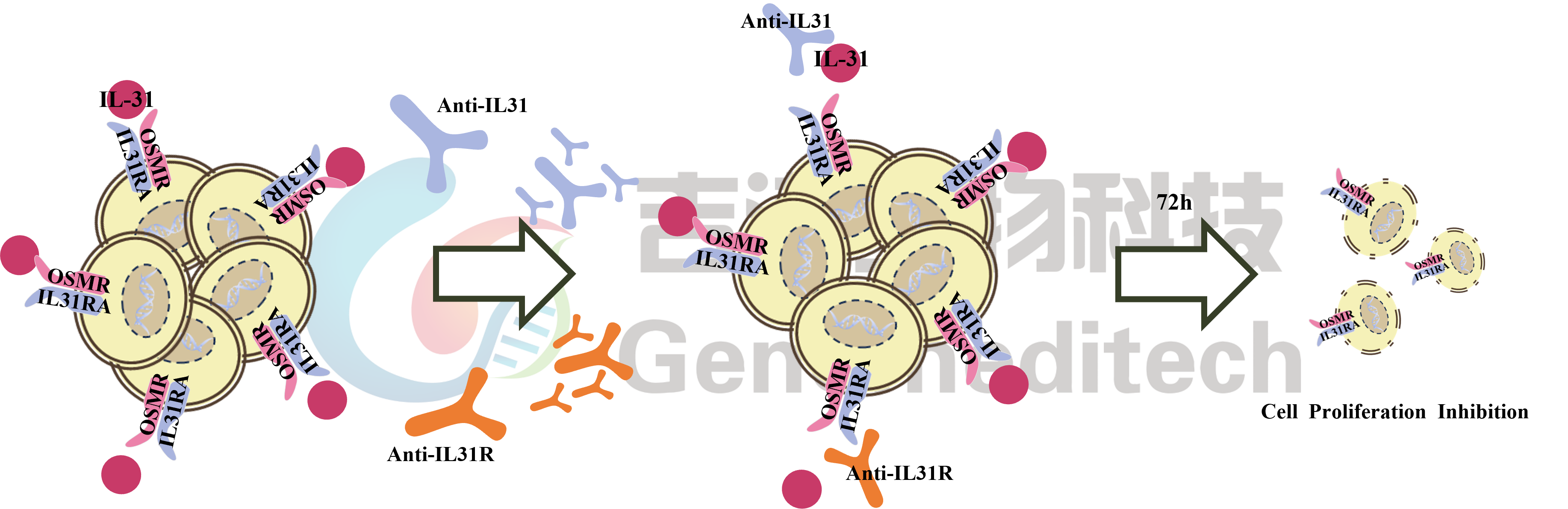
IL-31 transmits signals by forming a heterodimeric receptor complex composed of IL31RA and OSMR (oncostatin M receptor). Its signaling pathway is closely linked to chronic pruritic skin conditions, such as atopic dermatitis. Monoclonal antibody therapies targeting IL-31 or IL-31 receptors can effectively reduce itching and sleep disturbances, improve skin lesions, and minimize the use of topical steroids.

H_IL-31RA OSMR Baf3 Cell Line is a clonal stable BaF3 cell line constructed using lentiviral technology, constitutive expression of the human IL-31RA and human OSMR gene. Can be used for the development and validation of related drugs.
Interleukin-31 (IL-31) is a novel cytokine whose receptor shares similarity with the IL-6 receptor, and it is therefore classified as part of the IL-6 cytokine family. It is primarily secreted by activated CD4+ T lymphocytes, particularly activated Th2 helper T cells, mast cells, macrophages, and dendritic cells. IL-31 mainly regulates cell-mediated immunity in the skin by sensing itching in the peripheral nervous system, modulates lung immunity by increasing airway inflammation, and adjusts intestinal immunity by defending against microorganisms.

IL-31 transmits signals by forming a heterodimeric receptor complex composed of IL31RA and OSMR (oncostatin M receptor). Its signaling pathway is closely linked to chronic pruritic skin conditions, such as atopic dermatitis. Monoclonal antibody therapies targeting IL-31 or IL-31 receptors can effectively reduce itching and sleep disturbances, improve skin lesions, and minimize the use of topical steroids.

H_IL-31RA OSMR Baf3 Cell Line is a clonal stable BaF3 cell line constructed using lentiviral technology, constitutive expression of the human IL-31RA and human OSMR gene. Can be used for the development and validation of related drugs.
Data Display
Applications
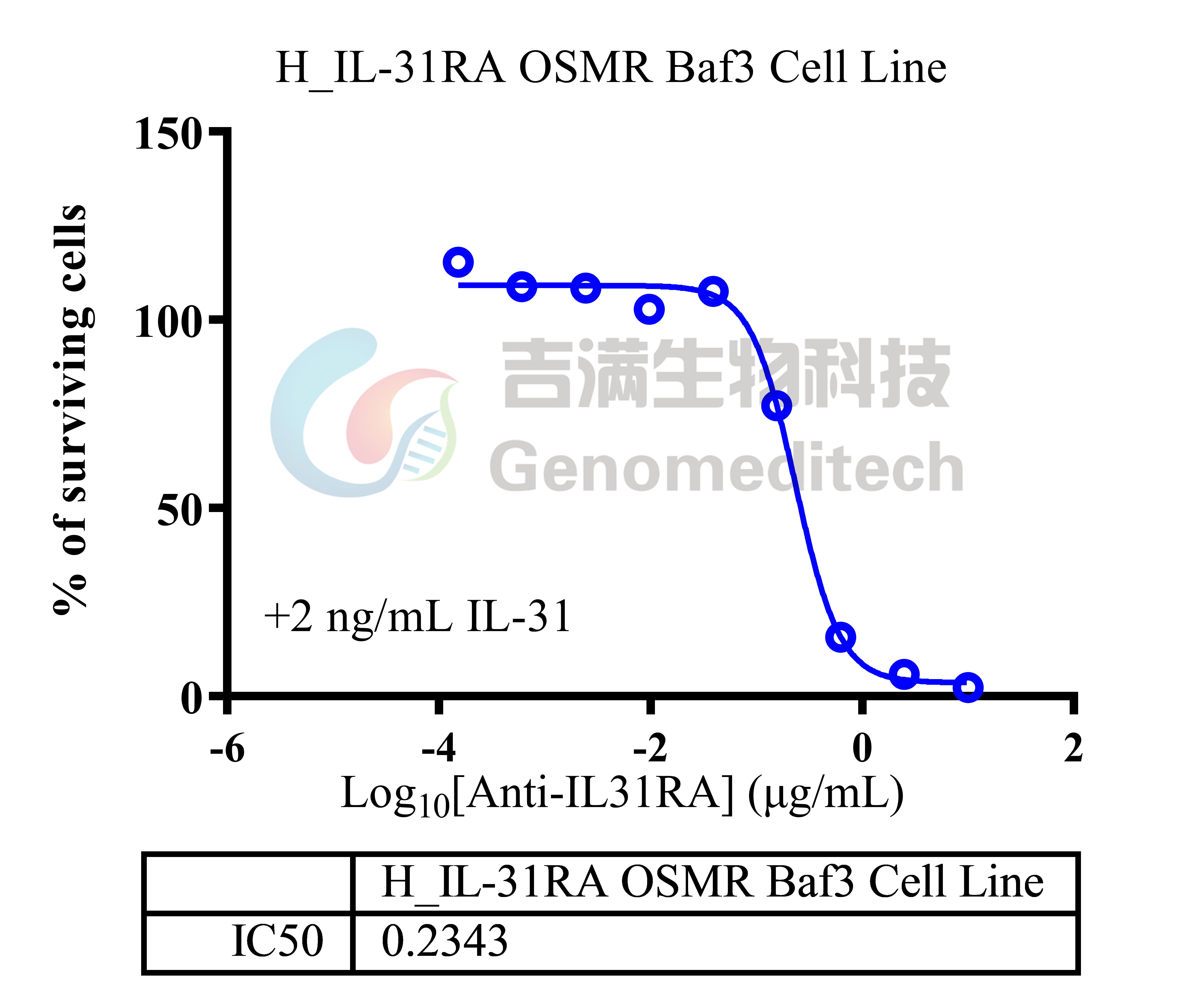
Cell proliferation assay. The H_IL-31RA OSMR Baf3 Cell Line (Cat. GM-C29783) at a concentration of 1E4cells/well (96-well format) was treated with serial dilutions of Anti-IL31RA hIgG2 Antibody(Cat. GM-50871AB) in assay buffer (RPMI 1640 + 10% FBS + 1% P.S) for 72 hours. The firefly luciferase activity was measured the GMTiter™ Luminescent Cell Viability Assay (Cat. GM-040504).
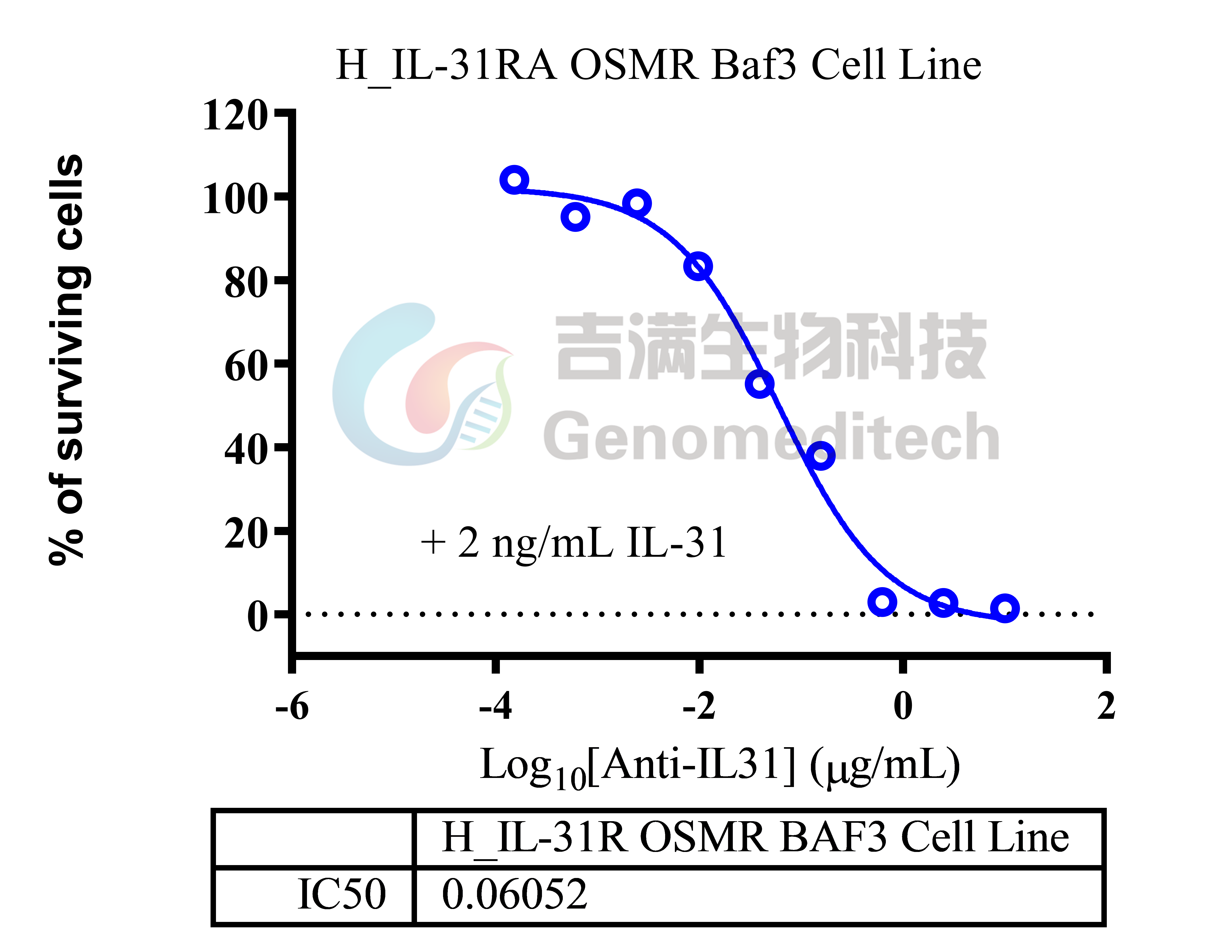
Cell proliferation assay. The H_IL-31RA OSMR Baf3 Cell Line (Cat. GM-C29783) at a concentration of 1E4cells/well (96-well format) was treated with serial dilutions of Anti-IL31 hIgG1 Antibody(mAb33)(Cat. GM-50883AB) in assay buffer (RPMI 1640 + 10% FBS + 1% P.S) for 72 hours. The firefly luciferase activity was measured the GMTiter™ Luminescent Cell Viability Assay (Cat. GM-040504).
Expression
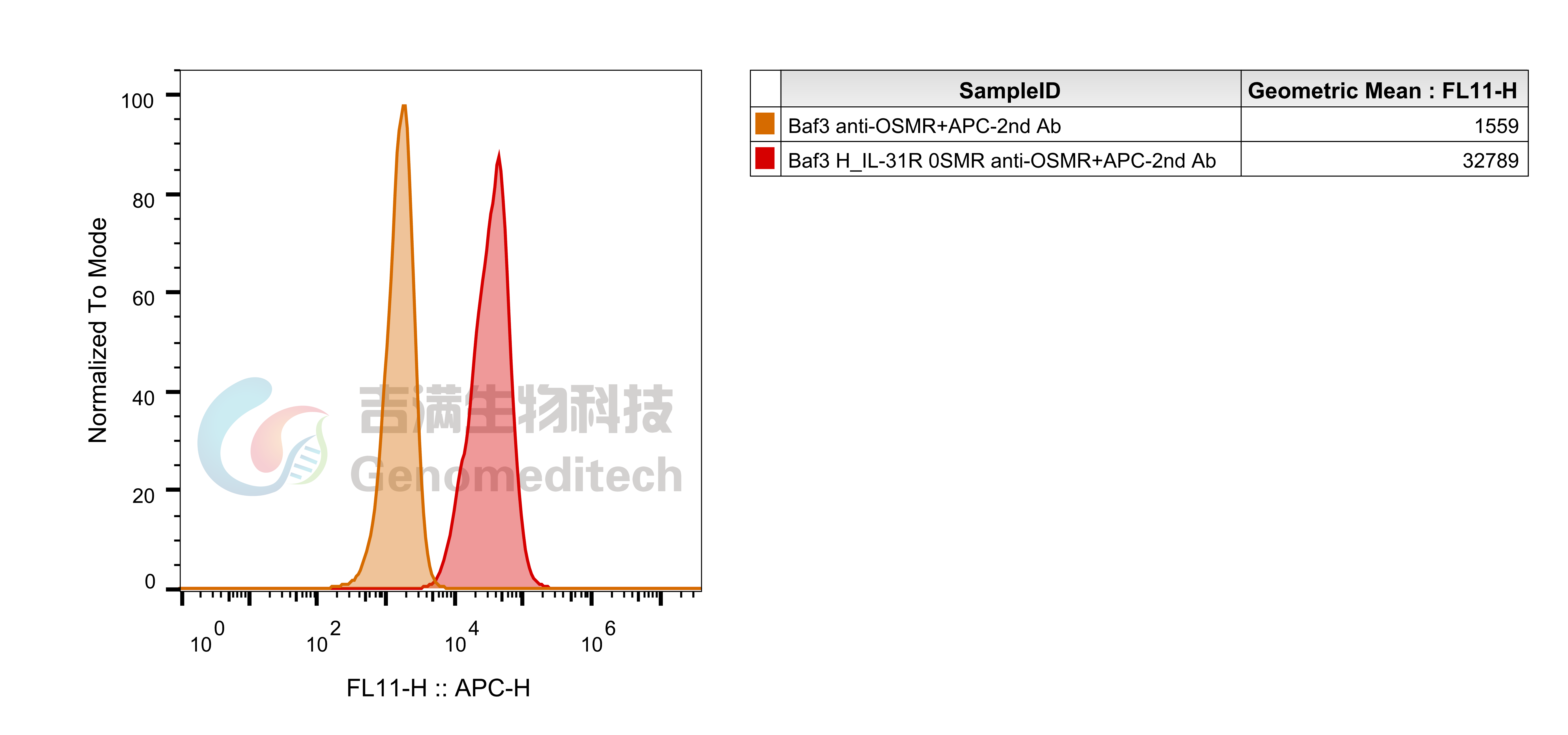
H_IL-31RA OSMR Baf3 Cell Line (Cat. GM-C29783) was determined by flow cytometry using Anti-OSMR hIgG4 Antibody(Cat. GM-50874AB).
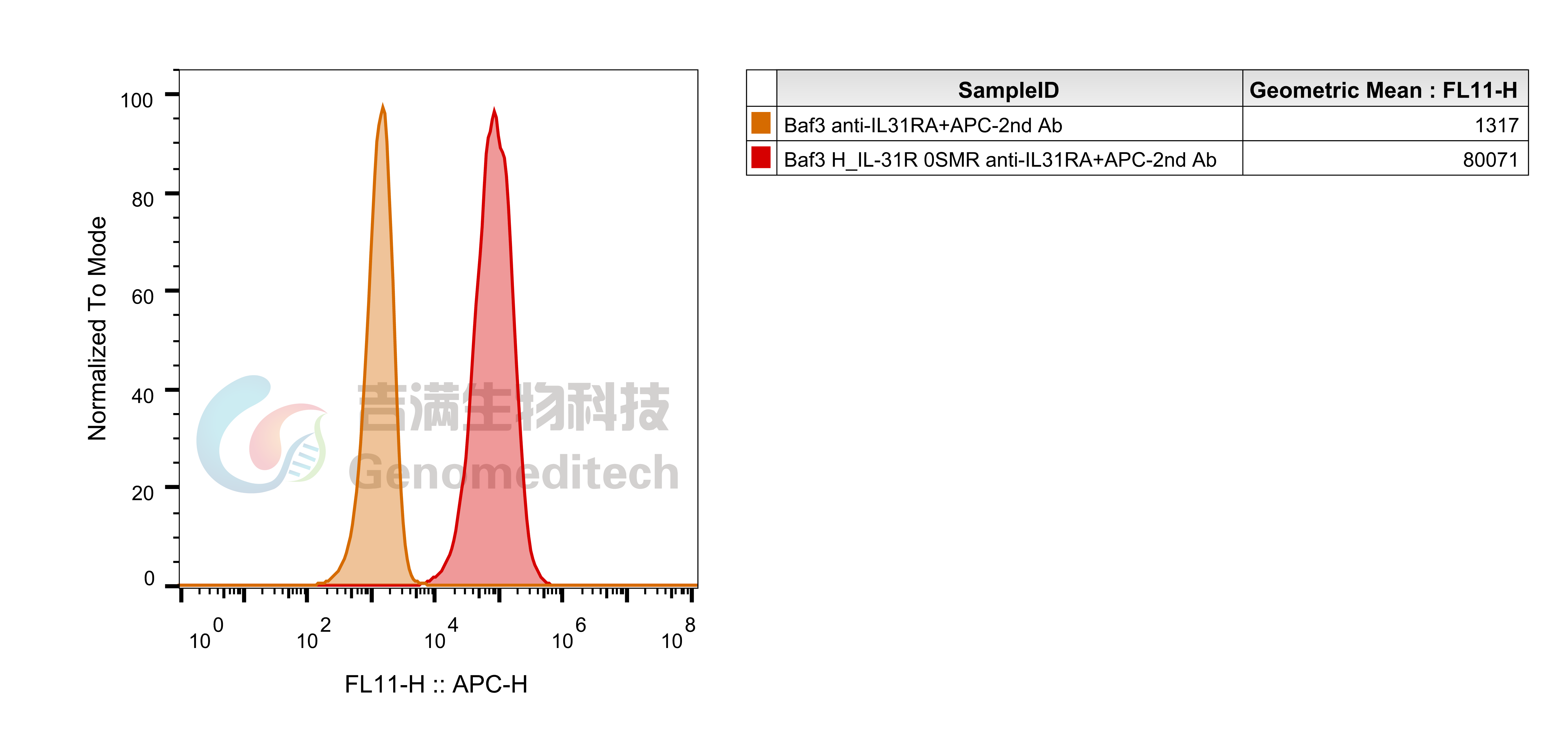
H_IL-31RA OSMR Baf3 Cell Line (Cat. GM-C29783) was determined by flow cytometry using Anti-IL31RA hIgG2 Antibody(Cat. GM-50871AB).
Specifications
Cat. No GM-C29783
Product H_IL-31RA OSMR Baf3 Cell Line
Product Format 1 vial of frozen cells
Quantity 5E6 Cells per vial,1 mL
Storage Conditions Liquid nitrogen immediately upon receipt
Recovery Medium RPMI 1640+10% FBS+1% P.S+8 ng/mL M_IL3
Growth medium RPMI 1640+10% FBS+1% P.S+8 ng/mL M_IL3+50 μg/mL G418+0.25 μg/mL Puromycin
Note None
Freezing Medium 90% FBS+10% DMSO
Growth properties Suspension
Growth Conditions 37°C, 5% CO₂
Safety considerations Biosafety Level 2
Mycoplasma Testing The cell line has been screened to confirm the absence of Mycoplasma species.
Cat. No GM-C29783
Product H_IL-31RA OSMR Baf3 Cell Line
Product Format 1 vial of frozen cells
Quantity 5E6 Cells per vial,1 mL
Storage Conditions Liquid nitrogen immediately upon receipt
Recovery Medium RPMI 1640+10% FBS+1% P.S+8 ng/mL M_IL3
Growth medium RPMI 1640+10% FBS+1% P.S+8 ng/mL M_IL3+50 μg/mL G418+0.25 μg/mL Puromycin
Note None
Freezing Medium 90% FBS+10% DMSO
Growth properties Suspension
Growth Conditions 37°C, 5% CO₂
Safety considerations Biosafety Level 2
Mycoplasma Testing The cell line has been screened to confirm the absence of Mycoplasma species.
Materials
Reagent Ordering Information
RPMI 1640 VivaCell/C3010-0500
Fetal Bovine Serum ExCell/FSP500
Pen/Strep Thermo/15140-122
Recombinant Mouse IL-3 (C-6His) Novoprotein/CP39
G418 Genomeditech/GM-040402
Puromycin Genomeditech/GM-040401
Anti-IL31RA hIgG2 Antibody Genomeditech/GM-50871AB
Anti-IL31 hIgG1 Antibody(mAb33) Genomeditech/GM-50883AB
Anti-OSMR hIgG4 Antibody Genomeditech/GM-50874AB
Recombinant Human IL-31 Protein Sino Biological/11557-H08H
GMTiter™ Luminescent Cell Viability Assay 细胞活力检测试剂盒 Genomeditech/GM-040504
Reagent Ordering Information
RPMI 1640 VivaCell/C3010-0500
Fetal Bovine Serum ExCell/FSP500
Pen/Strep Thermo/15140-122
Recombinant Mouse IL-3 (C-6His) Novoprotein/CP39
G418 Genomeditech/GM-040402
Puromycin Genomeditech/GM-040401
Anti-IL31RA hIgG2 Antibody Genomeditech/GM-50871AB
Anti-IL31 hIgG1 Antibody(mAb33) Genomeditech/GM-50883AB
Anti-OSMR hIgG4 Antibody Genomeditech/GM-50874AB
Recombinant Human IL-31 Protein Sino Biological/11557-H08H
GMTiter™ Luminescent Cell Viability Assay 细胞活力检测试剂盒 Genomeditech/GM-040504
Cell Culture

Cell Recovery

Recovery Medium: RPMI 1640+10% FBS+1% P.S+8 ng/mL M_IL3

To insure the highest level of viability, thaw the vial and initiate the culture as soon as possible upon receipt. If upon arrival, continued storage of the frozen culture is necessary, it should be stored in liquid nitrogen vapor phase and not at -70°C. Storage at -70°C will result in loss of viability.

a)       Thaw the vial by gentle agitation in a 37°C water bath. To reduce the possibility of contamination, keep the O-ring and cap out of the water. Thawing should be rapid (approximately 2 - 3 minutes).

b)       Remove the vial from the water bath as soon as the contents are thawed, and decontaminate by dipping in or spraying with 70% ethanol. All of the operations from this point on should be carried out under strict aseptic conditions.

c)       Transfer the vial contents to a centrifuge tube containing 5.0 mL complete culture medium. And spin at approximately 176 x g for 5 minutes.Discard supernatant.

d)       Resuspend cell pellet with the recommended complete medium. And dispense the suspension into 1-2 T-25 culture flasks.

e)       Incubate the culture at 37°C in a suitable incubator. A 5% CO₂ in air atmosphere is recommended if using the medium described on this product sheet.

Cell Freezing

Freezing Medium: 90% FBS+10% DMSO

a)          Centrifuge at 176 x g for 3 minutes to collect cells.

b)         Resuspend the cells in pre-cooled freezing medium and adjust the cell density to 5E6 cells/mL.

c)          Aliquot 1 mL into each vial.

d)         Place the vials in a controlled-rate freezing container and store at -80°C for at least 1 day, then transfer to liquid nitrogen as soon as possible.

Cell passage

Growth medium: RPMI 1640+10% FBS+1% P.S+8 ng/mL M_IL3+50 μg/mL G418+0.25 μg/mL Puromycin

Approximately 48-72 hours after the initial thawing, the cells can be passaged for the first time. After this initial passage, the culture medium can be adjusted to growth medium supplemented with antibiotics. If cells are not passaged within 48 hours, it is recommended to add some fresh recovery medium and place the flask horizontally.

a)          When the cell density reaches 1 - 1.2E6 cells/mL, subculture the cells. Do not allow the cell density to exceed 1.4E6 cells/mL.

b)         It is recommended to use T-25 flasks for subculturing.

c)          These cells are suspension cells, and it is recommended to use the "half-medium change" method to maintain optimal cell conditions during passaging.

d)         During passaging, you can directly add fresh growth medium to the culture flask, gently pipette to resuspend the cells, and then transfer the cell suspension to a new T-25 flask for continued culture.

Subcultivation Ratio: Maintain cultures at a cell concentraion between 3E5 and 1E6 viable cells/mL.

Medium Renewal: Every 2 to 3 days

Notes

a)          These cells are sensitive to density, so please ensure that the cell density is maintained within an appropriate range during culture and subculturing.

b)         During the first passage, pay attention to the nutrient supply; if not subculturing, make sure to add fresh recovery medium every other day as needed.

Cell Recovery

Recovery Medium: RPMI 1640+10% FBS+1% P.S+8 ng/mL M_IL3

To insure the highest level of viability, thaw the vial and initiate the culture as soon as possible upon receipt. If upon arrival, continued storage of the frozen culture is necessary, it should be stored in liquid nitrogen vapor phase and not at -70°C. Storage at -70°C will result in loss of viability.

a)       Thaw the vial by gentle agitation in a 37°C water bath. To reduce the possibility of contamination, keep the O-ring and cap out of the water. Thawing should be rapid (approximately 2 - 3 minutes).

b)       Remove the vial from the water bath as soon as the contents are thawed, and decontaminate by dipping in or spraying with 70% ethanol. All of the operations from this point on should be carried out under strict aseptic conditions.

c)       Transfer the vial contents to a centrifuge tube containing 5.0 mL complete culture medium. And spin at approximately 176 x g for 5 minutes.Discard supernatant.

d)       Resuspend cell pellet with the recommended complete medium. And dispense the suspension into 1-2 T-25 culture flasks.

e)       Incubate the culture at 37°C in a suitable incubator. A 5% CO₂ in air atmosphere is recommended if using the medium described on this product sheet.

Cell Freezing

Freezing Medium: 90% FBS+10% DMSO

a)          Centrifuge at 176 x g for 3 minutes to collect cells.

b)         Resuspend the cells in pre-cooled freezing medium and adjust the cell density to 5E6 cells/mL.

c)          Aliquot 1 mL into each vial.

d)         Place the vials in a controlled-rate freezing container and store at -80°C for at least 1 day, then transfer to liquid nitrogen as soon as possible.

Cell passage

Growth medium: RPMI 1640+10% FBS+1% P.S+8 ng/mL M_IL3+50 μg/mL G418+0.25 μg/mL Puromycin

Approximately 48-72 hours after the initial thawing, the cells can be passaged for the first time. After this initial passage, the culture medium can be adjusted to growth medium supplemented with antibiotics. If cells are not passaged within 48 hours, it is recommended to add some fresh recovery medium and place the flask horizontally.

a)          When the cell density reaches 1 - 1.2E6 cells/mL, subculture the cells. Do not allow the cell density to exceed 1.4E6 cells/mL.

b)         It is recommended to use T-25 flasks for subculturing.

c)          These cells are suspension cells, and it is recommended to use the "half-medium change" method to maintain optimal cell conditions during passaging.

d)         During passaging, you can directly add fresh growth medium to the culture flask, gently pipette to resuspend the cells, and then transfer the cell suspension to a new T-25 flask for continued culture.

Subcultivation Ratio: Maintain cultures at a cell concentraion between 3E5 and 1E6 viable cells/mL.

Medium Renewal: Every 2 to 3 days

Notes

a)          These cells are sensitive to density, so please ensure that the cell density is maintained within an appropriate range during culture and subculturing.

b)         During the first passage, pay attention to the nutrient supply; if not subculturing, make sure to add fresh recovery medium every other day as needed.

Related products
OX40:OX40L
H_OX40 Reporter Cell Line H_OX40 Reporter DDX35TM Cell Line Cynomolgus_OX40 HEK-293 Cell Line
Cynomolgus_OX40L CHO-K1 Cell Line H_OX40 CHO-K1 Cell Line H_OX40L CHO-K1 Cell Line
H_OX40L HEK-293 Cell Line Mouse_OX40L CHO-K1 Cell Line Rat_OX40L CHO-K1 Cell Line
Biotinylated Human OX40L Protein; His-Avi Tag Cynomolgus OX40 Protein; His Tag Cynomolgus OX40L Protein; His Tag
Cynomolgus OX40L Protein; mFc Tag Human OX40 Protein; hFc Tag Human OX40 Protein; His Tag
Human OX40L Protein; His Tag Human OX40L Protein; mFc Tag  
IL-4/IL-13
IL-4 Reporter Cell Line IL-4/IL-13 Reporter 293 Cell Line IL-4/IL-13 Reporter 293 DDX35TM Cell Line
Cynomolgus_IL4R CHO-K1 Cell Line H_IL4R CHO-K1 Cell Line H_IL4R CHO-K1 Cell Line (Low Expression)
H_IL4R HEK-293 Cell Line Mouse_IL4R CHO-K1 Cell Line
Biotinylated Human IL-4R alpha Protein; Avi-His Tag Cynomolgus IL-13 Protein; His Tag Cynomolgus IL-13RA1 Protein; hFc Tag
Cynomolgus IL-13RA1 Protein; His Tag Cynomolgus IL-4 Protein; His Tag Cynomolgus IL-4R alpha Protein; His Tag
Human IL-13 Protein; His Tag Human IL-13RA1 Protein; hFc Tag Human IL-13RA1 Protein; His Tag
Human IL-4 Protein; His Tag Human IL-4R alpha Protein; hFc Tag Human IL-4R alpha Protein; His Tag
Human IL-4R alpha Protein; mFc Tag Mouse IL-13 Protein; His Tag Mouse IL-4R alpha Protein; His Tag
Rat IL-4R alpha Protein; His Tag    
IL-31
Cynomolgus_IL-31RA OSMR Reporter Baf3 Cell Line H_IL-31 Reporter Cell Line H_IL-31 Reporter DDX35TM Cell Line
Cynomolgus_IL31RA CHO-K1 Cell Line H_IL31RA CHO-K1 Cell Line H_IL31RA HEK-293 Cell Line
H_IL-31RA OSMR CHO-K1 Cell Line
Cynomolgus IL-31 Protein; His Tag Cynomolgus IL-31RA Protein; hFc Tag Human IL-31 Protein; hFc Tag
Human IL-31 Protein; His Tag Human IL-31RA Protein; hFc Tag  
MRGPRX2
H_MRGPRX2 Gq Reporter CHO-K1 Cell Line H_MRGPRX2 Gqi5 Reporter CHO-K1 Cell Line Tango-H_MRGPRX2 CHO-K1 Cell Line
Cynomolgus_MRGPRX2 CHO-K1 Cell Line Cynomolgus_MRGPRX2 HEK-293 Cell Line Flag-Mouse_Mrgprb2 CHO-K1 Cell Line
Flag-Rat_Mrgprb3 HEK-293 Cell Line H_MRGPRX2 CHO-K1 Cell Line H_MRGPRX2 HEK-293 Cell Line
H_MRGPRX2 HMC-1 Cell Line H_MRGPRX2 RBL-2H3 Cell Line  
For laboratory research use only. Direct human use, including taking orally and injection and clinical use are forbidden.
H_IL-31RA OSMR Baf3 Cell Line
Cat. No.
GM-C29783
Size
2 vial
Quote
Description
Data Display
Specifications
Materials
Cell Culture
Related products
Description
Interleukin-31 (IL-31) is a novel cytokine whose receptor shares similarity with the IL-6 receptor, and it is therefore classified as part of the IL-6 cytokine family. It is primarily secreted by activated CD4+ T lymphocytes, particularly activated Th2 helper T cells, mast cells, macrophages, and dendritic cells. IL-31 mainly regulates cell-mediated immunity in the skin by sensing itching in the peripheral nervous system, modulates lung immunity by increasing airway inflammation, and adjusts intestinal immunity by defending against microorganisms.

IL-31 transmits signals by forming a heterodimeric receptor complex composed of IL31RA and OSMR (oncostatin M receptor). Its signaling pathway is closely linked to chronic pruritic skin conditions, such as atopic dermatitis. Monoclonal antibody therapies targeting IL-31 or IL-31 receptors can effectively reduce itching and sleep disturbances, improve skin lesions, and minimize the use of topical steroids.

H_IL-31RA OSMR Baf3 Cell Line is a clonal stable BaF3 cell line constructed using lentiviral technology, constitutive expression of the human IL-31RA and human OSMR gene. Can be used for the development and validation of related drugs.

Interleukin-31 (IL-31) is a novel cytokine whose receptor shares similarity with the IL-6 receptor, and it is therefore classified as part of the IL-6 cytokine family. It is primarily secreted by activated CD4+ T lymphocytes, particularly activated Th2 helper T cells, mast cells, macrophages, and dendritic cells. IL-31 mainly regulates cell-mediated immunity in the skin by sensing itching in the peripheral nervous system, modulates lung immunity by increasing airway inflammation, and adjusts intestinal immunity by defending against microorganisms.

IL-31 transmits signals by forming a heterodimeric receptor complex composed of IL31RA and OSMR (oncostatin M receptor). Its signaling pathway is closely linked to chronic pruritic skin conditions, such as atopic dermatitis. Monoclonal antibody therapies targeting IL-31 or IL-31 receptors can effectively reduce itching and sleep disturbances, improve skin lesions, and minimize the use of topical steroids.

H_IL-31RA OSMR Baf3 Cell Line is a clonal stable BaF3 cell line constructed using lentiviral technology, constitutive expression of the human IL-31RA and human OSMR gene. Can be used for the development and validation of related drugs.

Data Display
Applications
Cell proliferation assay. The H_IL-31RA OSMR Baf3 Cell Line (Cat. GM-C29783) at a concentration of 1E4cells/well (96-well format) was treated with serial dilutions of Anti-IL31RA hIgG2 Antibody(Cat. GM-50871AB) in assay buffer (RPMI 1640 + 10% FBS + 1% P.S) for 72 hours. The firefly luciferase activity was measured the GMTiter™ Luminescent Cell Viability Assay (Cat. GM-040504).
Cell proliferation assay. The H_IL-31RA OSMR Baf3 Cell Line (Cat. GM-C29783) at a concentration of 1E4cells/well (96-well format) was treated with serial dilutions of Anti-IL31 hIgG1 Antibody(mAb33)(Cat. GM-50883AB) in assay buffer (RPMI 1640 + 10% FBS + 1% P.S) for 72 hours. The firefly luciferase activity was measured the GMTiter™ Luminescent Cell Viability Assay (Cat. GM-040504).
Expression
H_IL-31RA OSMR Baf3 Cell Line (Cat. GM-C29783) was determined by flow cytometry using Anti-OSMR hIgG4 Antibody(Cat. GM-50874AB).
H_IL-31RA OSMR Baf3 Cell Line (Cat. GM-C29783) was determined by flow cytometry using Anti-IL31RA hIgG2 Antibody(Cat. GM-50871AB).
Specifications
Cat. No GM-C29783
Product H_IL-31RA OSMR Baf3 Cell Line
Product Format 1 vial of frozen cells
Quantity 5E6 Cells per vial,1 mL
Storage Conditions Liquid nitrogen immediately upon receipt
Recovery Medium RPMI 1640+10% FBS+1% P.S+8 ng/mL M_IL3
Growth medium RPMI 1640+10% FBS+1% P.S+8 ng/mL M_IL3+50 μg/mL G418+0.25 μg/mL Puromycin
Note None
Freezing Medium 90% FBS+10% DMSO
Growth properties Suspension
Growth Conditions 37°C, 5% CO₂
Safety considerations Biosafety Level 2
Mycoplasma Testing The cell line has been screened to confirm the absence of Mycoplasma species.
Cat. No GM-C29783
Product H_IL-31RA OSMR Baf3 Cell Line
Product Format 1 vial of frozen cells
Quantity 5E6 Cells per vial,1 mL
Storage Conditions Liquid nitrogen immediately upon receipt
Recovery Medium RPMI 1640+10% FBS+1% P.S+8 ng/mL M_IL3
Growth medium RPMI 1640+10% FBS+1% P.S+8 ng/mL M_IL3+50 μg/mL G418+0.25 μg/mL Puromycin
Note None
Freezing Medium 90% FBS+10% DMSO
Growth properties Suspension
Growth Conditions 37°C, 5% CO₂
Safety considerations Biosafety Level 2
Mycoplasma Testing The cell line has been screened to confirm the absence of Mycoplasma species.
Materials
Reagent Ordering Information
RPMI 1640 VivaCell/C3010-0500
Fetal Bovine Serum ExCell/FSP500
Pen/Strep Thermo/15140-122
Recombinant Mouse IL-3 (C-6His) Novoprotein/CP39
G418 Genomeditech/GM-040402
Puromycin Genomeditech/GM-040401
Anti-IL31RA hIgG2 Antibody Genomeditech/GM-50871AB
Anti-IL31 hIgG1 Antibody(mAb33) Genomeditech/GM-50883AB
Anti-OSMR hIgG4 Antibody Genomeditech/GM-50874AB
Recombinant Human IL-31 Protein Sino Biological/11557-H08H
GMTiter™ Luminescent Cell Viability Assay 细胞活力检测试剂盒 Genomeditech/GM-040504
Reagent Ordering Information
RPMI 1640 VivaCell/C3010-0500
Fetal Bovine Serum ExCell/FSP500
Pen/Strep Thermo/15140-122
Recombinant Mouse IL-3 (C-6His) Novoprotein/CP39
G418 Genomeditech/GM-040402
Puromycin Genomeditech/GM-040401
Anti-IL31RA hIgG2 Antibody Genomeditech/GM-50871AB
Anti-IL31 hIgG1 Antibody(mAb33) Genomeditech/GM-50883AB
Anti-OSMR hIgG4 Antibody Genomeditech/GM-50874AB
Recombinant Human IL-31 Protein Sino Biological/11557-H08H
GMTiter™ Luminescent Cell Viability Assay 细胞活力检测试剂盒 Genomeditech/GM-040504
Cell Culture

Cell Recovery

Recovery Medium: RPMI 1640+10% FBS+1% P.S+8 ng/mL M_IL3

To insure the highest level of viability, thaw the vial and initiate the culture as soon as possible upon receipt. If upon arrival, continued storage of the frozen culture is necessary, it should be stored in liquid nitrogen vapor phase and not at -70°C. Storage at -70°C will result in loss of viability.

a)       Thaw the vial by gentle agitation in a 37°C water bath. To reduce the possibility of contamination, keep the O-ring and cap out of the water. Thawing should be rapid (approximately 2 - 3 minutes).

b)       Remove the vial from the water bath as soon as the contents are thawed, and decontaminate by dipping in or spraying with 70% ethanol. All of the operations from this point on should be carried out under strict aseptic conditions.

c)       Transfer the vial contents to a centrifuge tube containing 5.0 mL complete culture medium. And spin at approximately 176 x g for 5 minutes.Discard supernatant.

d)       Resuspend cell pellet with the recommended complete medium. And dispense the suspension into 1-2 T-25 culture flasks.

e)       Incubate the culture at 37°C in a suitable incubator. A 5% CO₂ in air atmosphere is recommended if using the medium described on this product sheet.

Cell Freezing

Freezing Medium: 90% FBS+10% DMSO

a)          Centrifuge at 176 x g for 3 minutes to collect cells.

b)         Resuspend the cells in pre-cooled freezing medium and adjust the cell density to 5E6 cells/mL.

c)          Aliquot 1 mL into each vial.

d)         Place the vials in a controlled-rate freezing container and store at -80°C for at least 1 day, then transfer to liquid nitrogen as soon as possible.

Cell passage

Growth medium: RPMI 1640+10% FBS+1% P.S+8 ng/mL M_IL3+50 μg/mL G418+0.25 μg/mL Puromycin

Approximately 48-72 hours after the initial thawing, the cells can be passaged for the first time. After this initial passage, the culture medium can be adjusted to growth medium supplemented with antibiotics. If cells are not passaged within 48 hours, it is recommended to add some fresh recovery medium and place the flask horizontally.

a)          When the cell density reaches 1 - 1.2E6 cells/mL, subculture the cells. Do not allow the cell density to exceed 1.4E6 cells/mL.

b)         It is recommended to use T-25 flasks for subculturing.

c)          These cells are suspension cells, and it is recommended to use the "half-medium change" method to maintain optimal cell conditions during passaging.

d)         During passaging, you can directly add fresh growth medium to the culture flask, gently pipette to resuspend the cells, and then transfer the cell suspension to a new T-25 flask for continued culture.

Subcultivation Ratio: Maintain cultures at a cell concentraion between 3E5 and 1E6 viable cells/mL.

Medium Renewal: Every 2 to 3 days

Notes

a)          These cells are sensitive to density, so please ensure that the cell density is maintained within an appropriate range during culture and subculturing.

b)         During the first passage, pay attention to the nutrient supply; if not subculturing, make sure to add fresh recovery medium every other day as needed.

Cell Recovery

Recovery Medium: RPMI 1640+10% FBS+1% P.S+8 ng/mL M_IL3

To insure the highest level of viability, thaw the vial and initiate the culture as soon as possible upon receipt. If upon arrival, continued storage of the frozen culture is necessary, it should be stored in liquid nitrogen vapor phase and not at -70°C. Storage at -70°C will result in loss of viability.

a)       Thaw the vial by gentle agitation in a 37°C water bath. To reduce the possibility of contamination, keep the O-ring and cap out of the water. Thawing should be rapid (approximately 2 - 3 minutes).

b)       Remove the vial from the water bath as soon as the contents are thawed, and decontaminate by dipping in or spraying with 70% ethanol. All of the operations from this point on should be carried out under strict aseptic conditions.

c)       Transfer the vial contents to a centrifuge tube containing 5.0 mL complete culture medium. And spin at approximately 176 x g for 5 minutes.Discard supernatant.

d)       Resuspend cell pellet with the recommended complete medium. And dispense the suspension into 1-2 T-25 culture flasks.

e)       Incubate the culture at 37°C in a suitable incubator. A 5% CO₂ in air atmosphere is recommended if using the medium described on this product sheet.

Cell Freezing

Freezing Medium: 90% FBS+10% DMSO

a)          Centrifuge at 176 x g for 3 minutes to collect cells.

b)         Resuspend the cells in pre-cooled freezing medium and adjust the cell density to 5E6 cells/mL.

c)          Aliquot 1 mL into each vial.

d)         Place the vials in a controlled-rate freezing container and store at -80°C for at least 1 day, then transfer to liquid nitrogen as soon as possible.

Cell passage

Growth medium: RPMI 1640+10% FBS+1% P.S+8 ng/mL M_IL3+50 μg/mL G418+0.25 μg/mL Puromycin

Approximately 48-72 hours after the initial thawing, the cells can be passaged for the first time. After this initial passage, the culture medium can be adjusted to growth medium supplemented with antibiotics. If cells are not passaged within 48 hours, it is recommended to add some fresh recovery medium and place the flask horizontally.

a)          When the cell density reaches 1 - 1.2E6 cells/mL, subculture the cells. Do not allow the cell density to exceed 1.4E6 cells/mL.

b)         It is recommended to use T-25 flasks for subculturing.

c)          These cells are suspension cells, and it is recommended to use the "half-medium change" method to maintain optimal cell conditions during passaging.

d)         During passaging, you can directly add fresh growth medium to the culture flask, gently pipette to resuspend the cells, and then transfer the cell suspension to a new T-25 flask for continued culture.

Subcultivation Ratio: Maintain cultures at a cell concentraion between 3E5 and 1E6 viable cells/mL.

Medium Renewal: Every 2 to 3 days

Notes

a)          These cells are sensitive to density, so please ensure that the cell density is maintained within an appropriate range during culture and subculturing.

b)         During the first passage, pay attention to the nutrient supply; if not subculturing, make sure to add fresh recovery medium every other day as needed.

Related products
OX40:OX40L
H_OX40 Reporter Cell Line H_OX40 Reporter DDX35TM Cell Line Cynomolgus_OX40 HEK-293 Cell Line
Cynomolgus_OX40L CHO-K1 Cell Line H_OX40 CHO-K1 Cell Line H_OX40L CHO-K1 Cell Line
H_OX40L HEK-293 Cell Line Mouse_OX40L CHO-K1 Cell Line Rat_OX40L CHO-K1 Cell Line
Biotinylated Human OX40L Protein; His-Avi Tag Cynomolgus OX40 Protein; His Tag Cynomolgus OX40L Protein; His Tag
Cynomolgus OX40L Protein; mFc Tag Human OX40 Protein; hFc Tag Human OX40 Protein; His Tag
Human OX40L Protein; His Tag Human OX40L Protein; mFc Tag  
IL-4/IL-13
IL-4 Reporter Cell Line IL-4/IL-13 Reporter 293 Cell Line IL-4/IL-13 Reporter 293 DDX35TM Cell Line
Cynomolgus_IL4R CHO-K1 Cell Line H_IL4R CHO-K1 Cell Line H_IL4R CHO-K1 Cell Line (Low Expression)
H_IL4R HEK-293 Cell Line Mouse_IL4R CHO-K1 Cell Line
Biotinylated Human IL-4R alpha Protein; Avi-His Tag Cynomolgus IL-13 Protein; His Tag Cynomolgus IL-13RA1 Protein; hFc Tag
Cynomolgus IL-13RA1 Protein; His Tag Cynomolgus IL-4 Protein; His Tag Cynomolgus IL-4R alpha Protein; His Tag
Human IL-13 Protein; His Tag Human IL-13RA1 Protein; hFc Tag Human IL-13RA1 Protein; His Tag
Human IL-4 Protein; His Tag Human IL-4R alpha Protein; hFc Tag Human IL-4R alpha Protein; His Tag
Human IL-4R alpha Protein; mFc Tag Mouse IL-13 Protein; His Tag Mouse IL-4R alpha Protein; His Tag
Rat IL-4R alpha Protein; His Tag    
IL-31
Cynomolgus_IL-31RA OSMR Reporter Baf3 Cell Line H_IL-31 Reporter Cell Line H_IL-31 Reporter DDX35TM Cell Line
Cynomolgus_IL31RA CHO-K1 Cell Line H_IL31RA CHO-K1 Cell Line H_IL31RA HEK-293 Cell Line
H_IL-31RA OSMR CHO-K1 Cell Line
Cynomolgus IL-31 Protein; His Tag Cynomolgus IL-31RA Protein; hFc Tag Human IL-31 Protein; hFc Tag
Human IL-31 Protein; His Tag Human IL-31RA Protein; hFc Tag  
MRGPRX2
H_MRGPRX2 Gq Reporter CHO-K1 Cell Line H_MRGPRX2 Gqi5 Reporter CHO-K1 Cell Line Tango-H_MRGPRX2 CHO-K1 Cell Line
Cynomolgus_MRGPRX2 CHO-K1 Cell Line Cynomolgus_MRGPRX2 HEK-293 Cell Line Flag-Mouse_Mrgprb2 CHO-K1 Cell Line
Flag-Rat_Mrgprb3 HEK-293 Cell Line H_MRGPRX2 CHO-K1 Cell Line H_MRGPRX2 HEK-293 Cell Line
H_MRGPRX2 HMC-1 Cell Line H_MRGPRX2 RBL-2H3 Cell Line  
Contact
Us
Message Inquiry
reset
submit
Message
Message Inquiry
reset
submit