





Insights
Press Release
Current position:News > Insights
BDCA2: The Next Frontier in Lupus Drug Development
吉满生物
2026-07-30

Lupus remains one of the most challenging diseases in the field of autoimmune disorders. According to the Lupus Foundation of America, at least 5 million people worldwide are living with some form of lupus, with approximately 16,000 new cases diagnosed each year. For decades, treatment has relied primarily on corticosteroids, immunosuppressants, and a limited number of targeted biologics. However, due to the complex pathogenesis of the disease and substantial patient heterogeneity, truly disease-modifying therapies have remained limited. In recent years, growing evidence has highlighted the therapeutic potential of BDCA2 as a promising target for lupus.


In March this year, Biogen announced positive results from Part A of the Phase II AMETHYST trial evaluating its anti-BDCA2 monoclonal antibody Litifilimab in patients with cutaneous lupus erythematosus (CLE). The study met its primary endpoint at Week 16,  demonstrating a significant reduction in skin disease activity. These positive findings supported the initiation of Phase III clinical trials of Litifilimab in patients with CLE. This important clinical milestone has once again brought the relatively niche target BDCA2 into the spotlight.


Why Is BDCA2 Emerging as a Promising Target for Lupus?


Blood Dendritic Cell Antigen 2 (BDCA2), also known as CLEC4C or CD303, is a type II C-type lectin receptor exclusively expressed on plasmacytoid dendritic cells (pDCs).


Upon activation, BDCA2 undergoes clathrin-mediated internalization and initiates a B-cell receptor (BCR)-like signaling cascade, leading to tyrosine phosphorylation and calcium influx. Cross-linking of BDCA2 potently suppresses the production of type I interferons (IFN-I) by activated pDCs—the body's primary source of IFN-I.


In addition to inhibiting IFN-I secretion, BDCA2 signaling also downregulates the transcription of IFN-I genes and interferon-stimulated genes (ISGs), indicating that its inhibitory effect is regulated, at least in part, at the transcriptional level.


This mechanism is particularly important because excessive activation of the type I interferon pathway is widely recognized as a central driver of lupus pathogenesis. Numerous studies have shown that patients with systemic lupus erythematosus (SLE) exhibit significantly elevated serum IFN-I levels compared with healthy individuals, and these levels are closely associated with disease activity and progression.


Unlike directly targeting circulating interferons, BDCA2-targeted therapies suppress IFN-I production at its cellular source by modulating pDC function, regardless of the upstream stimuli that trigger interferon release. This upstream mechanism offers the potential to reduce chronic interferon signaling while preserving broader immune function, making BDCA2 an attractive therapeutic target for SLE and other interferon-driven autoimmune diseases.
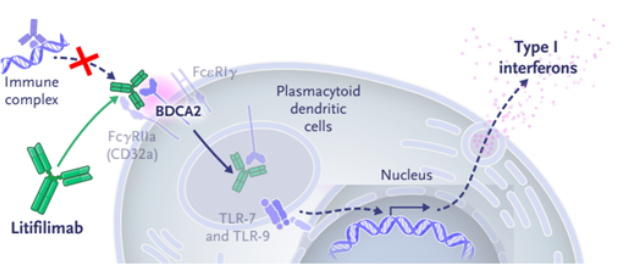


BDCA2 represents a novel therapeutic strategy for lupus.


Unlike approaches that directly block downstream inflammatory mediators, BDCA2-targeted therapies intervene at an earlier stage of the disease by modulating the function of plasmacytoid dendritic cells (pDCs), thereby suppressing the production of type I interferons (IFN-I) at their primary cellular source.


Beyond reducing IFN-I signaling, BDCA2 activation may also decrease the expression of multiple pro-inflammatory cytokines and interferon-stimulated genes (ISGs), offering broader immunomodulatory potential. As the central role of pDCs in autoimmune diseases continues to be elucidated, BDCA2 has rapidly emerged as one of the most promising therapeutic targets for lupus and other interferon-driven autoimmune disorders.


Global BDCA2 Development Landscape


Despite growing interest in BDCA2, the global development landscape remains relatively uncrowded, with only a handful of drug candidates currently in clinical development. Most programs are focused on lupus, particularly systemic lupus erythematosus (SLE) and cutaneous lupus erythematosus (CLE), highlighting the target's strong therapeutic relevance in interferon-driven autoimmune diseases.


Biogen currently leads the field with Litifilimab (BIIB059), which has advanced into Phase III clinical trials, making it the most clinically advanced BDCA2-targeted therapy worldwide. In contrast, other candidates, including CBS004 and DB-2304, remain in earlier stages of development.


Although the global pipeline is still limited, China has emerged as one of the most active regions for BDCA2 research and development. Several Chinese biotech companies are advancing novel BDCA2-targeted programs, contributing to a growing and increasingly diversified pipeline.


From a modality perspective, BDCA2 development is also evolving beyond conventional monoclonal antibodies. In addition to antibody therapies, emerging approaches such as antibody-drug conjugates (ADCs), bispecific antibodies, and fusion proteins are expanding the therapeutic possibilities for this target, reflecting broader innovation in autoimmune drug development.
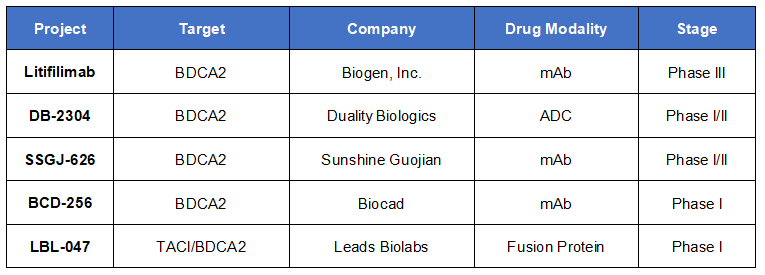
 

Pipeline Highlights

Litifilimab (BIIB059) – Biogen

Litifilimab (BIIB059) is a fully human IgG1 monoclonal antibody targeting BDCA2 and is currently the most advanced BDCA2-directed therapy worldwide. By engaging BDCA2 on plasmacytoid dendritic cells (pDCs), Litifilimab suppresses the production of type I interferons (IFN-I) and other inflammatory cytokines, addressing a key upstream driver of lupus pathogenesis.


Following encouraging Phase II results, the program has advanced into multiple Phase III clinical trials, including TOPAZ-1, TOPAZ-2, and AMETHYST, covering both systemic lupus erythematosus (SLE) and cutaneous lupus erythematosus (CLE).


Clinical data have consistently demonstrated meaningful improvements in skin disease activity in patients with CLE, while also showing significant efficacy in cutaneous manifestations of SLE. As the first BDCA2-targeted therapy to reach Phase III, Litifilimab provides the strongest clinical validation of BDCA2 as a therapeutic target.


DB-2304 – Duality Biologics

While monoclonal antibodies remain the dominant approach, Duality Biologics is exploring a differentiated strategy with DB-2304, the world's first BDCA2-targeting antibody-drug conjugate (ADC).


Rather than delivering a cytotoxic payload, DB-2304 conjugates an anti-BDCA2 antibody with a glucocorticoid, enabling targeted delivery of an immunosuppressive agent directly to pDCs. Preclinical studies suggest that this approach achieves more potent inhibition of IFN-I and other pro-inflammatory cytokines than conventional anti-BDCA2 antibodies, while minimizing systemic glucocorticoid exposure.


The program is currently in Phase I clinical development, where it has demonstrated a favorable safety and tolerability profile.


LBL-047 (DNTH212) – Leads Biolabs / Dianthus Therapeutics

LBL-047 represents another innovative approach, combining BDCA2 targeting with BAFF/APRIL pathway inhibition in a long-acting bispecific fusion protein.


The molecule is designed to simultaneously suppress type I interferon production by targeting pDCs while inhibiting B-cell activation and antibody production through blockade of the BAFF/APRIL signaling pathway. By addressing two key drivers of autoimmune disease, this dual-mechanism strategy has the potential to expand beyond lupus into multiple autoimmune indications.


The program has attracted significant international attention following an exclusive global licensing agreement with Dianthus Therapeutics. Current development priorities include Sjögren's disease (SjD), systemic lupus erythematosus (SLE), and dermatomyositis (DM), with Phase I clinical studies currently underway.


Conclusion and Outlook

BDCA2 has emerged as a promising therapeutic target for lupus by targeting the upstream driver of disease pathogenesis—the type I interferon pathway mediated by plasmacytoid dendritic cells (pDCs). With Litifilimab advancing into Phase III clinical development and innovative modalities such as ADCs, bispecific antibodies, and fusion proteins entering the pipeline, BDCA2-targeted therapies are entering a new stage of development.


As understanding of pDC biology and interferon-driven autoimmune mechanisms continues to advance, reliable tools for target validation, antibody screening, and functional evaluation will become increasingly important. Genomeditech provides integrated BDCA2 research solutions, including BDCA2-related proteins, antibodies, and functional cell-based models, supporting researchers in accelerating the development of next-generation autoimmune therapeutics.


Learn Morehttps://www.genomeditech.com/v2/search?k=BDCA2 


Reference

ClinicalTrials.gov. (2026). A phase 1/2a study of DB-2304 in healthy adults and SLE/CLE participants (NCT06625671). U.S. National Library of Medicine. https://clinicaltrials.gov/study/NCT06625671


ClinicalTrials.gov. (2026). An extension study to learn more about the long-term safety of Litifilimab (BIIB059) injections and whether they can improve symptoms of adult participants who have systemic lupus erythematosus (EMERALD) (NCT05352919). U.S. National Library of Medicine. https://clinicaltrials.gov/study/NCT05352919


ClinicalTrials.gov. (2026). A phase I study to assess LBL-047 in healthy adults and patients with systemic lupus erythematosus (NCT07323173). U.S. National Library of Medicine. https://clinicaltrials.gov/study/NCT07323173


ClinicalTrials.gov. (2025). Safety, pharmacokinetics, immunogenicity BCD-256-1 and Divozilimab in subjects with systemic lupus erythematosus (NCT07136389). U.S. National Library of Medicine. https://clinicaltrials.gov/study/NCT07136389


ClinicalTrials.gov. (2026). The Purpose of This Study is to Evaluate the Efficacy and Safety of 626 in the Treatment of SLE. U.S. National Library of Medicine. https://clinicaltrials.gov/study/NCT07185269


Lupus Foundation of America. (n.d.). Lupus facts and statistics. https://www.lupus.org/resources/lupus-facts-and-statistics


Current position:News > Insights
classify
BDCA2: The Next Frontier in Lupus Drug Development
吉满生物
2026-07-30

Lupus remains one of the most challenging diseases in the field of autoimmune disorders. According to the Lupus Foundation of America, at least 5 million people worldwide are living with some form of lupus, with approximately 16,000 new cases diagnosed each year. For decades, treatment has relied primarily on corticosteroids, immunosuppressants, and a limited number of targeted biologics. However, due to the complex pathogenesis of the disease and substantial patient heterogeneity, truly disease-modifying therapies have remained limited. In recent years, growing evidence has highlighted the therapeutic potential of BDCA2 as a promising target for lupus.


In March this year, Biogen announced positive results from Part A of the Phase II AMETHYST trial evaluating its anti-BDCA2 monoclonal antibody Litifilimab in patients with cutaneous lupus erythematosus (CLE). The study met its primary endpoint at Week 16,  demonstrating a significant reduction in skin disease activity. These positive findings supported the initiation of Phase III clinical trials of Litifilimab in patients with CLE. This important clinical milestone has once again brought the relatively niche target BDCA2 into the spotlight.


Why Is BDCA2 Emerging as a Promising Target for Lupus?


Blood Dendritic Cell Antigen 2 (BDCA2), also known as CLEC4C or CD303, is a type II C-type lectin receptor exclusively expressed on plasmacytoid dendritic cells (pDCs).


Upon activation, BDCA2 undergoes clathrin-mediated internalization and initiates a B-cell receptor (BCR)-like signaling cascade, leading to tyrosine phosphorylation and calcium influx. Cross-linking of BDCA2 potently suppresses the production of type I interferons (IFN-I) by activated pDCs—the body's primary source of IFN-I.


In addition to inhibiting IFN-I secretion, BDCA2 signaling also downregulates the transcription of IFN-I genes and interferon-stimulated genes (ISGs), indicating that its inhibitory effect is regulated, at least in part, at the transcriptional level.


This mechanism is particularly important because excessive activation of the type I interferon pathway is widely recognized as a central driver of lupus pathogenesis. Numerous studies have shown that patients with systemic lupus erythematosus (SLE) exhibit significantly elevated serum IFN-I levels compared with healthy individuals, and these levels are closely associated with disease activity and progression.


Unlike directly targeting circulating interferons, BDCA2-targeted therapies suppress IFN-I production at its cellular source by modulating pDC function, regardless of the upstream stimuli that trigger interferon release. This upstream mechanism offers the potential to reduce chronic interferon signaling while preserving broader immune function, making BDCA2 an attractive therapeutic target for SLE and other interferon-driven autoimmune diseases.


BDCA2 represents a novel therapeutic strategy for lupus.


Unlike approaches that directly block downstream inflammatory mediators, BDCA2-targeted therapies intervene at an earlier stage of the disease by modulating the function of plasmacytoid dendritic cells (pDCs), thereby suppressing the production of type I interferons (IFN-I) at their primary cellular source.


Beyond reducing IFN-I signaling, BDCA2 activation may also decrease the expression of multiple pro-inflammatory cytokines and interferon-stimulated genes (ISGs), offering broader immunomodulatory potential. As the central role of pDCs in autoimmune diseases continues to be elucidated, BDCA2 has rapidly emerged as one of the most promising therapeutic targets for lupus and other interferon-driven autoimmune disorders.


Global BDCA2 Development Landscape


Despite growing interest in BDCA2, the global development landscape remains relatively uncrowded, with only a handful of drug candidates currently in clinical development. Most programs are focused on lupus, particularly systemic lupus erythematosus (SLE) and cutaneous lupus erythematosus (CLE), highlighting the target's strong therapeutic relevance in interferon-driven autoimmune diseases.


Biogen currently leads the field with Litifilimab (BIIB059), which has advanced into Phase III clinical trials, making it the most clinically advanced BDCA2-targeted therapy worldwide. In contrast, other candidates, including CBS004 and DB-2304, remain in earlier stages of development.


Although the global pipeline is still limited, China has emerged as one of the most active regions for BDCA2 research and development. Several Chinese biotech companies are advancing novel BDCA2-targeted programs, contributing to a growing and increasingly diversified pipeline.


From a modality perspective, BDCA2 development is also evolving beyond conventional monoclonal antibodies. In addition to antibody therapies, emerging approaches such as antibody-drug conjugates (ADCs), bispecific antibodies, and fusion proteins are expanding the therapeutic possibilities for this target, reflecting broader innovation in autoimmune drug development.


Pipeline Highlights

Litifilimab (BIIB059) – Biogen

Litifilimab (BIIB059) is a fully human IgG1 monoclonal antibody targeting BDCA2 and is currently the most advanced BDCA2-directed therapy worldwide. By engaging BDCA2 on plasmacytoid dendritic cells (pDCs), Litifilimab suppresses the production of type I interferons (IFN-I) and other inflammatory cytokines, addressing a key upstream driver of lupus pathogenesis.


Following encouraging Phase II results, the program has advanced into multiple Phase III clinical trials, including TOPAZ-1, TOPAZ-2, and AMETHYST, covering both systemic lupus erythematosus (SLE) and cutaneous lupus erythematosus (CLE).


Clinical data have consistently demonstrated meaningful improvements in skin disease activity in patients with CLE, while also showing significant efficacy in cutaneous manifestations of SLE. As the first BDCA2-targeted therapy to reach Phase III, Litifilimab provides the strongest clinical validation of BDCA2 as a therapeutic target.


DB-2304 – Duality Biologics

While monoclonal antibodies remain the dominant approach, Duality Biologics is exploring a differentiated strategy with DB-2304, the world's first BDCA2-targeting antibody-drug conjugate (ADC).


Rather than delivering a cytotoxic payload, DB-2304 conjugates an anti-BDCA2 antibody with a glucocorticoid, enabling targeted delivery of an immunosuppressive agent directly to pDCs. Preclinical studies suggest that this approach achieves more potent inhibition of IFN-I and other pro-inflammatory cytokines than conventional anti-BDCA2 antibodies, while minimizing systemic glucocorticoid exposure.


The program is currently in Phase I clinical development, where it has demonstrated a favorable safety and tolerability profile.


LBL-047 (DNTH212) – Leads Biolabs / Dianthus Therapeutics

LBL-047 represents another innovative approach, combining BDCA2 targeting with BAFF/APRIL pathway inhibition in a long-acting bispecific fusion protein.


The molecule is designed to simultaneously suppress type I interferon production by targeting pDCs while inhibiting B-cell activation and antibody production through blockade of the BAFF/APRIL signaling pathway. By addressing two key drivers of autoimmune disease, this dual-mechanism strategy has the potential to expand beyond lupus into multiple autoimmune indications.


The program has attracted significant international attention following an exclusive global licensing agreement with Dianthus Therapeutics. Current development priorities include Sjögren's disease (SjD), systemic lupus erythematosus (SLE), and dermatomyositis (DM), with Phase I clinical studies currently underway.


Conclusion and Outlook

BDCA2 has emerged as a promising therapeutic target for lupus by targeting the upstream driver of disease pathogenesis—the type I interferon pathway mediated by plasmacytoid dendritic cells (pDCs). With Litifilimab advancing into Phase III clinical development and innovative modalities such as ADCs, bispecific antibodies, and fusion proteins entering the pipeline, BDCA2-targeted therapies are entering a new stage of development.


As understanding of pDC biology and interferon-driven autoimmune mechanisms continues to advance, reliable tools for target validation, antibody screening, and functional evaluation will become increasingly important. Genomeditech provides integrated BDCA2 research solutions, including BDCA2-related proteins, antibodies, and functional cell-based models, supporting researchers in accelerating the development of next-generation autoimmune therapeutics.


Learn Morehttps://www.genomeditech.com/v2/search?k=BDCA2 


Reference

ClinicalTrials.gov. (2026). A phase 1/2a study of DB-2304 in healthy adults and SLE/CLE participants (NCT06625671). U.S. National Library of Medicine. https://clinicaltrials.gov/study/NCT06625671


ClinicalTrials.gov. (2026). An extension study to learn more about the long-term safety of Litifilimab (BIIB059) injections and whether they can improve symptoms of adult participants who have systemic lupus erythematosus (EMERALD) (NCT05352919). U.S. National Library of Medicine. https://clinicaltrials.gov/study/NCT05352919


ClinicalTrials.gov. (2026). A phase I study to assess LBL-047 in healthy adults and patients with systemic lupus erythematosus (NCT07323173). U.S. National Library of Medicine. https://clinicaltrials.gov/study/NCT07323173


ClinicalTrials.gov. (2025). Safety, pharmacokinetics, immunogenicity BCD-256-1 and Divozilimab in subjects with systemic lupus erythematosus (NCT07136389). U.S. National Library of Medicine. https://clinicaltrials.gov/study/NCT07136389


ClinicalTrials.gov. (2026). The Purpose of This Study is to Evaluate the Efficacy and Safety of 626 in the Treatment of SLE. U.S. National Library of Medicine. https://clinicaltrials.gov/study/NCT07185269


Lupus Foundation of America. (n.d.). Lupus facts and statistics. https://www.lupus.org/resources/lupus-facts-and-statistics

Contact
Us
Message Inquiry
reset
submit
Message
Message Inquiry
reset
submit